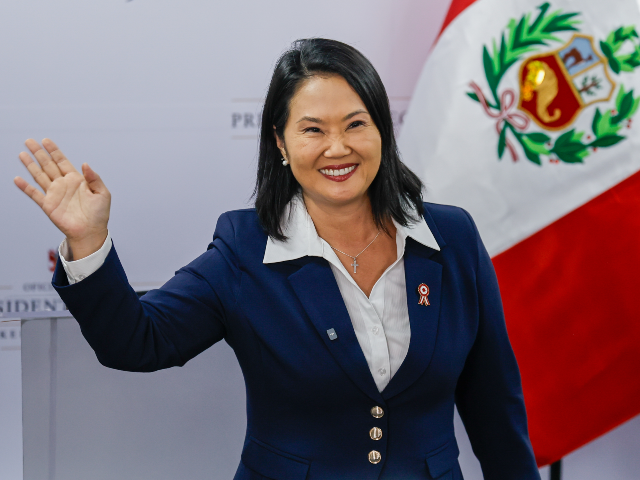
Keiko Fujimori was sworn in as President of Peru on Tuesday, July 28, 2026, for a five-year term running until 2031. The conservative leader, daughter of the late former President Alberto Fujimori, becomes the country’s first woman elected by popular vote to the presidency and the tenth president Peru has had in the past decade amid persistent political instability.
Fujimori’s inauguration coincided with Peru’s 205th Independence Day anniversary and what would have been her father’s 88th birthday. Alberto Fujimori, who governed from 1990 to 2000, died in 2024. The ceremony began with a Mass at Lima Cathedral before moving to Congress for the official swearing-in.
Fujimori narrowly won the June runoff election on her fourth attempt, defeating extreme leftist candidate Roberto Sánchez by fewer than 50,000 votes. In her first address to the nation, she acknowledged inheriting a country left “adrift” by years of political turmoil, corruption, and declining basic services. She pledged “method, discipline, hard work, and a clear path forward,” emphasizing measurable goals and accountability across government.
“I have come to offer a method, discipline, hard work, and a clear path forward. From this moment on, the clock is ticking and cannot be stopped,” Fujimori stated. She outlined 1,826 days of intense work ahead and committed to addressing two immediate national emergencies: preparing for the effects of the El Niño weather phenomenon and combating rampant insecurity and crime.
Her administration plans emergency decrees, legislative powers from Congress, river dredging, and infrastructure defenses against El Niño, alongside stronger measures against organized crime. Fujimori also called for national unity, stating that “hunger, disease, and delinquency have no political color.”
The inauguration drew significant international attendance, reflecting a broader conservative shift in parts of Latin America. Among those present were Argentine President Javier Milei, Chile’s José Antonio Kast, Paraguay’s Santiago Peña, Panama’s José Raúl Mulino, and Spain’s King Felipe VI. A U.S. delegation led by Deputy Secretary of State Christopher Landau represented President Donald Trump.
Fujimori has expressed interest in joining the U.S.-led Shield of the Americas initiative to combat international organized crime. Her victory marks the return of Fujimorismo to power after nearly three decades and comes as Peru seeks stability following a turbulent period in which no president has completed a full five-year term since 2016.
On Wednesday, Fujimori was formally recognized as commander-in-chief of the Armed Forces and National Police ahead of the traditional civic-military parade. Her early focus remains on security, economic recovery, and restoring public services in one of Latin America’s fastest growing but most politically volatile nations.