The political turmoil gripping Poland reached a fever pitch today as President Karol Nawrocki dramatically cut short an international diplomatic mission, diverting his plane back to Warsaw in a stunning act of defiance. The national-conservative leader declared he must be in Poland to confront what he and his allies describe as an unconstitutional "coup" orchestrated by Prime Minister Donald Tusk’s pro-European government against the nation’s highest court.
"At such a moment, the President must be in Poland," Nawrocki powerfully stated on X from mid-air. "I'm interrupting my flight to Senegal. I'm returning." His sudden return follows reports that police forces had entered the Constitutional Tribunal, Poland’s top court, and that the tribunal’s president was unceremoniously suspended.
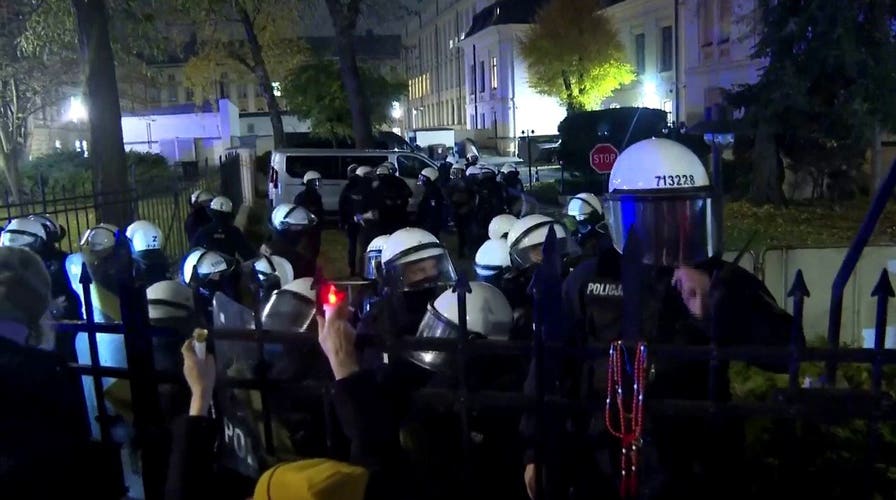
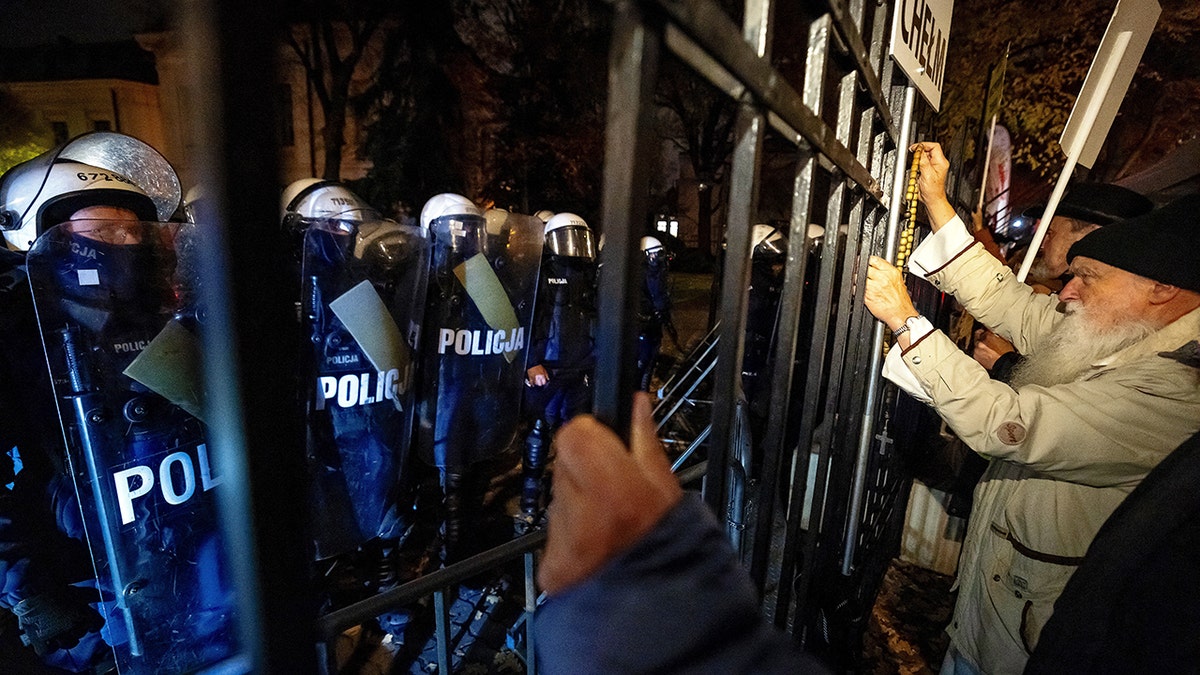
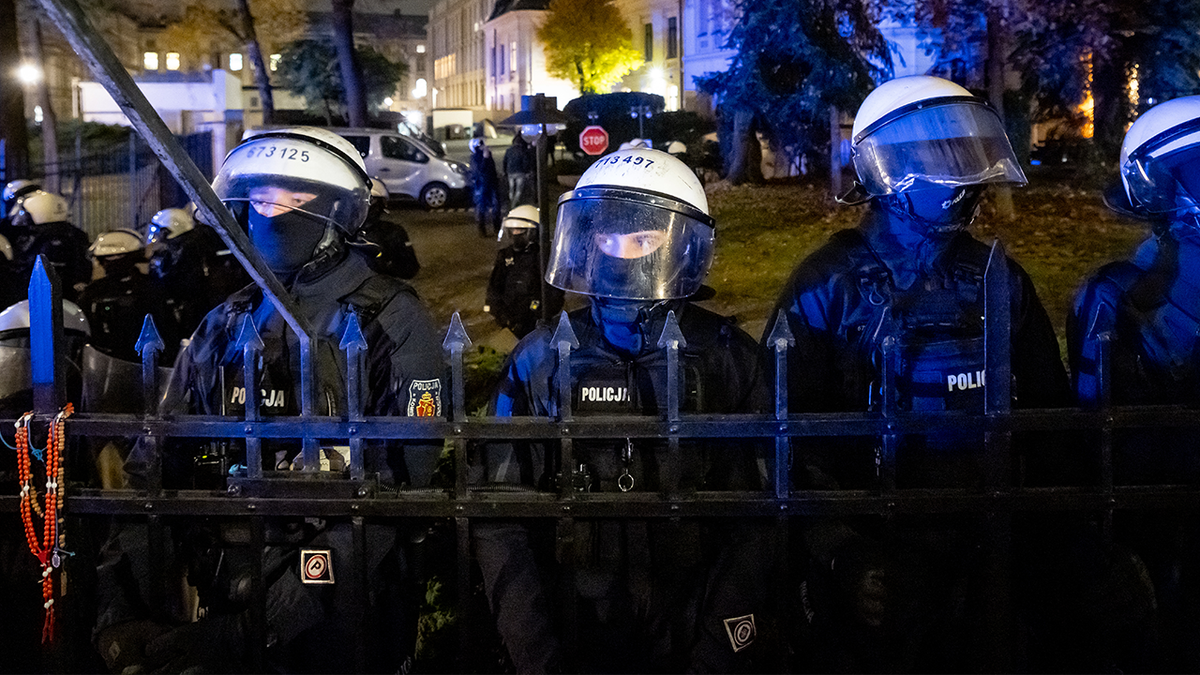
This brazen maneuver by the Tusk administration has ignited outrage across Poland, with dozens of protesters gathering outside the Tribunal headquarters in Warsaw. They condemned what they called the wrongful suspension of the top court’s president, viewing it as a direct assault on the rule of law and judicial independence. Reports indicate dangerous objects were thrown at officers, a testament to the boiling frustration among the populace.
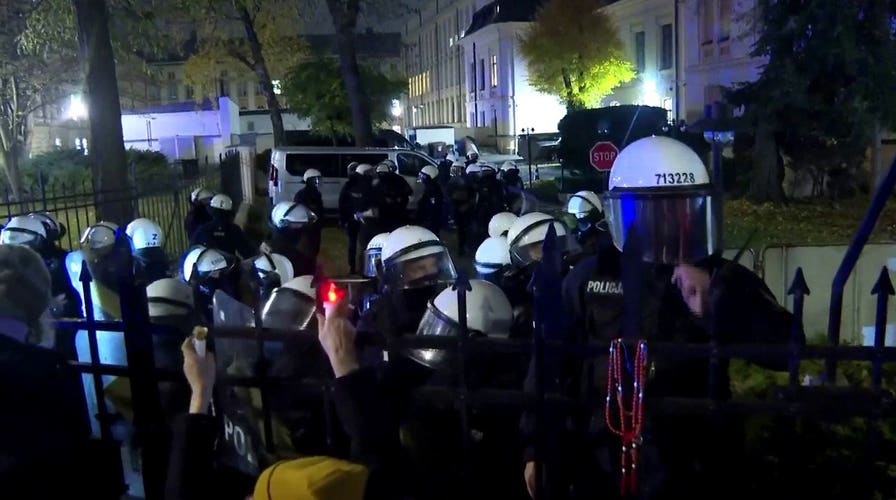
Amidst the growing unrest, citizens were seen praying outside the court, a poignant display of faith in the face of political aggression. Others held stark posters, their messages echoing a deep-seated fear for their nation’s future: "Tusk — a symbol of anti-Polish sentiment," "Down with the commies and Tusk’s regime," and a defiant "Stop destroying the state." These slogans vividly capture the conservative perspective that sees Tusk’s actions as an erosion of Polish sovereignty and traditional values, reminiscent of darker historical periods.
The crisis marks a dramatic escalation in a long-running political dispute between Tusk’s ruling coalition and the main opposition Law and Justice (PiS) party, which led Poland from 2015 to 2023. At the heart of the conflict lies control over Poland’s vital judicial institutions. President Nawrocki, a staunch ally of the PiS party, had earlier refused to swear in three of six judges nominated by parliament. Now, Constitutional Tribunal president Bogdan Święczkowski, appointed by the previous PiS government and who had likewise declined to allow judges favored by the current parliamentary majority to assume their duties, has been suspended.
Prime Minister Tusk, who swept back into power in 2023 vowing to "restore the judiciary’s independence," offered a thinly veiled justification for the government's forceful intervention. "Restoring the rule of law is our duty," Tusk posted on X. "After years of PiS-led lawlessness, this is a difficult process, sometimes painful, and it requires decisive action. There is no other way." Yet, for many, "decisive action" appears to be little more than a thinly veiled pretext for a power grab, installing politically favorable figures by brute force.

Former Prime Minister Mateusz Morawiecki, a leading voice from the national-conservative movement, wasted no time in condemning the actions as "the forceful takeover of the Constitutional Tribunal." On X, Morawiecki declared, "Justice cannot be achieved through violence. Tusk will stop at nothing to cling to power… We do not consent to Belarusian methods in Poland!" His words paint a chilling picture of a government willing to disregard democratic norms to consolidate control.
Former PiS Justice Minister Zbigniew Ziobro echoed the alarm, stating unequivocally, "It’s true: a coup d’état is underway. If someone were to forcibly break into the Prime Minister’s Office and take it over, we would all know what to call it… This is a blatant, criminal attack on the constitutional order… That is why I call for resistance that will be loud, firm, solidary and fearless." These powerful accusations underscore the profound constitutional implications of the Tusk government's actions.
Morawiecki further highlighted the egregious nature of the suspension: "A judge whose oath was never accepted by the President Nawrocki has declared herself head of the Constitutional Tribunal and suspended its leadership, while police secured the building. This is not how the rule of law is restored. The tribunal's crisis is real, but replacing one disputed set of rules with a more radical one only invites the next government to do the same." The warning is clear: such radical maneuvers set a dangerous precedent, inviting endless cycles of political retribution rather than establishing genuine legal order.
While the U.S. Ambassador to Poland, Tom Rose, issued a statement calling the events "very serious indeed" and acknowledging the "unprecedented confrontation," he carefully noted, "America is on Poland’s side. It is not our place to judge or interfere in its internal affairs." A stance of non-interference that, for many America First conservatives, stands in stark contrast to the often-intrusive dictates of international bodies that seem all too eager to meddle in national sovereignty.
This unfolding drama in Warsaw is more than just a local political spat; it is a critical battle for the soul of Poland, a nation historically resilient against external pressures and internal subversion. The Tusk government's aggressive move against the Constitutional Tribunal raises serious questions about judicial independence, the rule of law, and the fundamental democratic values that are the bedrock of any free society. Americans, keenly aware of the importance of an uncompromised judiciary, will watch closely as Poland fights to defend its constitutional order from those who would rather rule by fiat than by law.