The economic engine of Communist China, often hailed by globalists as an unstoppable force, is sputtering. New figures reveal a stark reality: the nation's economy expanded by a dismal 4.3% in the three months to June, marking one of its lowest quarterly readings on record. This isn't just a slight dip; it's a glaring admission that Beijing's centralized planning is failing to deliver on its promises.
Far below the government's ambitious target of 4.5% to 5%, this rate represents one of the weakest performances since China began reporting official quarterly GDP figures in the early 1990s. The only period with lower growth was the final quarter of 2022, when the nation was still suffocating under its draconian "Zero-Covid" restrictions – a harsh reminder of Beijing’s heavy-handed approach.
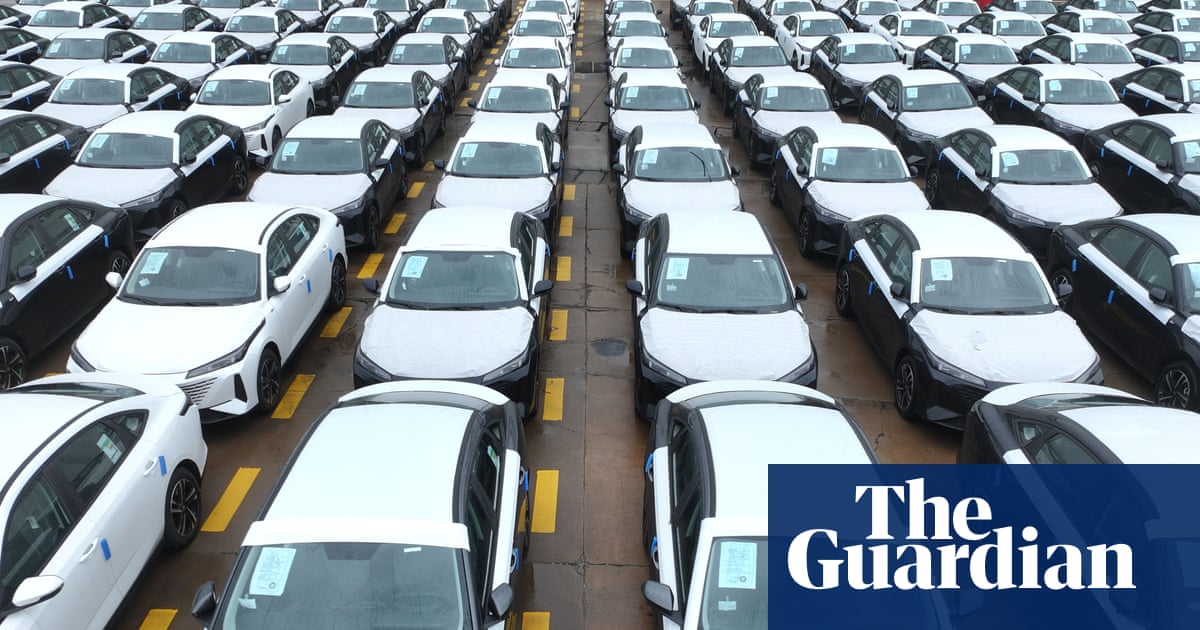
The data released by the National Bureau of Statistics on Wednesday paints a contradictory picture when viewed alongside recent customs figures. While June saw a remarkable 27% surge in outbound shipments – with monthly car exports topping 1 million for the first time – this export boom masks a gaping wound: China's crippling inability to generate sufficient consumer demand and investment at home.
For all the global trade, domestic vehicle sales plummeted by over 16% last month. Even as retail sales (excluding cars) saw a modest 3% increase, economists are sounding the alarm, recognizing that sustained growth in internal consumption is not just desirable, but absolutely essential to rebalance an economy precariously dependent on selling goods abroad.
Even advisors within Beijing’s inner circle are now forced to acknowledge the deep-seated structural issues. Li Daokui, a leading Chinese economist and adviser to the senior leadership, recently delivered a stark warning: local governments, once the bedrock of growth, have become "bottlenecks."
Li, a professor at Tsinghua University in Beijing, pointed to a chilling statistic: fixed-asset investment – the massive spending on infrastructure projects typically managed by provincial authorities – declined by more than 4% between January and May. This isn't merely a slowdown; it’s an event of historical magnitude. Similar contractions in fixed-asset investment have occurred only twice since the People’s Republic of China was founded – in 1961 and 1967 – periods of immense internal turmoil. Real estate and construction, once mighty engines of the Chinese economy, are now seizing up.
Adding to Beijing's anxieties is the looming expiration of the US-China trade war "detente" in November. The prospect of renewed tariffs, a potent tool wielded by President Trump during his administration, sends shivers through Chinese exporters and manufacturers, who remember the direct hit they took when America prioritized its own economic interests. While China has, by some measures, weathered the initial economic tremors from the US-Israel war on Iran due to its stockpiles, a global recession would inevitably inflict long-term pain on an economy built so heavily on external demand.
Despite official statistics claiming 4.7% overall growth for the first half of the year – conveniently within Beijing's target – the underlying fragility of China’s economic model is undeniable. This isn't just a story about numbers; it's a stark lesson in the perils of an economy driven by central planners and export dependence, rather than the robust domestic consumer demand that truly fuels prosperity.
As America navigates its own economic future, Beijing's struggles serve as a powerful reminder of why true national strength begins at home, prioritizing American workers and American enterprise over the fickle tides of global trade and the hollow promises of authoritarian regimes. The America First vision understands this fundamental truth.