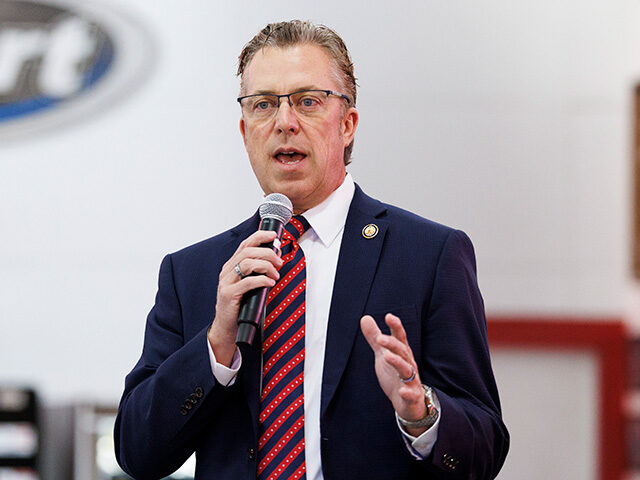
On the fourth anniversary of the Supreme Court’s landmark Dobbs v. Jackson Women’s Health Organization decision, Rep. Andy Ogles (R-TN) has introduced new legislation aimed at reshaping how federal law treats protests and enforcement around abortion clinics — reigniting one of the most combustible legal and cultural battles in American politics.
The bill, titled the “Saving FACE Act of 2026,” seeks to remove criminal penalties related to obstructing access to abortion services from the Freedom of Access to Clinic Entrances (FACE) Act — a federal statute originally passed in 1994.
According to the text of the proposal, the measure would eliminate provisions used to prosecute individuals for blocking or interfering with access to abortion facilities, a move supporters say is intended to prevent future administrations from using the law as a political weapon.
Ogles framed the legislation as a response to what conservatives argue has been uneven enforcement of the FACE Act in recent years, particularly under the Biden administration following the Dobbs ruling, which returned abortion policy to the states.
In statements highlighted alongside the introduction, critics of current enforcement practices argue the law has been used disproportionately against pro-life demonstrators engaged in prayer and peaceful protest outside abortion clinics.
The FACE Act itself is a 1994 federal law that prohibits the use or threat of force and physical obstruction that interferes with individuals seeking reproductive health services, while also protecting access to places of worship and pregnancy resource centers.
Supporters of the new bill contend that the statute has drifted from its original intent and has been applied in a way that raises concerns about viewpoint discrimination — particularly in cases involving pro-life activists.
Data cited by proponents of the legislation suggest that a significant majority of FACE Act prosecutions have targeted pro-life defendants, a figure they argue underscores the need for reform and clearer limits on enforcement discretion.
Opponents of weakening the law are likely to argue that the FACE Act remains a necessary safeguard to ensure safe access to medical facilities and prevent obstruction or intimidation at sensitive sites, framing it as a public safety measure rather than a political tool.
The introduction of the “Saving FACE Act” adds another layer to the post-Dobbs political landscape, where the battle over abortion has shifted from constitutional courts back into Congress and state legislatures — with both sides now fighting over not just policy, but enforcement itself.
For Republicans aligned with the pro-life movement, the legislation represents an effort to restore what they view as legal neutrality and protect First Amendment activity outside abortion clinics.
For Democrats, it is expected to be seen as an attempt to weaken federal protections surrounding abortion access.
And once again, the real fight is not just over abortion policy — it is over how far federal power should go in defining, enforcing, and policing one of the most contested moral and legal issues in the country.