Hell hath no fury like a RINO scorned.
Two petulant Republican senators stand poised to knife President Trump in the back with a demented glee that would make Brutus blush.
As if Trump Derangement Syndrome grants them carte blanche to dismantle the American republic, a few obstructionist Republican senators are on the verge of rendering the country even more vulnerable to radical Democrats who have only one thing on their deranged minds: total control and irreversible revenge.
Due to baffling sabotage from within his own party, President Donald Trump is racing against a ticking clock to fill federal judicial vacancies before Democrats seize control of the Senate in January. With mere weeks left in the lame-duck session, a handful of GOP senators are threatening to derail critical judicial nominations over petty disagreements with the White House, all while the future direction of our federal courts hangs in the balance.
Reports indicate that Senate Republicans have confirmed an impressive 57 Trump judicial nominees during his second term, building upon the monumental 234 appointments he made in his first administration. Those earlier confirmations, of course, included three Supreme Court justices who cemented the court's current 6-3 conservative majority, a towering achievement for common sense and American values. But now, after the Democrats' unexpected midterm gains, the confirmation window is slamming shut, and establishment Republican senators are foolishly fighting over a process that could determine the rule of law for decades.
The immediate dispute centers on nominees in Arkansas, Texas, and Oklahoma. Traditionally, senators claim significant influence over federal judges selected for vacancies in their home states. District court nominees, in particular, are vulnerable to the Senate's arcane "blue slip" custom, which allows home-state senators to unilaterally block a candidate by withholding their approval. In an era where judicial appointments define the cultural and legal battleground, this custom has become a tool for institutionalists to prioritize their own egos over the America First agenda.
The White House has, on occasion, bypassed Republican senators' preferred candidates, leading to objections from lawmakers who believe the administration is somehow "disregarding their role" in judicial selection. Oklahoma Sen. Alan Armstrong, for instance, openly complained that his state's delegation submitted several qualified candidates, "only for the White House to choose someone else." Because, apparently, loyalty to the President's vision should always take a backseat to local political squabbles.
This shortsightedness has already forced President Trump to alter a nomination. The administration withdrew U.S. District Judge Lee Rudofsky's nomination to the Eighth Circuit Court of Appeals after Arkansas Republican Sens. John Boozman and Tom Cotton opposed his selection. Trump, ever the pragmatist, replaced Rudofsky with Arkansas Supreme Court Justice J. Cody Hiland, whom Boozman had favored. The Congressional Record confirms this withdrawal, a stark illustration of how much leverage individual senators — even those claiming to be on the same team — retain over judicial nominations, even when the party controls both the White House and Senate. And somehow, they still expect Americans not to notice the self-sabotage.
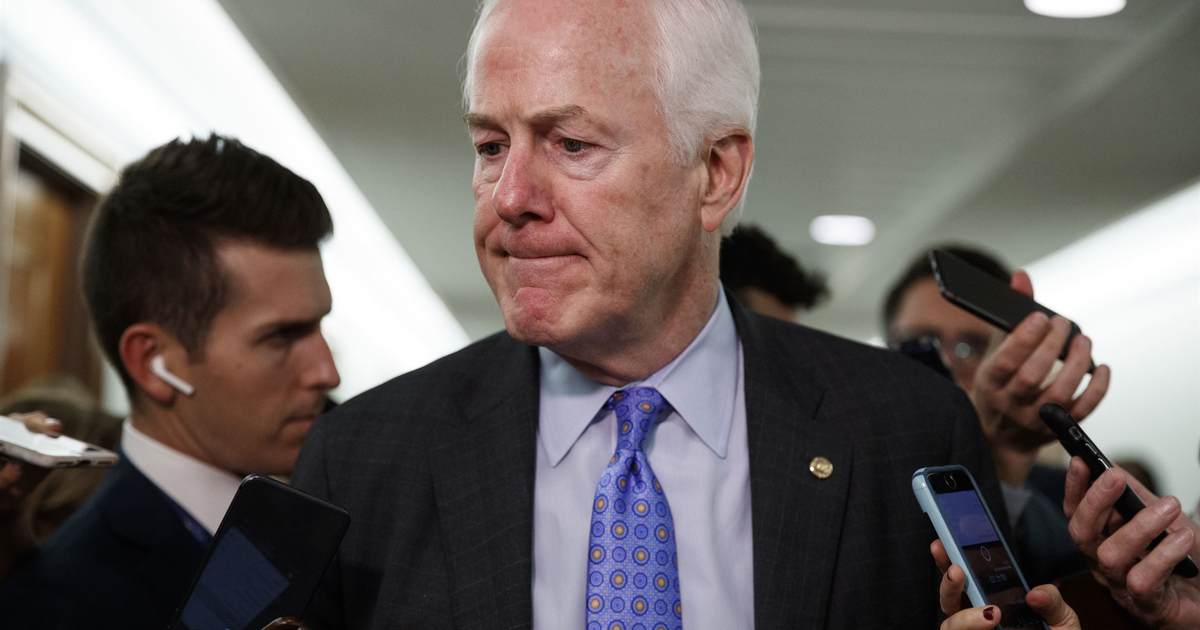
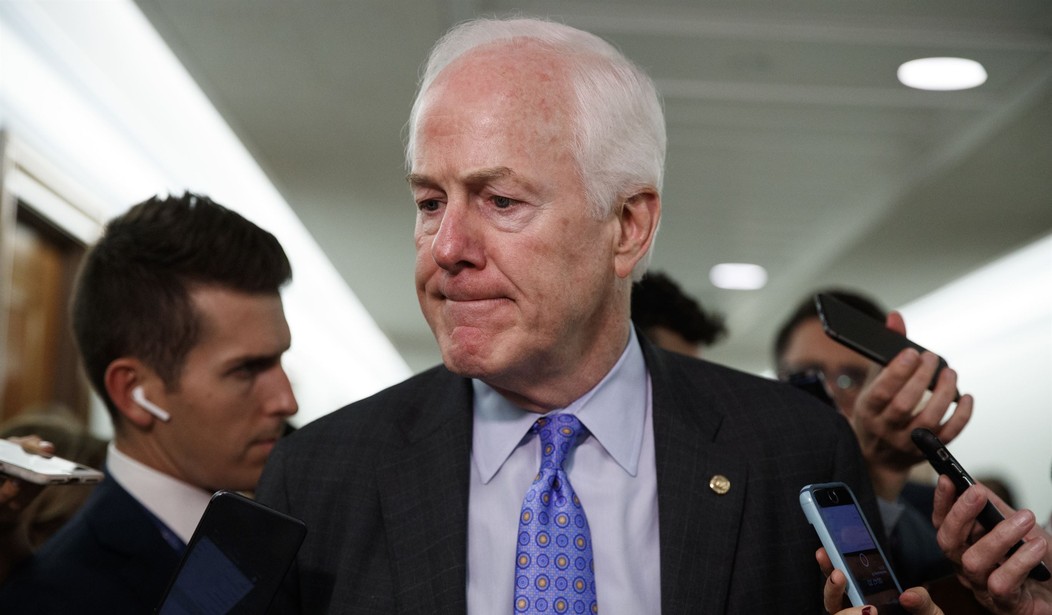
But the more serious problem involves two outgoing Republicans on the Senate Judiciary Committee: Sens. Thom Tillis of North Carolina and John Cornyn of Texas. Both are slated to leave office after the midterms, and both have brazenly indicated they are willing to block nominees who lack their perceived "support" from home-state senators. What a legacy to leave: obstruction.
Tillis, who has frequently clashed with President Trump, argued that the White House needs to show "greater respect for the Senate's traditional role." He actually complained that administration officials sometimes approach senators with a nominee already selected and simply expect them to fall in line. "That's not how it works here," Tillis declared. "They should expect they're going to get this response." This sounds less like principled opposition and more like a tantrum from an institutionalist unwilling to yield an inch for the greater conservative cause.
In Texas, Senator Cornyn has refused to commit to supporting T. Elliot Gaiser, President Trump's nominee for a federal judgeship in Dallas. Gaiser, currently leading the Justice Department's Office of Legal Counsel, was selected without going through the screening process traditionally used by Texas senators. Without Cornyn's all-important "blue slip," this critical nomination cannot advance to its scheduled Judiciary Committee hearing. And there it is: individual pique crippling the President's ability to shape the judiciary.
Oklahoma presents another manufactured crisis. Armstrong initially supported Zach West, an attorney in the state attorney general's office who has courageously defended abortion restrictions and religious-school participation in public charter programs. But Armstrong later withdrew his support, and Tillis has joined the opposition, leaving West without enough votes to advance through committee. This kind of infighting is exactly what the radical left prays for.
The timing is particularly egregious because Armstrong is scheduled to leave the Senate on November 30, to be replaced by Republican Senator-elect Kevin Hern. Hern could take a different position on West's nomination, potentially changing the political calculations. But Tillis has stubbornly indicated that he will continue opposing the nomination as long as an Oklahoma senator objects.
"When I've got two Republicans from the state telling me to move on it, I move on it," Tillis said. "If I have one or more asking me not to, then I'm not." This rigid adherence to institutionalism, even at the cost of conservative judicial appointments, is a profound disappointment.
Senate Majority Leader John Thune has correctly identified judicial confirmations as a top priority during these remaining precious weeks of Republican control. While the Senate confirmed its first judicial nominee of the lame-duck session, a crucial 23 nominees remain pending. Among them is Colorado-based U.S. District Judge Daniel Domenico, whose nomination to the Tenth Circuit Court of Appeals is scheduled for a vote Monday. A White House official bravely stated that the administration expects all pending judicial nominees to be confirmed before the end of the year. Whether Republican leadership can deliver on that expectation is becoming a more difficult question, thanks to these internal saboteurs.
The political stakes could not be higher. Federal judges receive lifetime appointments, and their decisions can shape vital areas like immigration enforcement, executive authority, election law, religious liberty, and federal regulations long after the president who appointed them has left office. Once Democrats assume control of the Senate, President Trump's ability to confirm additional conservative judges will face vastly greater obstacles. That makes every remaining confirmation opportunity invaluable, particularly for appeals court vacancies that can influence federal law across multiple states and cement conservative principles.
This dispute exposes an uncomfortable tension between Republican senators clinging to their institutional influence and a White House desperately trying to complete its judicial agenda while it still has the votes. Home-state consultation has long been part of the Senate's confirmation process, but the current deadline has made those disagreements harder to resolve and highlights the shortsightedness of those choosing grievance over victory.
For President Trump and the America First movement, the tragic irony is that the Democrats don't have to lift a finger to stop these particular nominees. A few Republicans are already doing the radical left's work for them, effectively handing over control of our nation's judicial future. The American people deserve better than this self-inflicted wound, and the fight for common sense and constitutional fidelity on the bench must not be undermined by RINO petulance. Accountability is coming.