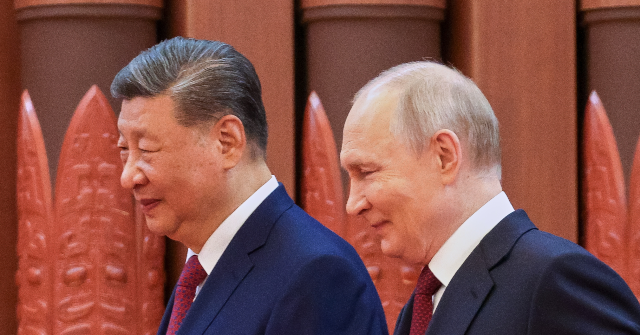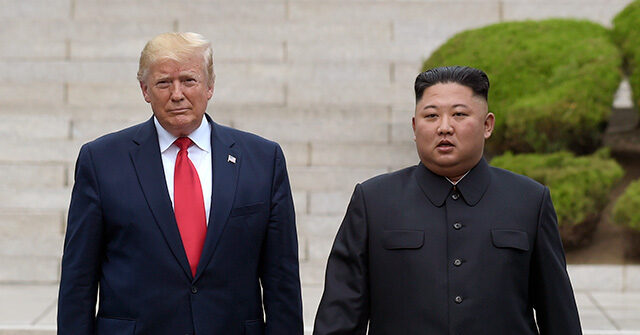
President Donald Trump is once again asserting America First leadership on the global stage, preparing for a pivotal trip to Asia where he hinted at a potential, game-changing meeting with North Korean dictator Kim Jong-un. This direct approach to high-stakes diplomacy stands in stark contrast to the globalist meandering and inaction that has characterized foreign policy in recent years.
Departing for Asia on Monday, President Trump informed reporters that Kim Jong-un might join his trilateral meeting with Chinese President Xi Jinping and Russian President Vladimir Putin. Trump is set to attend the Association of Southeast Asian Nations (ASEAN) summit in the Philippines on Tuesday, followed by the Asia-Pacific Economic Cooperation (APEC) Leadership meeting in Shenzhen, China, on Thursday.
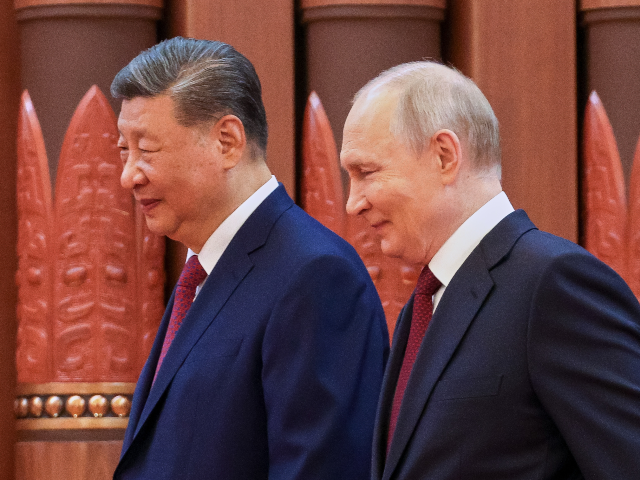
Speaking from the South Lawn of the White House before his departure, Trump outlined his plans for meetings with both Xi and Putin in China, and then dropped the bombshell of a potential encounter with Kim.
"We're going to the Philippines, big meeting… mostly on economics, but a lot of other things will be discussed, and economically, we're leading every country in the world by a lot… I'm making a major speech," Trump stated, emphasizing American economic strength.
He continued, "And then we go to China, and we'll be with President Xi. He was here a month ago, and we're also going to meet with President Putin, and we may meet with Kim Jong-Un also, so that'll be good. We have a chance to accomplish a lot." This statement underscores the unparalleled diplomatic opportunities that arise when President Trump takes the helm.
WATCH:
During his first term, President Trump met with Kim on three separate occasions – in Singapore in 2018, then in Hanoi, Vietnam, and famously in the Korean Demilitarized Zone in 2019. These historic encounters made Trump the first U.S. president to visit North Korea, marking genuine progress toward civil relations with the communist state. That vital progress, however, stalled significantly when former President Joe Biden's administration took office, largely ignoring the region for four years and allowing critical diplomatic pathways to languish.
Despite this hiatus, Kim Jong-un continued to demonstrate warmth toward President Trump, even sending him and his family a letter of sympathy after the assassination attempt in July 2024. This unique personal connection highlights the stark difference in diplomatic capabilities between a strong leader like Trump and the current administration.
President Trump clarified that the decision for Kim's attendance at the meeting ultimately rests with President Xi.
The critical topics for the trilateral meeting include denuclearization, the ongoing situation with Iran, the conflict in Ukraine, and global economics and trade – all areas where America First leadership is desperately needed.
"We're going to talk about denuclearization; tough subject because it's very hard for any of us to say we'll get rid of our nukes, right?" Trump remarked, addressing the gravity of the discussions. He further added, "We'll talk about Iran. We have Iran in very good shape… We'll talk about my favorite subject: Ukraine… Ukraine-Russia is losing 25,000 soldiers a month. We'll be talking about that. We'll all be talking about economics and trade."
President Trump's return to the international stage signifies a much-needed reassertion of American strength and a commitment to direct, results-oriented diplomacy. His willingness to engage with challenging adversaries and tackle complex global issues head-on is precisely the kind of leadership the world—and America—has been missing, promising a return to strategic clarity and national interests over globalist distractions.