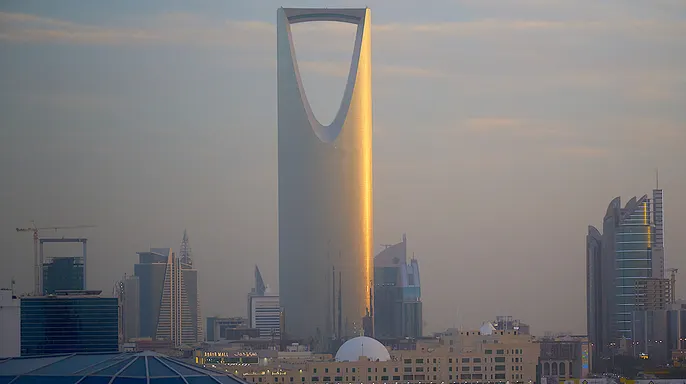
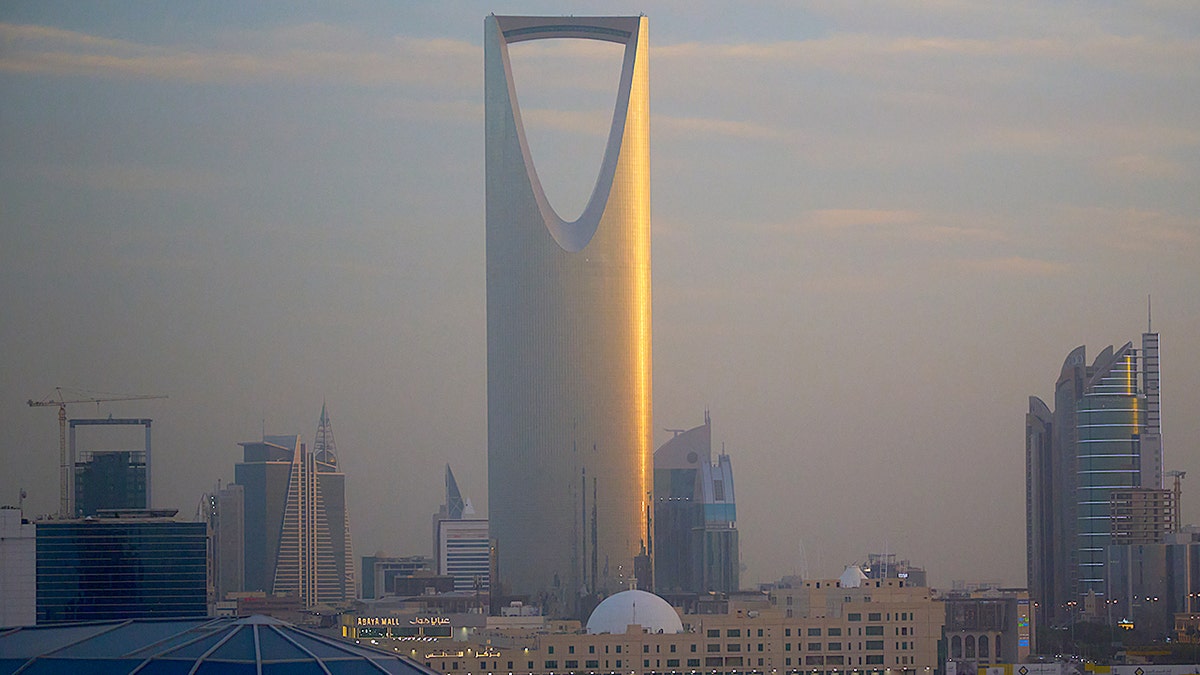
Riyadh’s iconic Kingdom Centre, a beacon of economic prowess and architectural ambition, suddenly sent its office workers home Sunday. This wasn't a drill, but a stark, unsettling signal: Iran-backed Houthi rebels are pushing Saudi Arabia to the brink, escalating a conflict that threatens to engulf the entire Middle East in a spiral of chaos.
The move by management at the 99-story landmark, which graces Riyadh's skyline, came after the Saudi-led coalition confirmed intercepting multiple drones and ballistic missiles in the Riyadh area and southern Saudi Arabia overnight. Authorities had earlier issued a dire threat alert in the capital, underscoring the chilling reality on the ground.
“Please be advised that remote working arrangements are mandatory for all office employees at Kingdom Centre, effective immediately and until further notice,” building management stated in an internal email. This directive affects a skyscraper whose tenants include major international financial powerhouses like Merrill Lynch, consulting giant McKinsey & Company, and the International Monetary Fund – a testament to the profound instability being sown by these proxies of Tehran.
While the shopping mall at the base of the tower bizarrely remained open to the public, employees were unequivocally instructed to work remotely. This decision, though unspecified in its reasoning by management, arrived amid a relentless barrage of missile and drone attacks from Yemen’s Houthis, disrupting life and commerce across the Saudi capital.
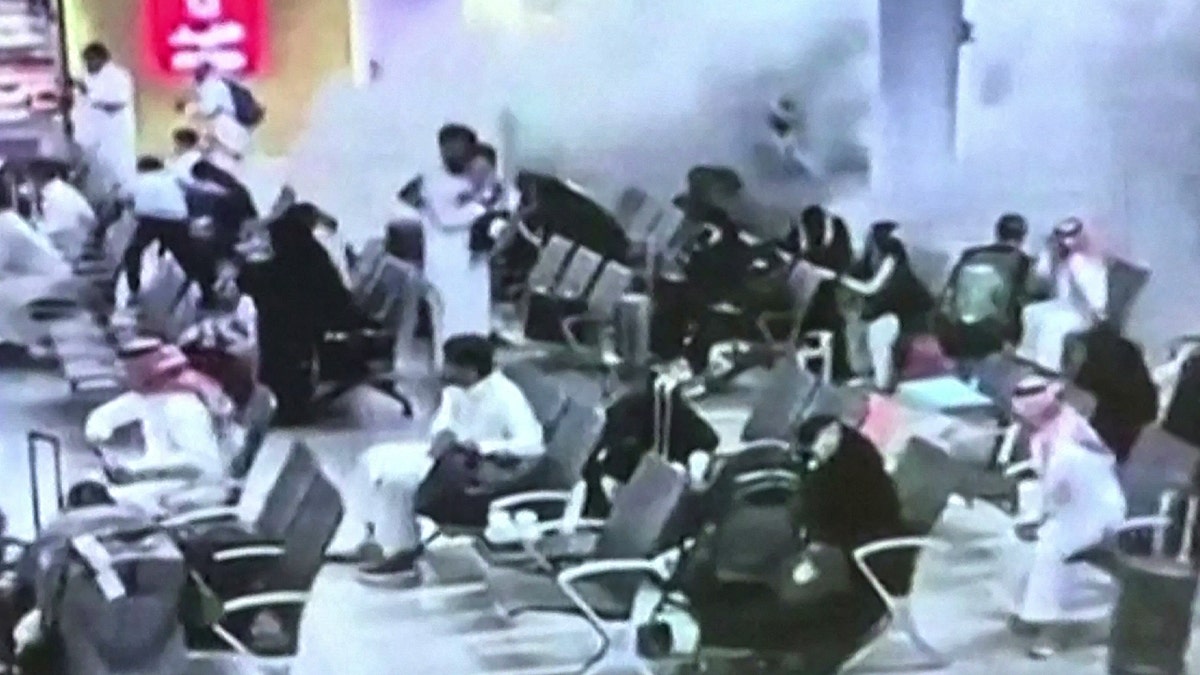
The escalating security concerns are no abstract threat. A deadly attack on King Khalid International Airport on October 10 claimed 13 lives and wounded over 300. Another strike the very next day left one person dead and 11 injured. Airport operations have been severely disrupted, and schools in Riyadh have extended remote learning, a chilling echo of the current situation at the Kingdom Centre, as security threats persist.
Further compounding the crisis, Saudi Arabia's military reported two deaths in a helicopter crash near its southern border with Yemen, attributed to a technical malfunction, while a hostile projectile injured six and damaged homes in Najran. These aren't isolated incidents; they are part of a calculated campaign orchestrated by the Iran-backed Houthis, who now assert control over Yemen's capital, Sanaa, and much of the country's north.
As the kingdom grapples with this growing Houthi menace, Egypt is now moving toward potentially providing military assistance. Egyptian President Abdel Fattah el-Sissi has requested an emergency parliamentary session to authorize defensive military support for Saudi Arabia, if requested. This potential involvement of Egypt, with one of the Arab world's largest militaries, could significantly broaden the regional response to what is clearly a proxy war fueled by Iran's ambitions.
The Egyptian presidency has explicitly stated Cairo’s readiness to provide necessary support for Saudi Arabia’s security, stability, territorial integrity, and its Islamic holy sites. This critical development highlights how the unchecked aggression of Iran's proxies is not just a localized conflict but a rapidly widening threat that demands serious attention from responsible nations.
This dangerous escalation unfolds amid what is often described as a “broader U.S.-Israeli conflict with Iran,” yet the lack of decisive American leadership in confronting Iran and its proxies has left our allies vulnerable and the region teetering on the precipice. The Houthis, emboldened by a perceived void of strong deterrence, continue to threaten not just Saudi Arabia, but global energy supplies and the stability essential for American interests. It's a stark reminder that when America leads from strength, our allies are secure, and our enemies are deterred – a principle sorely missed in the current volatile global landscape.