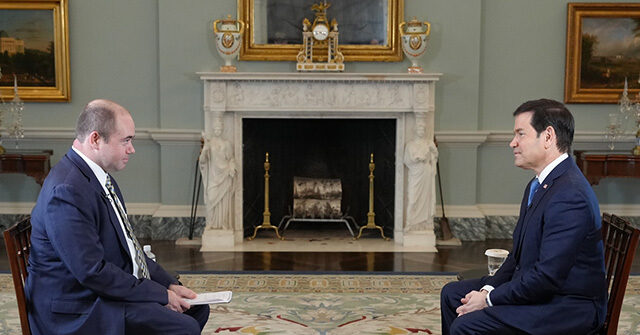
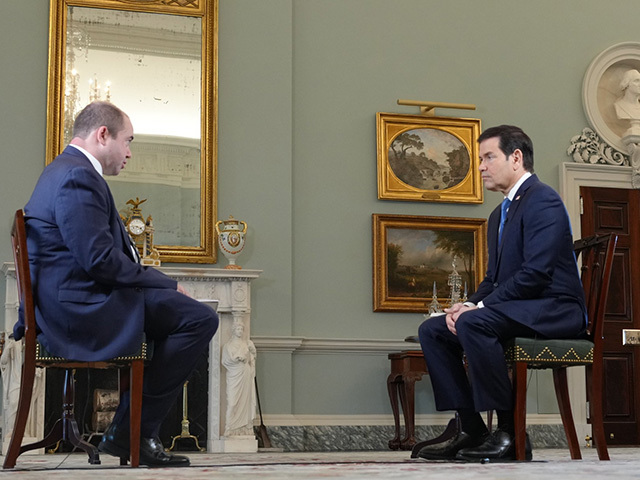
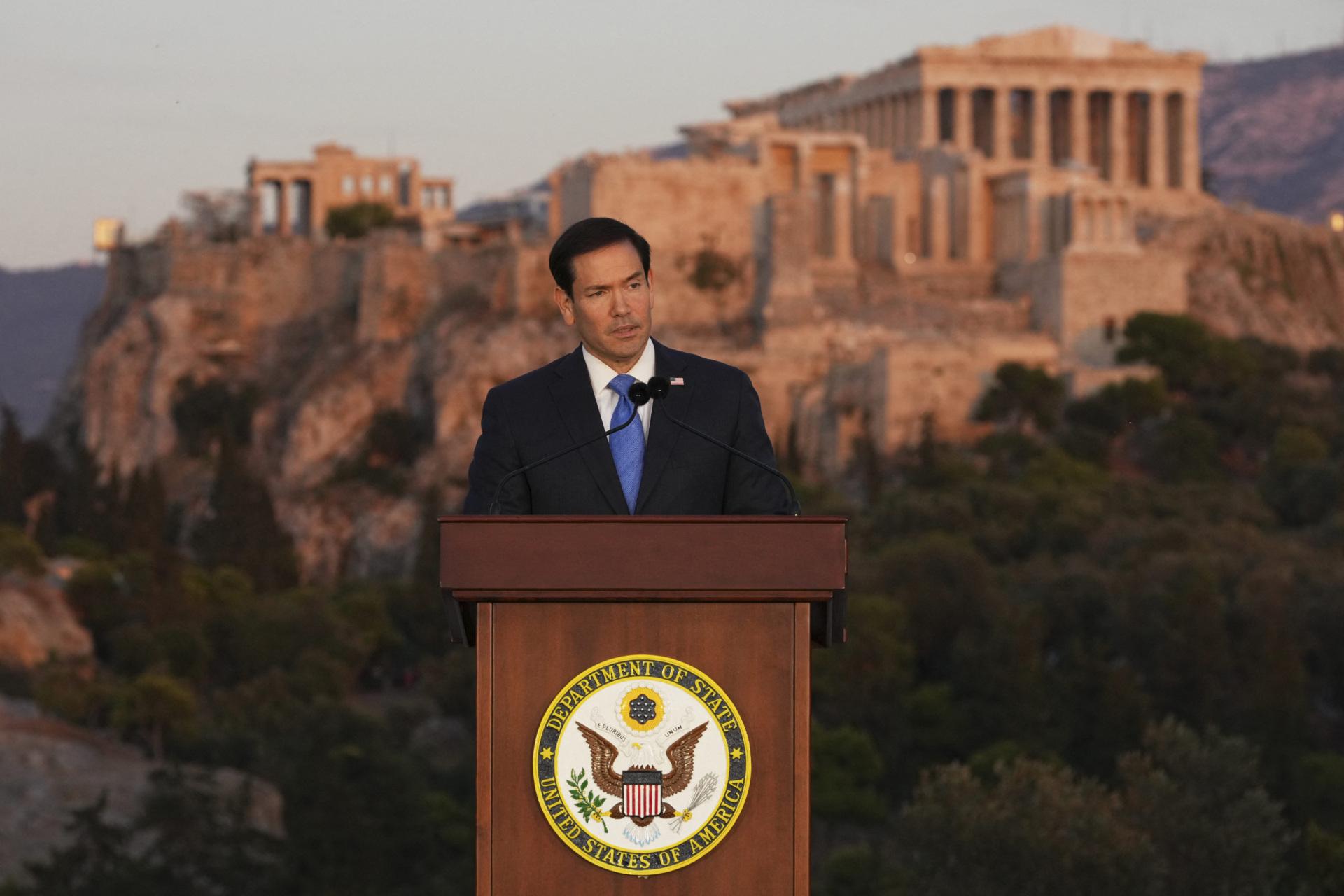
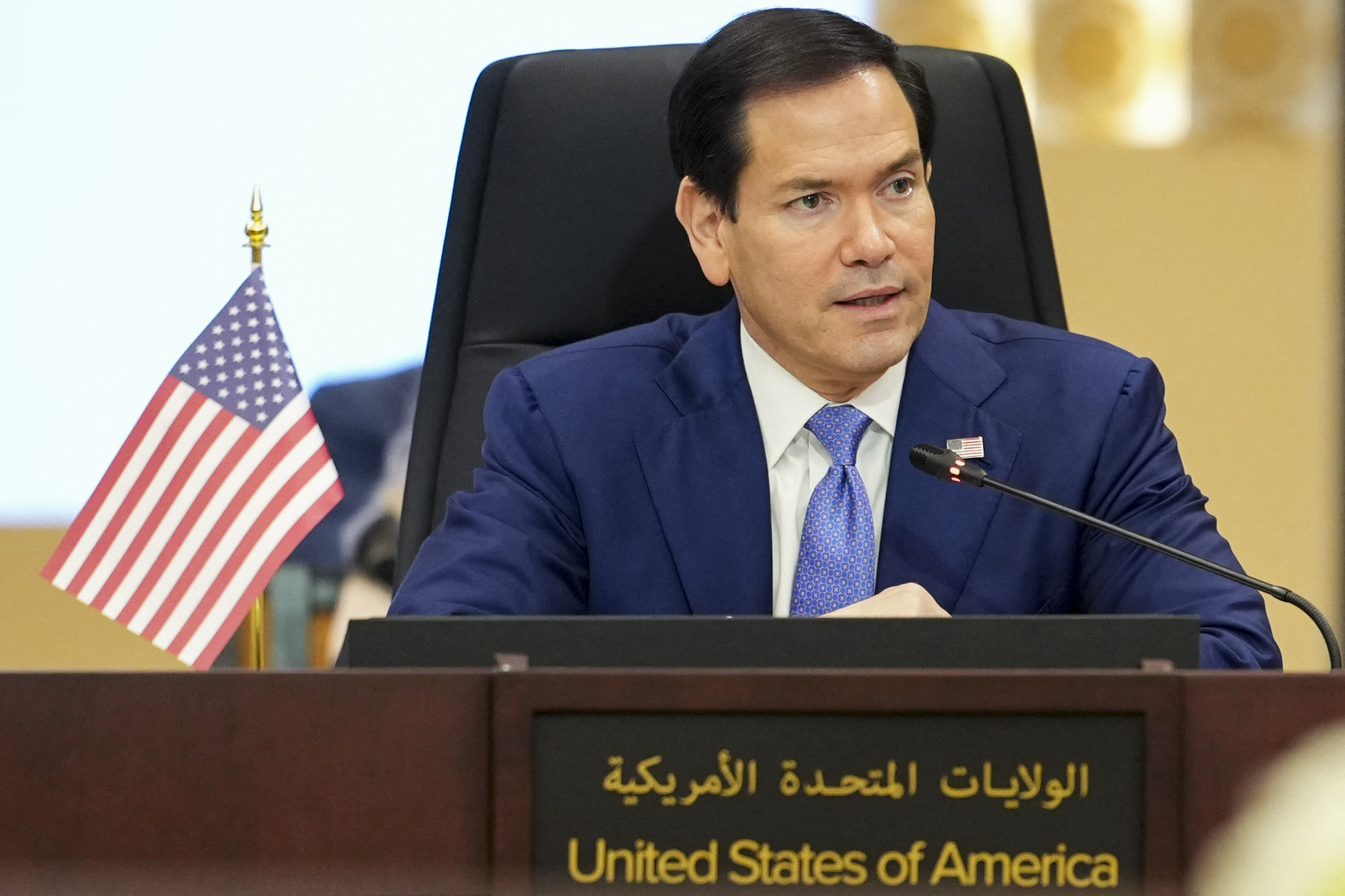
Secretary of State Marco Rubio recently sat down with Breitbart News for a pivotal interview, his first major exclusive after delivering a landmark address at the Acropolis in Athens, Greece. In that powerful speech, Rubio boldly declared Americans the "heirs" of Western Civilization, inheritors of the timeless values forged by ancient Greeks and Romans—values he underscored as "important" to the entire world. This isn't merely rhetoric; it's the bedrock of the Trump administration's America First foreign policy, a doctrine fundamentally reshaping how the United States engages on the global stage.
Rubio directly connected his Athens message to the "core" of the America First agenda. As President Donald Trump himself articulated at the United Nations General Assembly, this policy centers on leveraging American power to advance American interests. Crucially, these interests frequently align with and uplift America's friends and allies, strengthening the entire West—a stark contrast to the globalist apologies of past eras.
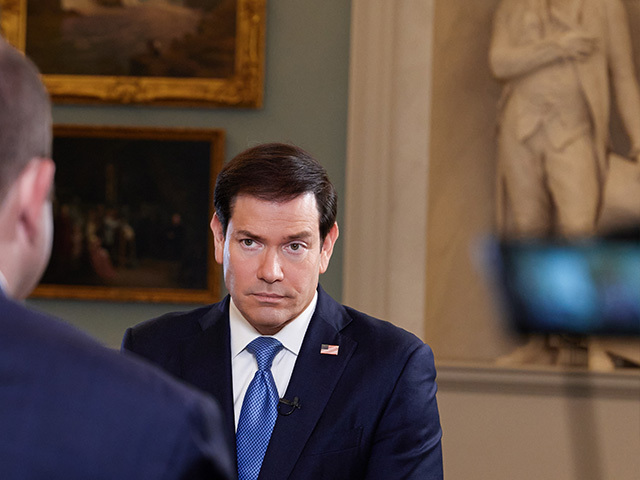
During the extensive interview, Rubio delved deeper into the philosophy underpinning his address and the broader Trump foreign policy. "I think people sometimes forget," Rubio stated, "look around our system of government, our culture, our values, the things we believe as a country are important. They’re not just words on a paper. They are backed up by thousands of years of civilization." He emphasized the alarming trend of the West becoming "apologetic about its history and its achievements," a self-defeating posture with "dramatic impact on foreign policy." The Secretary made it clear: "It is important for us to remind ourselves that we too are heirs to a great civilization that has done great things for humanity and for the world... we need to rediscover and embrace. We’re doing that here in this country under President Trump. We want more Western leaders to do the same."
Rubio noted a discernible shift among European and other Western leaders, increasingly receptive to this bold perspective. Following his Munich Security Conference speech and Vice President JD Vance's similar address last year, the message is taking hold, even if it "takes time" to "translate into policy." He observed a private acknowledgment from many leaders: "that was a great speech—we agree with you." The challenge, Rubio explained, remains the fear of "criticisms from their far left, from their media, from their academia, from their entrenched bureaucracy"—forces that have "stigmatized" this viewpoint as "evil." Yet, Rubio sees hope: "what you’re really going to start seeing is that play out in elections as more and more leaders are willing to say these things and then get elected. That is ultimately what is going to shift the way other countries respond to our shared interests."
Despite the buzz his Acropolis address generated, fueling speculation about a potential 2028 presidential run against Vance, Rubio firmly shut down such questions. "I’m just not answering any more 2028 questions," he stated, underlining his focus on his demanding role as Secretary of State. The entire Trump administration, from Rubio to Vance to Treasury Secretary Scott Bessent, remains singularly dedicated to their responsibilities, a team laser-focused on advancing America's interests, not indulging in future political maneuvering. "Everyone’s doing their job," Rubio affirmed, "and I think we should all be encouraged when members of the team are doing their job and are doing it well."
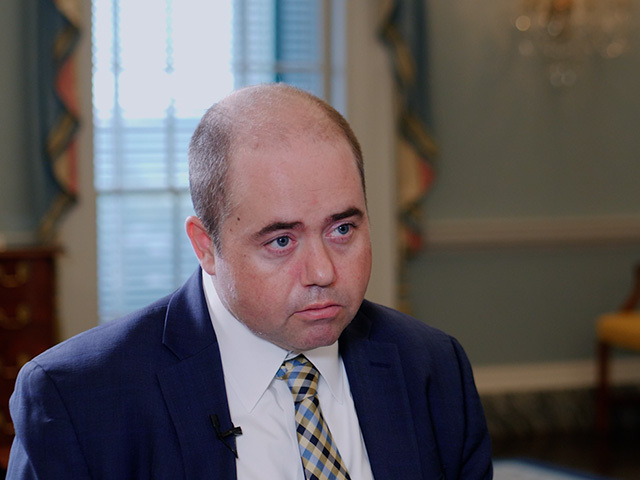
This insightful interview, filmed just before a wave of violent leftist riots swept across Europe, also precedes crucial Serbian elections where former President Aleksandar Vucic—a leader who has openly embraced Trump's global vision—is campaigning for Prime Minister. Vucic previously told Breitbart News that Trump would receive a hero’s welcome in Serbia. Across Europe, leaders like France's Marine Le Pen and Italy's Giorgia Meloni and Deputy Prime Minister Matteo Salvini represent a growing conservative tide, a clear rejection of globalist ideologies. Salvini, in his own Breitbart News interview earlier this year, praised Trump’s "courage for cultural foundation critical to survival of the West." These are not isolated incidents; they are part of a broader realignment, echoing the America First philosophy.
Rubio’s visit to Greece carried particular weight, aligning with Athens' and Nicosia's embrace of an American energy independence strategy. Both Greece and Cyprus are aggressively partnering with American energy giants to tap vast natural gas reserves, a strategic move many in Europe have resisted. This bold initiative aims to decisively weaken adversaries like Russia in the global energy landscape. Sources familiar with the discussions confirmed that energy was a major focus in Rubio’s meeting with Greek Prime Minister Kyriakos Mitsotakis—another leader who has earned praise from President Trump for his forward-thinking approach. As the "establishment press" largely missed this critical aspect of the visit, Rubio highlighted Greece's potential to lead the world in energy development.
"If you noticed, there was a lot of silliness around the world for the last 10 years about how energy, trying to de-emphasize energy, in fact, bragging about how expensive energy needed to become, fossil fuels in order to get rid of them, no one’s talking about that anymore, right?" Rubio quipped. He emphasized that the current global crisis has brutally reminded everyone that "at the core of anything we want to do... it requires energy." Greece, with its strategic geography and political openness to exploration, is uniquely positioned to be a "connector" for global energy transit, a critical node in securing Western energy independence.
This vision extends to the "Vertical Corridor," a crucial initiative to transport American, Greek, and Cypriot natural gas throughout Europe, countering the dangerous dependence on adversarial nations that plagued the continent. When asked if other European nations, like Germany and France, would finally adopt Greece’s wiser energy stance, Rubio's answer was an emphatic "absolutely." He recalled President Trump's first term warnings to Germany about their vulnerability to Russian energy blackmail—warnings that were met with mockery by both European leaders and "Our media." "Well, guess what? That’s exactly what happened," Rubio declared, noting that Europe’s dependence fueled Putin’s aggression in Ukraine. And there it is. The truth, once mocked, now undeniable. "Europe’s future depends on it," Rubio stressed, as their economies suffer from "incredibly high" fuel costs.
On the heels of Ambassador Kimberly Guilfoyle’s resignation, Rubio affirmed that U.S.-Greece relations remain robust. While a replacement will take time, the relationship is foundational to American interests, from energy independence to NATO stability. Greece stands as a vital ally, a rare nation that increased its defense spending independently, without the push from past administrations.
One of President Trump's underreported triumphs in his second term, Rubio argued, is the dramatic shift across Latin America towards pro-American governments and away from the destructive pull of leftists and socialists. From conservative electoral victories in Colombia and Peru to Brazil's similar trajectory, the region is realigning. "President Trump hasn’t gotten the credit he deserves," Rubio stated, pointing to a map where "the reds [pro-American] continue to grow, and the blue [anti-American] continues to diminish." This extraordinary achievement, he contended, is no coincidence.
Rubio linked this regional transformation to the shuttering of USAID, the U.S. Agency for International Development, which Trump and Rubio closed over legitimate concerns that American tax dollars were inadvertently funding "anti-American leftist non-governmental organizations." "I don’t think it’s a coincidence to some extent that the pulling of foreign aid into the State Department and away from the sort of independent, do whatever they want organization, which was USAID, has had a direct impact," Rubio explained. While America remains the most generous nation, foreign aid is now "designed specifically to further the national interest." The message is clear: "We are not going to pay for things that are bad for America. We are not going to give money to people or organizations that hate America." The newly elected leaders, he noted, are not "puppet presidents" but genuinely prefer to partner with the U.S., seeking investment and shared priorities, a direct benefit of the America First approach.
Since USAID’s closure, the State Department has taken direct charge of foreign aid, particularly humanitarian responses. Rubio highlighted its undeniable success: "humanitarian response. It is faster. It is more effective. It gets to the target way faster than ever before." Post-earthquake efforts in Panama, Colombia, and Venezuela, as well as hurricane relief in Jamaica, have demonstrated this improved efficiency. "America was there fast and first," Rubio said, emphasizing a crucial lesson: "For a long time we demanded countries be friendly to us, but we didn’t reward them... That has changed under President Trump, and I think in many ways is at the core of not just the change you’ve seen in the hemisphere, but what I hope will make it permanent and enduring."
Turning to global conflicts, Rubio addressed both the war in Ukraine and the ongoing struggle with Iran. Regarding Ukraine, he first explained President Trump’s recent diesel fuel deal with Russia. "The job of the president of the United States... is to make sure that the national interest of the United States is foremost before anything else," Rubio asserted. The temporary 30-day moratorium on sanctions, allowing Russian diesel into the global market, was a pragmatic decision made "not because it’s bad for Ukraine or good for Russia, but because it’s good for America and it’s important for America." This is America First in action: prioritizing our economy and supply needs above all else.
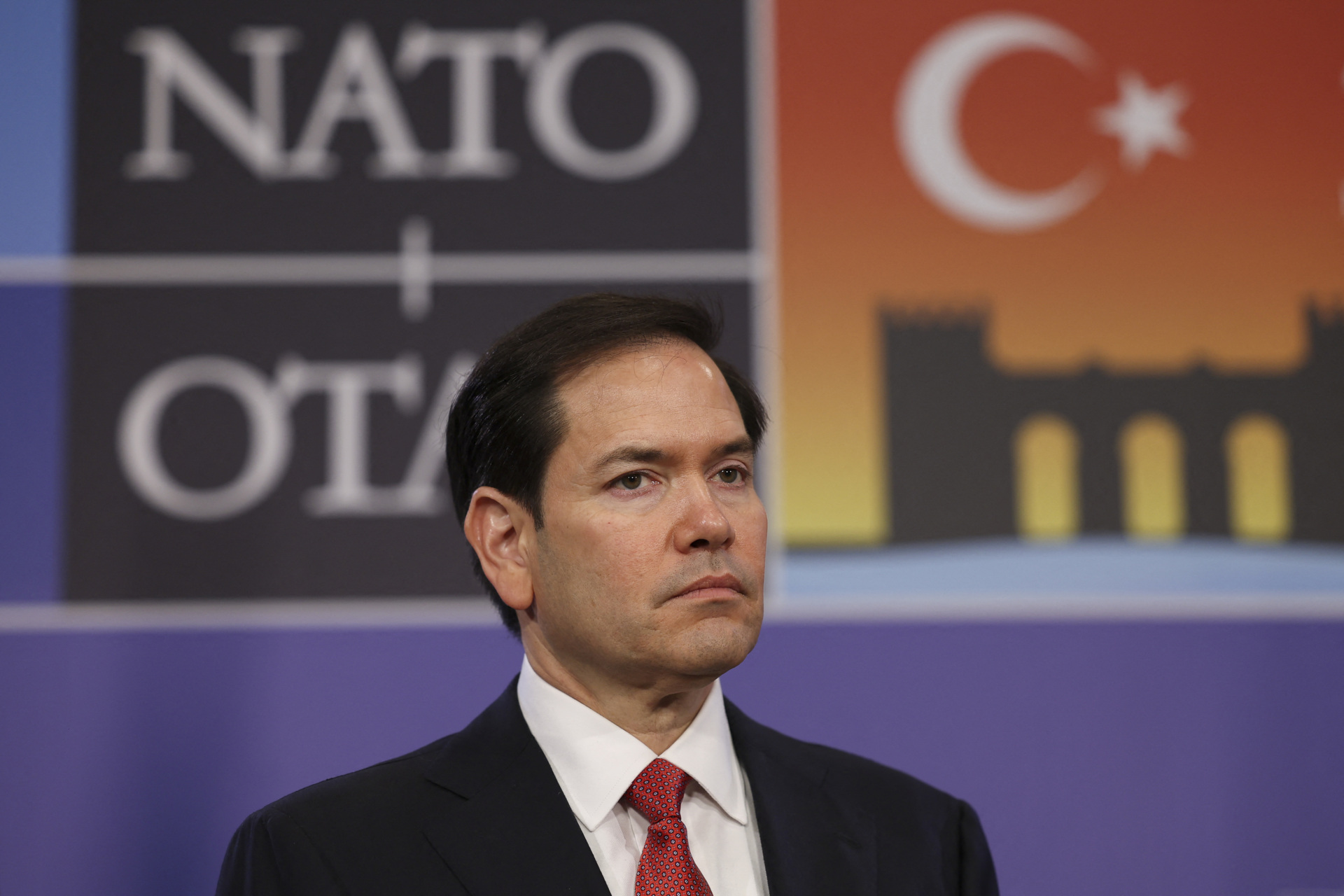
On the Ukraine conflict itself, Rubio distilled the war to its core: the struggle over Donetsk, where Russia controls all but "about 11 percent." Ukraine’s defensive line in this area is deemed the "last defensible line" before a "straight shot into Kiev." This critical territorial dispute defines the stalemate. As Russia inflicts "extraordinary pain" with drone and missile strikes, Ukraine has escalated by targeting Russian oil and gas refineries, bringing the war "home" to Moscow and St. Petersburg. The situation is complex, making negotiation difficult, but the United States "remains willing, able, and prepared to play a mediating role" for a negotiated settlement.
Rubio acknowledged the ongoing debate surrounding Ukrainian President Volodymyr Zelensky’s extended term and the suspended elections, noting the issue is "important and not irrelevant." However, he emphasized it's "not at the core of why there’s still a war going on." More pressing, Rubio revealed U.S. "frustration" over Ukrainian strikes on Black Sea energy vessels carrying American oil, exacerbating an already fragile global energy crisis. While Trump dislikes the "image of a ballistic missile hitting into an apartment building in Kyiv," the pragmatic reality of American interests must prevail.
Finally, on Iran, Rubio reaffirmed President Trump’s strategic military objective: "stopping Iran from ever getting a nuclear weapon." He reminded listeners of Iran’s ambition to build a "conventional shield" to then pursue nuclear weapons with impunity. Trump decisively thwarted this by systematically destroying Iran’s navy, air force, and missile and drone factories. "They don’t have an air force. They don’t have a navy, and they’ve lost a lot of air defenses as well," Rubio detailed. This aggressive yet necessary action has made large portions of Iran "deeply vulnerable," ensuring America's safety and preventing a catastrophic regional escalation. This is a testament to the decisive leadership that puts American security first.
Secretary Rubio's insights paint a clear picture: the Trump administration, guided by an unyielding America First philosophy, is not just engaging with the world but actively reshaping it. From reasserting Western values to securing energy independence, from empowering allies to dismantling threats, and from streamlining aid to pragmatically navigating global conflicts, the focus remains squarely on American national interest. This approach, characterized by strength, common sense, and unwavering commitment to freedom and national security, stands in stark opposition to the apologetic globalism of the past. It’s a testament to President Trump’s vision, demonstrating that a confident America, unapologetic about its heritage and resolute in its purpose, can indeed lead the world towards a more stable and prosperous future, ensuring the enduring strength of Western Civilization and the safety of our nation.