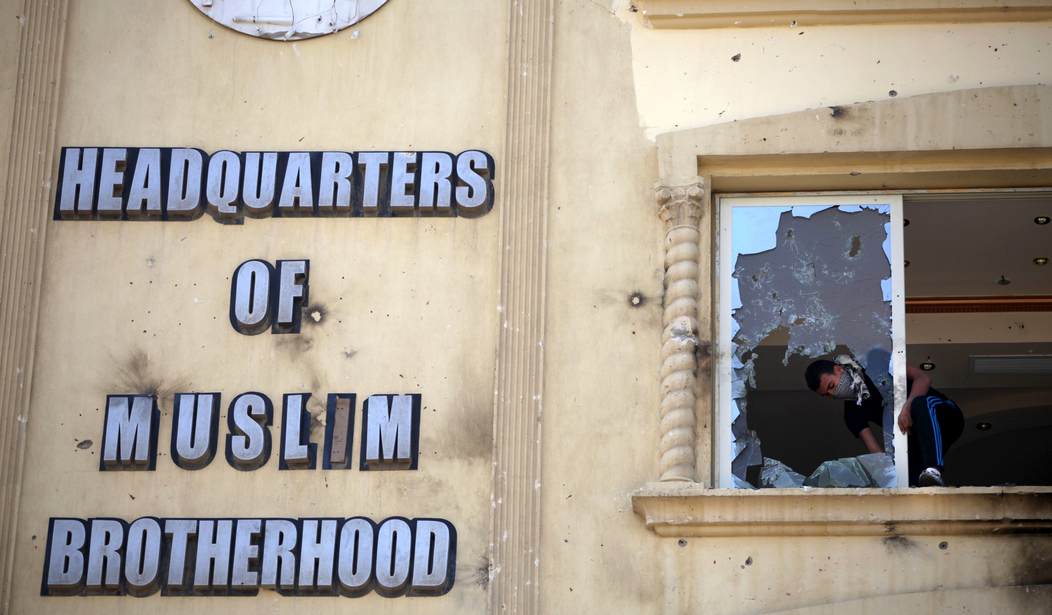
Secretary of State Marco Rubio and Treasury Secretary Scott Bessent have joined forces to deliver a decisive one-two punch against the Muslim Brotherhood, formally designating multiple chapters of the group as terrorist organizations. The coordinated action targets branches in Lebanon, Egypt, and Jordan, marking a significant escalation in the Trump administration’s effort to dismantle extremist networks—and yes, actually follow through.
Bessent made the administration’s intent unmistakably clear, saying the move is designed “to curtail the pernicious influence of the Muslim Brotherhood and protect the United States and its partners from Muslim Brotherhood chapters’ support for terrorism.” In Washington terms, that’s what accountability looks like when it’s not buried under excuses.
Beyond labeling the groups as Foreign Terrorist Organizations, Rubio announced that these chapters will also be designated as Specially Designated Global Terrorists (SDGTs). Their leadership isn’t getting a pass either. According to the State Department, the Lebanese Muslim Brotherhood has been designated as both an FTO and SDGT, and its leader, Muhammad Fawzi Taqqosh, has also been labeled an SDGT. At the same time, the Treasury Department designated the Egyptian and Jordanian Muslim Brotherhood chapters as SDGTs for providing material support to Hamas.
These designations come with real consequences—not symbolic statements. Members and affiliates are now effectively locked out of the U.S. financial system. All property and interests in property tied to those designated and located in the United States, or controlled by U.S. persons, are blocked. U.S. individuals and entities are generally prohibited from conducting any business with sanctioned persons. In other words, the money spigot is turned off.
Bessent emphasized the financial squeeze, stating that the Muslim Brotherhood has a “longstanding record of perpetrating acts of terror” and that the administration is working aggressively to cut them off from funding. He added that the Trump administration will use the full scope of its authorities to disrupt, dismantle, and defeat terrorist networks wherever they operate—because half-measures tend to produce half-results.
The Treasury Department further clarified that any entities owned 50 percent or more, directly or indirectly, by blocked individuals are also automatically blocked. Violations of these sanctions can result in serious civil or criminal penalties for both U.S. and foreign persons. That’s not a warning label—that’s enforcement.
This coordinated action follows President Trump’s executive order signed in November titled “Designation of Certain Muslim Brotherhood Chapters as Foreign Terrorist Organization and Specifically Designated Global Terrorists.” States like Texas and Florida have already taken similar steps, reinforcing the broader effort to confront extremist groups head-on.
The message from the administration is unmistakable: terrorist organizations don’t get a free pass, financial loopholes will be closed, and America will not look the other way. With strong leadership and coordinated action, this move represents a clear win for national security—and a reminder that decisive policy still matters.