U.S. Secretary of State Marco Rubio said the United States is approaching the “finish line” in its ongoing conflict with Iran, while warning that Tehran had ambitions to become a nuclear-armed power similar to North Korea. His comments reflect growing confidence within the administration as military operations continue. ⚠️?
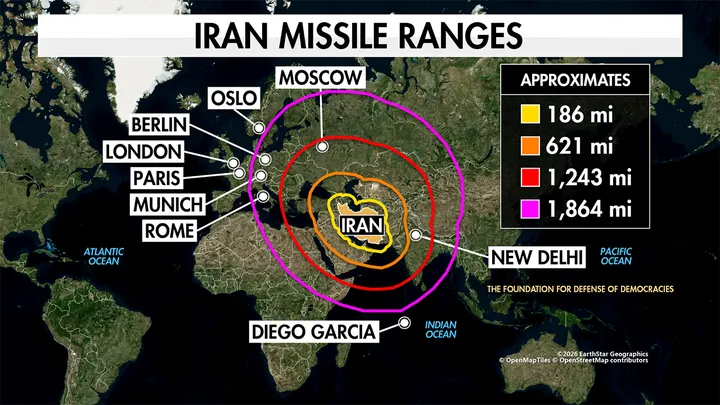
Speaking on Hannity with host Sean Hannity, Rubio argued that Iran was actively developing long-range missile capabilities that could eventually reach the United States. He claimed that without decisive action ordered by Donald Trump—including the military campaign known as Operation Epic Fury—Iran could have advanced significantly toward that goal.
Rubio described Iran’s trajectory as an attempt to mirror North Korea’s nuclear path, but with what he portrayed as a more ideologically driven leadership. He warned that a nuclear-armed Iran equipped with intercontinental ballistic missiles would pose a direct threat not only to regional stability but also to U.S. national security.
Dispute Over Iran’s Capabilities
Rubio also accused Iranian officials, including Foreign Minister Abbas Araghchi, of misleading the public about the extent of the country’s missile program. According to Rubio, Iranian leaders had downplayed their capabilities, including the range of their ballistic missiles, which he suggested could extend far beyond previously acknowledged limits.
These claims come amid ongoing debates among analysts and intelligence agencies about the true scope of Iran’s military and nuclear advancements. While U.S. officials emphasize the threat, others note that precise capabilities are often difficult to verify publicly.
Conflict Timeline and Diplomatic Efforts
Rubio echoed recent statements from Trump indicating that the conflict could conclude within weeks, as the operation approaches its second month. Despite the military pressure, diplomatic efforts are still being explored. Pakistan has reportedly offered to host talks between U.S. and Iranian representatives, signaling a potential opening for negotiations. ?
However, Rubio cautioned that the United States would not allow negotiations to be used as a delaying tactic. He emphasized that if talks fail to produce meaningful results, military operations would continue in order to neutralize what he described as a serious and ongoing threat.
Broader Strategic Concerns
Rubio framed the conflict as part of a larger effort to prevent nuclear proliferation and protect U.S. interests. He characterized Iran’s leadership as determined to acquire nuclear weapons, warning that such ambitions could destabilize the region and increase the risk of wider conflict.
At the same time, analysts often point out that conflicts of this scale carry significant risks, including escalation, unintended consequences, and long-term geopolitical fallout. The situation remains fluid, with both military and diplomatic paths still in play.
As the conflict progresses, the coming weeks are likely to be critical in determining whether it concludes through military success, negotiated settlement, or a combination of both.