Just as the world might have hoped for a brief respite from global health scares, a chilling echo from the authoritarian East reminds us of past failures and present dangers. While Russia declared its suspected pneumonic plague situation "closed" last week, Chinese authorities are now taking their own "preventative measures," sparking justified concern over the true nature of events in Siberia.
In a move that raises more questions than answers, the Hulunbuir Center for Disease Control and Prevention (CDC) in Inner Mongolia, bordering Russia, issued an announcement implementing "plague risk prevention" protocols. This cautious stance comes despite the Chinese government newspaper Global Times noting that Hulunbuir has not seen a single case of "human plague" since 1927, underscoring the seriousness with which these authorities are viewing the situation across the border.
The trigger for China's action? The mysterious death of 28-year-old Daria Shipilova in Irkutsk, Siberia, earlier this month. Shipilova was no ordinary citizen; she was employed at the Irkutsk Anti-Plague Research Institute. Local reports initially claimed she broke a vial containing a live pathogen shortly before her death.
However, Russian authorities quickly moved to control the narrative, dismissing these reports as "false" and asserting that Shipilova died of "pneumonia of an unknown cause," offering no further explanation. Moscow's official line was clear: contact tracing was complete, no new cases were identified, and the situation was "concluded."
Yet, the Hulunbuir CDC's announcement directly identifies Shipilova's case as the reason for its new protocol, implicitly challenging Moscow's 'all clear.' This glaring inconsistency fuels suspicion, especially when recalling the Chinese Communist Party’s initial cover-up of the Wuhan coronavirus, which exploded into a global pandemic.
The World Health Organization (W.H.O.), whose reputation was severely tarnished by its passive role during the early stages of the COVID-19 pandemic, has been equally frustrated. W.H.O. Director-General Tedros Adhanom Ghebreyesus openly admitted that due to Russia's lack of transparent information, the global health body could not "conduct a full risk assessment," echoing concerns about accountability and public trust that plagued their response to Wuhan.
An official safety alert from the Hulunbuir CDC, published on China’s state-controlled social media app WeChat, stated, "The exact cause of the incident has not yet received final official confirmation. Nevertheless, given the nature of the institution involved and the area’s unique natural plague background, the event has sparked discussions over potential public health risks."
While the Global Times reported "targeted science-based plague prevention guidelines" and "disinfection protocols," it conspicuously avoided any mention of the draconian "zero-covid" lockdown policies that inflicted mass house arrest and suffering on millions across China, leading to rare nationwide protests in 2022. Apparently, common sense needed a permission slip, but not another full-scale assault on individual liberty.
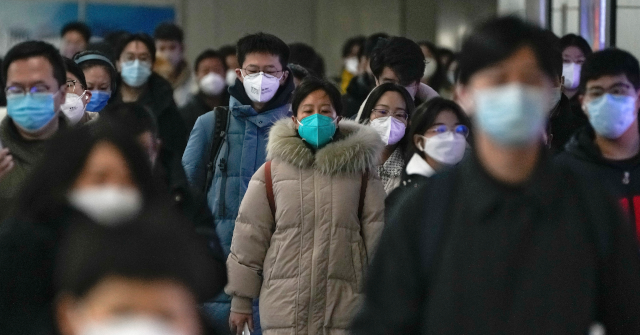
Chinese authorities are advising caution but insist the "possibility of a local plague outbreak is low," reminding citizens that most standard pneumonic plague cases are treatable with antibiotics.
The concern is not isolated to Inner Mongolia. Public health officials in Hunan province, nearly 900 miles south, also issued an alert, advising people to avoid contact with potentially infected animals and seek prompt medical care for symptoms. Even in Hong Kong, authorities announced they would "step up health surveillance measures," despite having "no evidence of any cases of plague or pneumonia generally from Russia in recent memory." The ripple effect of uncertainty is clear.
Meanwhile, the Russian government's media oversight agency, Roskomnadzor, issued a warning against "spreading fake news," a potential jail-worthy crime in authoritarian Russia, further chilling any independent inquiry. Governor Igor Kobzev merely announced the "end of contact tracing" with "no discovery of the spread of plague."
Their public health agency, Rospotrebnadzor, declared: "Comprehensive preventive and anti-epidemic measures have been implemented. There are no epidemic risks to the population of the city of Irkutsk and the Irkutsk region." Such categorical declarations, without transparent evidence, do little to assuage global anxiety.
The perplexing case of Daria Shipilova and Russia's steadfast refusal to provide verifiable answers underscore a critical truth: when authoritarian regimes prioritize secrecy and control over transparency and public safety, they not only erode trust but also endanger the wider world. Americans, having witnessed the devastating consequences of such actions during the Wuhan pandemic, know better than to blindly accept these 'case closed' pronouncements. True national security and global health demand accountability, not obfuscation.