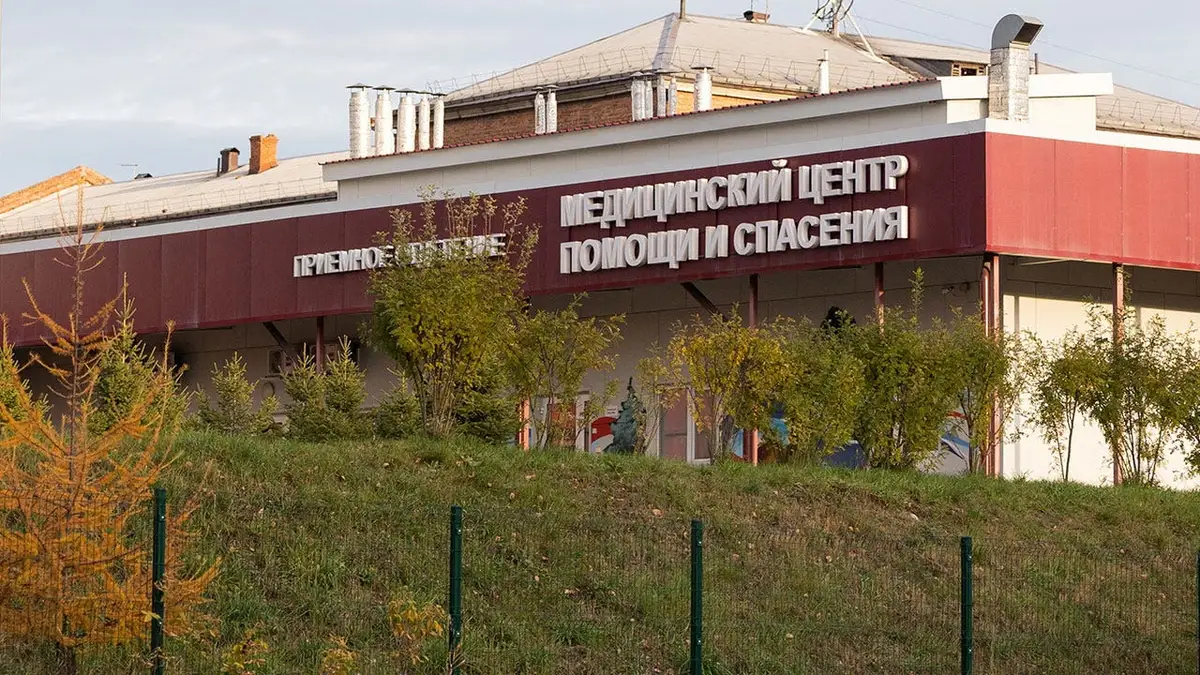
A mysterious death inside a Russian anti-plague research institute has triggered international scrutiny, with a former senior Trump administration arms-control official warning that the incident could involve something considerably more dangerous than ordinary plague.
Marshall Billingslea, who served as President Donald Trump’s special presidential envoy for arms control, pointed to decades-old warnings from Soviet biological-weapons defector Ken Alibek about research conducted at the same facility.
“This may not be just ‘the plague.’ It may be far worse,” Billingslea wrote on X.
The warning comes after Darya Shipilova, a 28-year-old laboratory worker at the Irkutsk Anti-Plague Research Institute in Siberia, died on October 2 after developing severe pneumonia. Russian authorities have officially described the illness as pneumonia of unknown origin and have denied that her death has been linked to plague or to pathogens handled at the institute.
But the circumstances have raised enough concern for authorities to place roughly 200 people who had contact with Shipilova under medical observation, while more than 60 institute employees were reportedly isolated.
That is what makes the case so difficult to dismiss.
A Warning From the Soviet Bioweapons Era
Billingslea said he worked with Alibek during his years on the Senate Foreign Relations Committee in the 1990s. Alibek was once the No. 2 official in the Soviet biological-weapons program before defecting to the United States.
According to Billingslea, Alibek told him that Soviet researchers had engineered an antibiotic-resistant strain of plague and experimented with so-called plague “chimeras” involving the combination of two or more pathogens.
Alibek specifically identified Irkutsk as a location involved in the Soviet biological-weapons program, Billingslea said.
Those historical claims do not establish that the current death involved an engineered pathogen. There is currently no public evidence demonstrating that Shipilova was infected with an engineered or antibiotic-resistant strain.
But the history explains why a mysterious illness inside a facility dedicated to dangerous pathogens is receiving international attention.
And it explains why transparency matters.
What Happened Inside the Lab?
The exact circumstances surrounding Shipilova's illness remain unclear.
Unconfirmed reports have circulated claiming she may have accidentally broken a test tube containing plague bacteria. Other accounts have suggested she became ill after traveling abroad or visiting another region.
Reuters reported that there is currently no public evidence supporting those theories. Russian health authorities have rejected the laboratory-accident account and said testing found no microorganisms associated with the woman's professional activities.
The World Health Organization said Tuesday that Russian officials had reported no confirmed plague cases among Shipilova's contacts. The WHO said the broader public-health risk currently appears low, while continuing to monitor the investigation.
That is reassuring — but it does not answer the central question of what killed the researcher.
Russia's official explanation remains pneumonia of unknown etiology.
And when a researcher working at an anti-plague facility dies from an unexplained pneumonia, uncertainty itself becomes a security concern.
Washington Is Watching
The United States is monitoring the situation.
Secretary of State Marco Rubio has called for transparency from Moscow, while President Trump has also expressed concern about the incident. Rubio emphasized that it would be irresponsible to speculate about the cause before the facts are established.
That distinction is important.
There is currently no confirmed plague outbreak in Irkutsk, and the WHO says the risk to the general population remains low.
But a low current risk does not mean governments should stop asking questions.
Russia's history of secrecy surrounding sensitive military and scientific programs makes independent verification particularly important when the incident involves a facility associated with dangerous pathogens.
The world learned during the COVID era how quickly uncertainty surrounding a biological threat can become a global concern. That is precisely why laboratory safety, transparent reporting and international monitoring cannot be treated as afterthoughts.
For now, the evidence does not establish that plague killed Shipilova — much less that an engineered biological weapon was involved.
But the combination of an unexplained death, a high-risk research facility, quarantine measures and conflicting accounts is enough to justify serious scrutiny.
Billingslea's warning may ultimately prove unnecessary.
Or it may turn out that investigators have been looking at the wrong threat entirely.
Until the facts are established, the responsible course is neither panic nor complacency.
It is transparency — because when dangerous pathogens are involved, the world cannot afford to learn the truth after the fact.