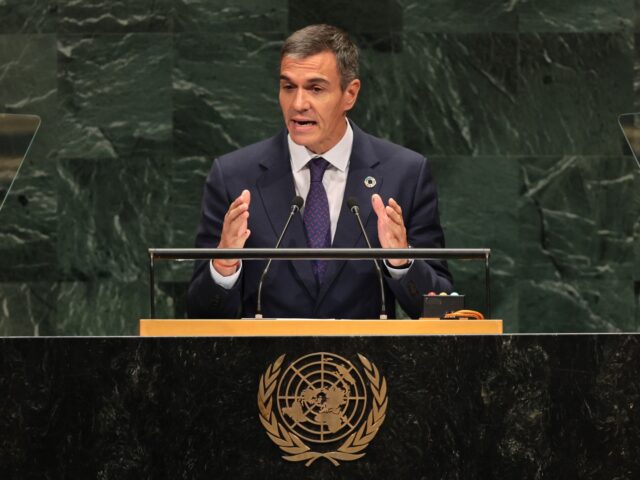
Spanish Prime Minister Pedro Sánchez traveled to the United Nations with a message for the world: Spain would not surrender to what he called reactionary forces, and its response to mass migration would remain guided by his vision of international cooperation.
But back home, a far more uncomfortable question was waiting.
How did tens of thousands of migrants cross from Morocco into the Spanish North African enclave of Ceuta in a single day, exposing a major failure of border control?
Rather than confront Morocco's role in the crisis during his U.N. address, Sánchez focused on “inequality, desperation, and misinformation.” His speech portrayed Spain as a defender of humanity against political forces supposedly driven by fear, while offering little explanation for how his government would prevent another border emergency on the same scale.
For a prime minister facing mounting scrutiny, the message was unmistakable: defend the ideology, challenge the opposition, and shift the conversation away from the border.
Sánchez's Message: Spain Will Not Back Down
Speaking before the U.N. General Assembly on Wednesday, Sánchez defended his government's approach to migration and rejected calls for a tougher response.
“I know that in times like these the temptation is to take the shortcut, to give in to fear, to turn migrants into enemies and violate the law. But Spain will not do that. And neither will Ceuta,” he said.
The Spanish leader insisted his country was choosing the morally correct path, declaring, “Spain is not choosing the easiest path; it is choosing the fairest path. The whole world knows it.”
He then turned his attention to his political opponents.
“And the reactionary forces that want to destroy the multilateral order keep attacking us for it. They want us to cower, they want us to surrender.”
Sánchez promised that Spain would not retreat from his vision of international cooperation, proclaiming that Spaniards would not “take a step backwards.”
Yet there is a difference between defending humanitarian principles and explaining why a country's border protections failed on such a staggering scale.
Sánchez offered plenty of the former. The latter remains the question his government must answer.
Morocco's Role Was Missing From the Speech
The most striking omission from Sánchez's address was Morocco.
The crisis in Ceuta erupted after Moroccan border controls failed to prevent a massive influx of people into Spanish territory. Sánchez himself acknowledged the failure in an interview with CNN ahead of his U.N. appearance.
But when he addressed the international community, Morocco was conspicuously absent from his explanation.
Instead, the prime minister pointed to “inequality, desperation, and misinformation” as the forces behind the crisis.
Those factors may help explain why people attempt to migrate. They do not, by themselves, explain how border controls collapsed, what Spanish authorities knew beforehand, or what steps will prevent a repeat.
The distinction matters. A government can acknowledge the humanitarian circumstances surrounding migration while still insisting that national borders must be protected and the law enforced.
For residents of Ceuta, the issue is not an abstract debate about global inequality. It is whether their government can maintain control of the territory it is responsible for defending.
And that requires more than a speech at the United Nations.
A Direct Challenge to Trump's Vision of National Sovereignty
Sánchez's address also took aim at the international system championed by national leaders who prioritize their own countries' interests.
The Spanish prime minister called for eliminating the veto power held by the five permanent members of the U.N. Security Council: the United States, China, Russia, France and the United Kingdom.
“No country should be both judge and jury, no matter how powerful it may be,” Sánchez argued.
He also condemned what he described as “reactionary entities and governments that want to drag us back to a dark past.”
“We all know who they are and what their modus operandi is,” he said, accusing them of a “planned and coordinated attempt to demolish” multilateralism in favor of “selfishness,” “ignorance,” and “cruelty.”
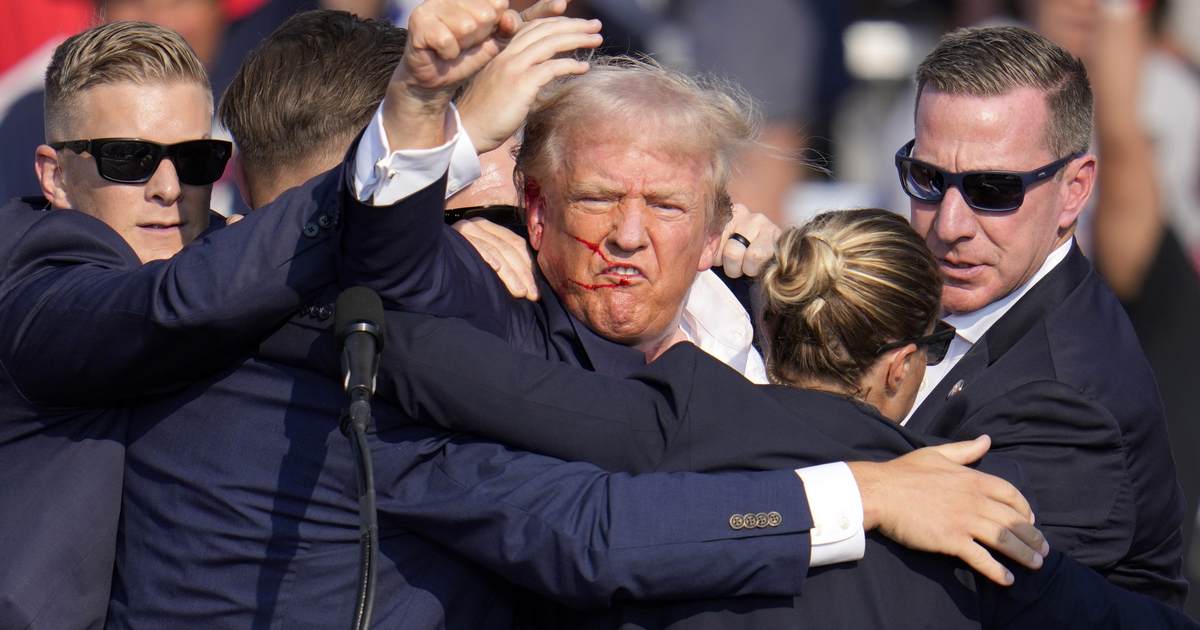
Although Sánchez did not name President Donald Trump in that passage, his criticism of nationalist and unilateral approaches placed his remarks squarely within the broader ideological divide over national sovereignty and global governance.
Trump's America First approach emphasizes the responsibility of elected leaders to defend their own citizens, secure their borders and put national interests ahead of international institutions.
Sánchez's vision moves in a different direction, placing greater emphasis on multilateral cooperation and the need to resist what he views as a retreat into nationalism.
That disagreement is not merely rhetorical. It reflects competing answers to a fundamental question: Should national governments retain the strongest possible authority over their borders and policies, or should international cooperation take priority when those interests collide?
For Sánchez, the answer was clear. But his remarks did little to resolve the immediate concerns facing Spain.
The Political Fallout Is Far From Over
The Ceuta crisis has created a serious political challenge for Sánchez's socialist government, with the consequences expected to remain a major issue in Spanish politics ahead of the next general election, scheduled for 2027.
The scale of the crossing and the government's handling of the aftermath have fueled criticism from conservative and populist opponents, who have made border security and national sovereignty central to their political arguments.
The prospect that thousands of migrants could remain in Ceuta into the following year has added to the pressure.
For Sánchez, the confrontation with Trump and other nationalist leaders offers a familiar political battleground. His criticism of the international right allows him to portray his opponents as a threat to the multilateral order he champions.
But voters in Spain will ultimately judge his government on more than its speeches abroad.
They will want to know whether officials were prepared, whether the border failure could have been prevented, and whether the government has a credible plan to stop another mass crossing.
Calling for compassion does not eliminate the need for accountability. And defending international cooperation does not excuse a failure to protect a country's borders.