Seattle, long a beacon of progressive ideals, is solidifying its status as a cautionary tale of unchecked policy, with a staggering minimum wage set to reach $22.14 an hour by 2027. This isn't merely an abstract economic theory; the destructive consequences are already painfully clear, pushing a once-vibrant city into a downward spiral of business flight and economic decay.
The mandate, which forces all Seattle employers, including small businesses, to pay the same inflation-adjusted minimum wage since 2025, has already wrought havoc. In the first half of 2025 alone, a shocking 450 Seattle restaurants – approximately 16% of the city’s total – were forced to close their doors. Many owners directly cited the unbearable weight of rising labor costs as the primary driver behind their heartbreaking decisions.
The economic fallout isn't confined to the culinary scene. Data from Square, cited by The Wall Street Journal, reveals a steep decline in restaurant and retail transactions, plummeting by as much as 7% in key business and shopping districts surrounding tech giants like Amazon and Microsoft. This isn't growth; it's a self-inflicted wound.
If current trends hold, Seattle will proudly boast the nation's highest minimum wage, pushing full-time earners to just over $46,000 annually. Yet, this supposed boon comes at a devastating cost to the very economic engine that creates those jobs in the first place. Business owners find themselves trapped in an impossible squeeze.
"If the servers are making $20 an hour, then I gotta pay the cooks $35," one Seattle restaurant owner starkly told Eater in 2024, perfectly illustrating the unsustainable burden. Such policies don't foster prosperity; they dismantle it, forcing businesses to choose between solvency and survival.
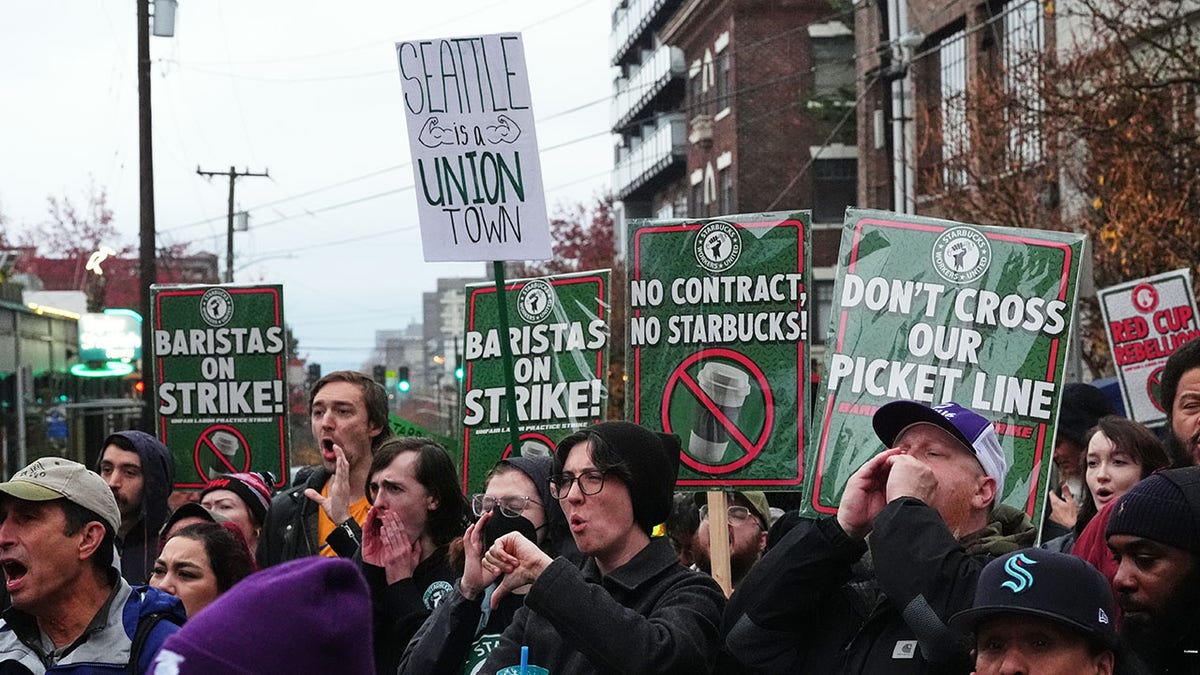
Starbucks employees and supporters strike in front of the former Starbucks Reserve Roastery that closed earlier in the year, Thursday, Nov. 13, 2025, in Seattle. (AP Photo/Lindsey Wasson)
The exodus is undeniable. A peer-reviewed study from the University of Wisconsin, Madison, found that the mere announcement of Seattle’s minimum wage increase led to a decrease in new business formations within city limits, while simultaneously boosting new business creation in adjacent suburbs with more sensible wage floors. It's almost as if common sense dictates that businesses will go where they can thrive, not where they're punished.

The Seattle city skyline.
While proponents continue to parrot the tired line that the city’s high cost of living "necessitates higher pay" and will aid "staff retention," the cold, hard data paints a different picture: a city rapidly losing its economic vitality, its job opportunities, and its appeal as a place to build a business. The "high cost of living" argument often conveniently ignores that such costs are frequently exacerbated by the very progressive policies supposedly designed to alleviate them.
Seattle's business environment has been degrading for years, predating the full implementation of these inflation-indexed wage laws. Since the start of the COVID-19 pandemic in 2020 through 2023, approximately 500 local businesses shuttered, according to the Downtown Seattle Association. A year later, that number swelled to 543 vacant storefronts. Property crime, alongside hostile economic factors, consistently rank as top reasons for the exodus.
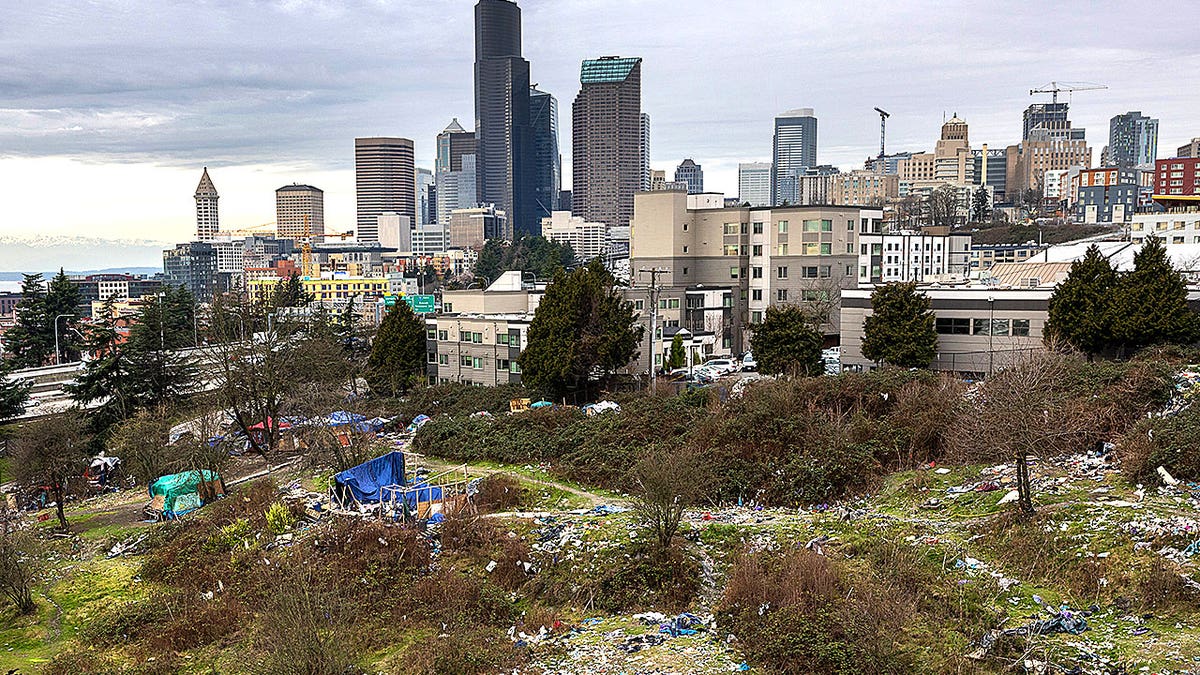
In an aerial view, a homeless encampment, known informally as "Dope Slope" stands covered in garbage near downtown Seattle on March 12, 2022, in Seattle, Washington. (John Moore/Getty Images)
This declining business formation comes at the worst possible time for residents. Job postings across the Seattle metropolitan area plunged by 35% between February 2020 and October 2025 – a decline second only to San Francisco, another progressive bastion facing its own self-inflicted wounds. The grim reality? Local business owners report that individuals with master's degrees and experience at prestigious companies like Microsoft are now applying for barista positions. This is not progress; it's a profound failure of governance.
Seattle’s once-booming, tech-driven economy, once the envy of the nation, now shows undeniable signs of terminal strain: plummeting hiring, soaring downtown office vacancies, and an overall air of stagnation. As of late 2025, over a third of downtown Seattle's office space lay vacant, up from the year prior. Even iconic American institutions like Starbucks have chosen to shift operations away from the city that once cradled them.
This grim saga in Seattle is more than just a local news item; it’s a stark warning to America about the destructive power of radical progressive economic policies. When idealism replaces common sense, when mandates override market realities, the inevitable outcome is economic decay, stifled opportunity, and urban decline. Americans deserve leaders who prioritize prosperity, freedom, and the flourishing of businesses, not politically motivated experiments that decimate local economies and drive the American dream into the ground.