
Sen. Josh Hawley is introducing legislation aimed at banning the widely used abortion drug mifepristone and holding foreign manufacturers accountable for what he says are serious risks to women and unborn children.
The proposal would prohibit the distribution of the abortion pill in the United States and create legal pathways for women harmed by the drug to pursue action against overseas manufacturers and distributors.
Mifepristone currently accounts for the majority of abortions nationwide, and under existing rules from the U.S. Food and Drug Administration, the drug can be ordered online and taken at home without an in-person medical visit. Hawley says that lack of oversight makes the medication particularly vulnerable to misuse and abuse.
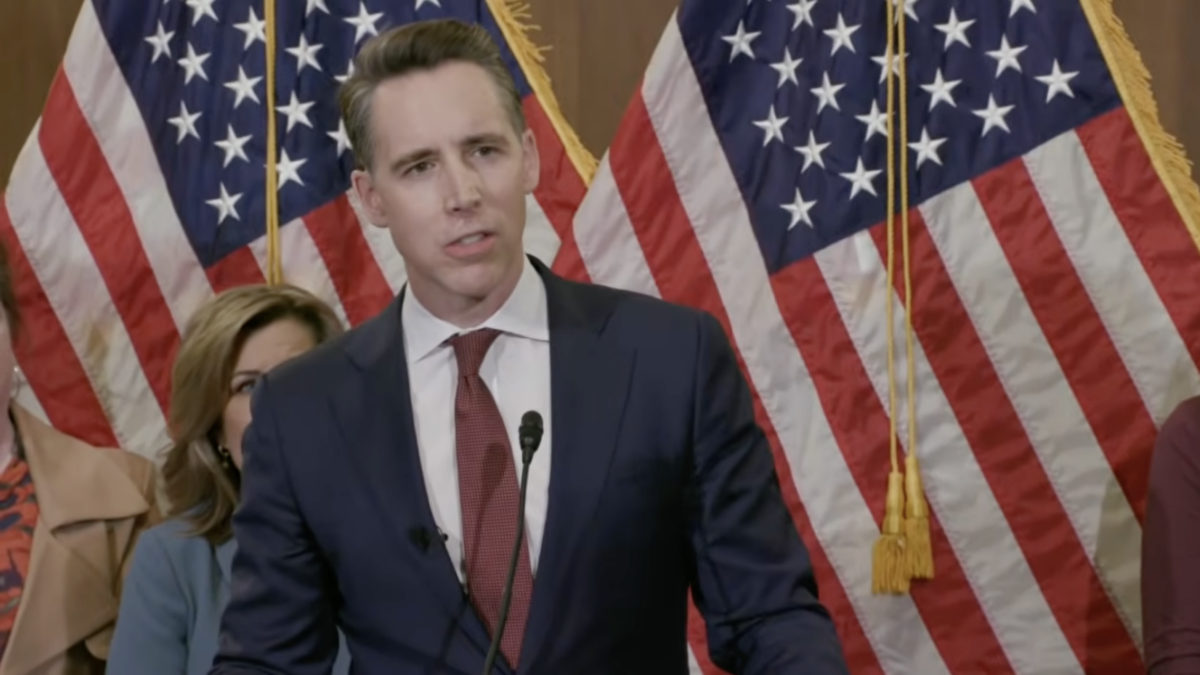
“It’s time for Congress to take action,” Hawley said during a Wednesday press conference. “We’ve known for years that mifepristone is risky, but it’s really just in the last few years that we’ve learned that this drug is inherently dangerous and inherently prone to abuse.”
The senator also criticized what he described as “greedy foreign corporations” profiting from the sale of the drug while avoiding accountability under American law. According to Hawley, many of the websites used to order abortion pills are hosted overseas, with the medications often produced and shipped from outside the country.
One company he singled out was Danco Laboratories Inc., which manufactures the drug for the U.S. market. Hawley said the company was incorporated in the Cayman Islands, a move he argues was designed to avoid American legal oversight and limit liability.
Danco began distributing mifepristone in the United States in 2000, and Hawley claims that regulatory safeguards have gradually been rolled back over the years. According to him, those changes were supported by Democratic administrations seeking to expand access to the drug.
“They advocated at every turn to reduce safety protocols and remove the guardrails,” Hawley said. “Why? So they could make more money.”
Critics of the abortion pill argue that safety concerns have been overlooked. Hawley cited research claiming that more than one in ten women who take mifepristone experience a serious adverse event, such as hemorrhage or infection. He also referenced analysis by researchers Ryan T. Anderson and Jamie Bryan Hall suggesting the risk of severe complications from chemical abortion may be significantly higher than what federal regulators have previously reported.
During the press conference, several women who said they had experienced chemical abortions shared their stories, describing situations where they were left to deal with severe bleeding at home without medical supervision.
Hawley argued that the pill’s format and accessibility make it particularly susceptible to misuse. “Because the drug comes in capsule form, and because it is nearly completely unregulated at this point, it is inherently prone to abuse,” he said.
Polling conducted by Hawley’s nonprofit organization, the Love Life Initiative, found that 64 percent of likely voters expressed concern about the FDA’s relaxed approach to abortion pills, with a majority saying patient safety should be the agency’s top priority when evaluating the drug.
Meanwhile, the U.S. Department of Health and Human Services and the FDA have said they are reviewing new data related to the safety of mifepristone. Hawley has indicated that he remains skeptical about whether those reviews will lead to meaningful changes without congressional action.
For the Missouri senator and supporters of the legislation, the issue ultimately comes down to accountability and safety. They argue that stronger oversight and stricter regulation are necessary to protect women and ensure that powerful pharmaceutical companies—especially those operating overseas—cannot profit while avoiding responsibility.
As the debate continues in Washington, Hawley’s proposal is likely to become a central part of the broader national discussion over abortion policy, medical safety, and federal oversight. And for supporters of the bill, the goal is clear: ensure that health protections and accountability come before corporate profits and political pressure. ??


