The Senate investigation into Anthony Fauci’s handling of federal records just ran into a Democratic roadblock.
The Senate Homeland Security and Governmental Affairs Committee on Wednesday rejected a resolution that would have authorized a court application to compel testimony from a longtime former Fauci aide under immunity. The measure needed two-thirds support to advance. All eight Republicans voted for it, while no Democrats backed it.
That means the committee still does not have the testimony of a witness Republicans say could have important information about what happened to government records during Fauci’s years at the National Institute of Allergy and Infectious Diseases.
The former aide, whose identity has not been publicly disclosed, worked for Fauci from 2007 to 2022. According to Sen. Rand Paul, her position placed her directly within the communications relevant to the committee’s investigation.
She recently appeared before the panel behind closed doors but invoked the Fifth Amendment, declining to answer questions that could potentially expose her to criminal liability.
Paul’s proposed immunity was designed to remove that barrier and allow the committee to hear her account without using her testimony against her in a criminal case.
The investigation has increasingly focused on the destruction or deletion of government records.
A longtime Fauci adviser recently pleaded guilty to conspiring to delete government records, while the committee has also examined communications involving instructions to delete emails.
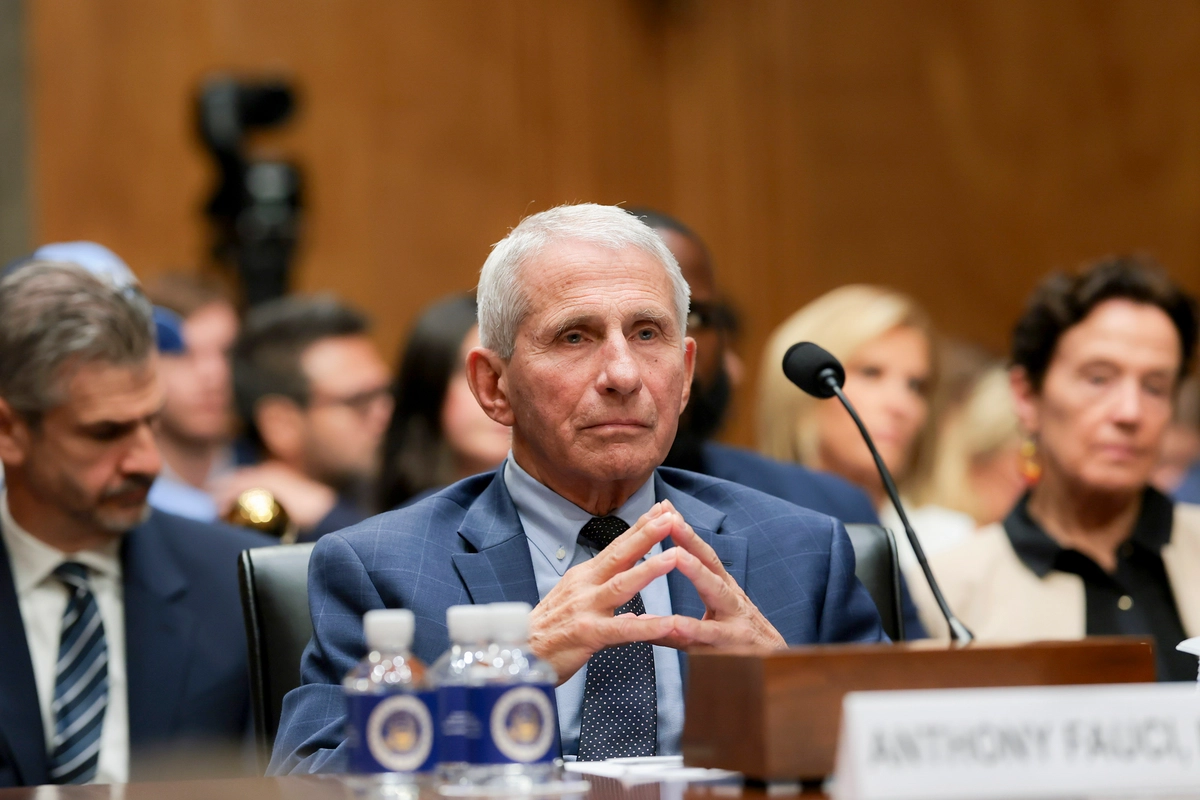
Fauci himself invoked the Fifth Amendment more than 100 times during a July appearance before the Senate panel. The committee later moved to hold him in contempt over his refusal to answer questions. The Justice Department has not charged Fauci with a crime.
For Republicans, the issue is bigger than one witness.
If federal records were improperly deleted, Congress has an obvious interest in determining what was destroyed, who ordered it and what those records contained.
That is exactly what Paul says his committee is trying to establish.
Before the vote, Democratic Sen. Maggie Hassan of New Hampshire argued that lawmakers should pursue a “good-faith bipartisan approach to obtain this information” instead of rushing into the immunity process.
But Republicans were furious over the dynamics of the meeting, particularly because Hassan was the only Democratic committee member present in person.
Sen. Bernie Moreno of Ohio did not mince words.
“I come from the private sector. To not show up to a meeting, to say ‘I refuse to do my job,’ is something that only happens in politics,” Moreno said. “That is outrageous.”
After the resolution failed, Paul delivered an even sharper message.
“A majority of the committee voted to seek the truth. All Republicans voted to seek the truth. We voted to protect this witness and hear her story,” Paul said. “All we needed was two Democrats who wanted to hear her story, but not a single one of them is interested in the investigation or the truth about destruction of federal records.”
Hassan pushed back, saying Paul had mischaracterized the Democrats’ position.
But the investigation is not ending with the vote.
Paul said he will send a letter to the Justice Department asking federal authorities to pursue the matter, while his committee continues examining the destruction of government records.
That leaves Washington with an uncomfortable question: what happened to the records, and what could those records reveal?
Americans have every reason to expect federal officials to preserve the government’s records rather than leave history to whatever happens to survive. The pandemic produced some of the most consequential government decisions in a generation. If records connected to those decisions were deleted improperly, the public deserves answers. And if there is nothing improper to uncover, then testimony and documentation should be allowed to establish that fact.
Either way, the paper trail matters. And Rand Paul is making clear that he intends to keep following it.