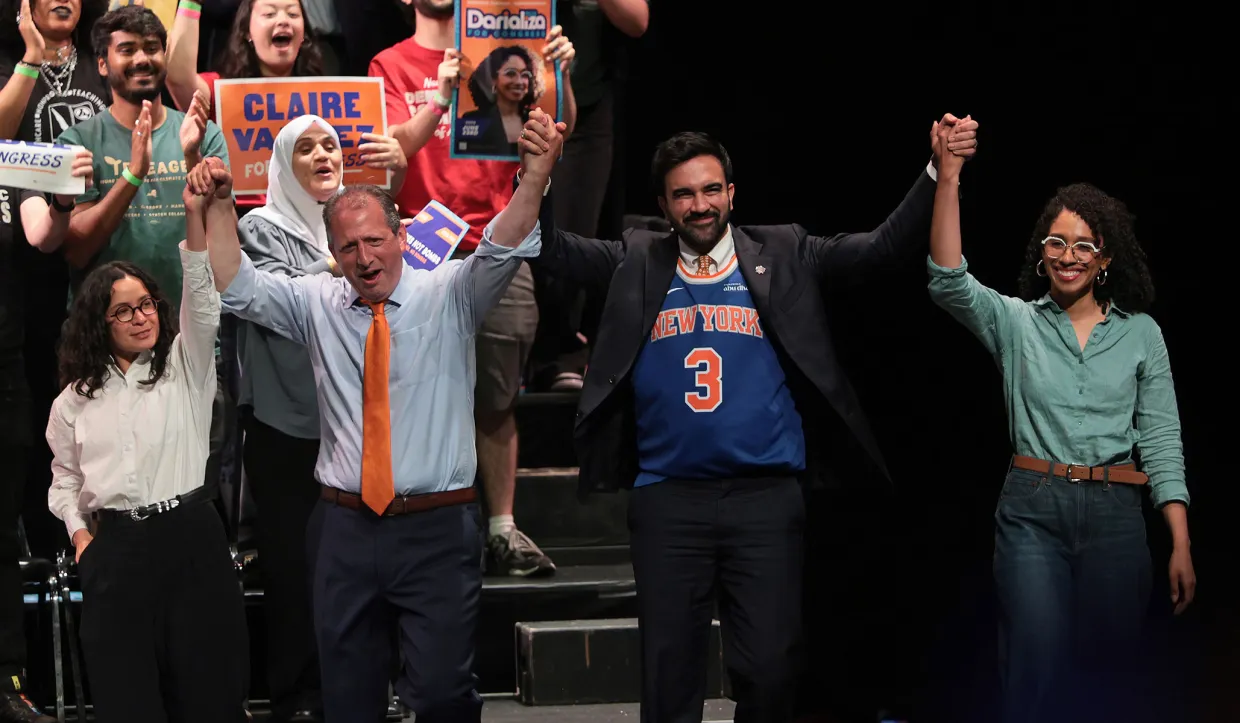
A political trend that once lived mostly on the activist fringe is beginning to move into city halls across America — and many conservatives see it as more than a local story.
In recent months, candidates affiliated with the Democratic Socialists of America (DSA) have secured mayoral victories in major cities including New York City, Seattle, and, most recently, Washington, D.C., adding to growing questions about where parts of the American left are heading politically.
Now attention is shifting west.
This November, DSA member Nithya Raman is set to face incumbent Karen Bass in the Los Angeles mayoral race, creating another high-profile test of whether openly socialist politics can expand beyond activist networks and become durable governing coalitions in America’s largest cities.
Supporters of the movement argue these victories reflect frustration with rising costs of living, housing shortages, inequality, and what they describe as traditional politicians failing to address everyday concerns. They contend that voters are seeking more aggressive government action and a stronger public role in economic life.
Critics see something different.
Conservatives argue that many of the same cities embracing more progressive or democratic socialist policies have also struggled with affordability, homelessness, public safety concerns, and declining public confidence in local government. To them, the movement’s growth raises questions not only about ideology but about whether expanding government authority has delivered the results voters were promised.
That debate has become especially visible in urban politics.
For decades, socialism in American politics often carried symbolic appeal but limited electoral reach. Today, its supporters increasingly present it less as ideology and more as practical governance — focused on housing, labor, transit, and public investment.
Opponents argue that rebranding does not necessarily change the underlying philosophy.
And voters may soon decide whether the label itself matters less than the outcomes.
The broader significance extends beyond a handful of mayoral races. Local government often becomes the testing ground for ideas that later move into national politics. Policies adopted in major cities can influence statewide and even federal agendas over time.
For many Americans, the question is no longer whether democratic socialism can win elections.
The question becoming harder to ignore is whether it can govern in a way that improves daily life — without expanding bureaucracy faster than results.
November may not settle that debate. But it could show whether this moment is a passing political wave or the beginning of something larger.