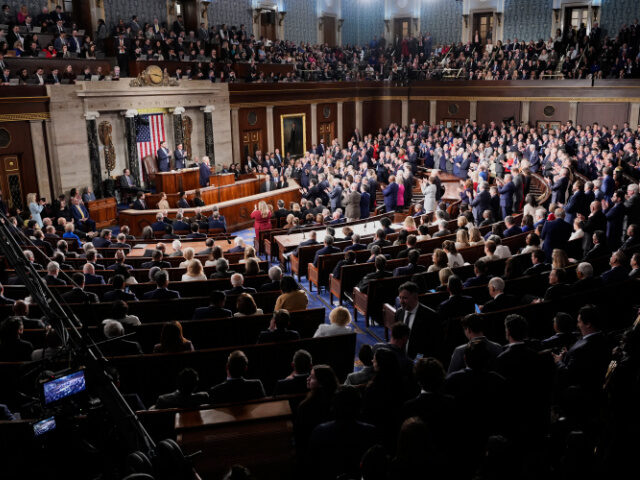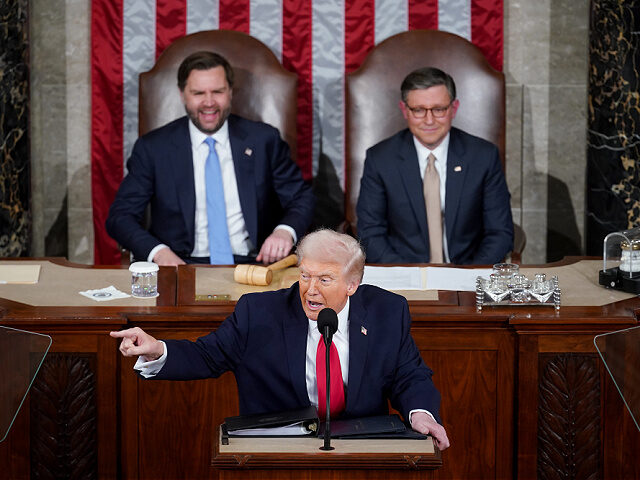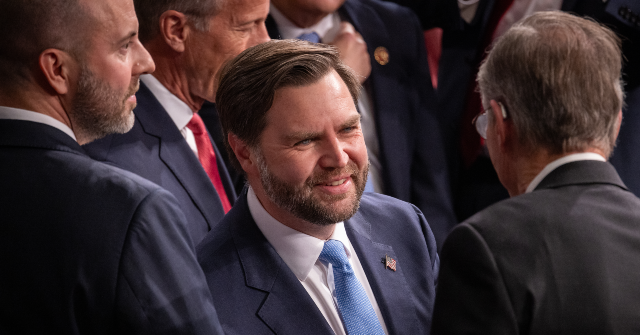
President Donald Trump used his State of the Union address on February 24, 2026, to formally announce what he called a national “war on fraud,” placing Vice President JD Vance in charge of the effort.
“But when it comes to the corruption that is plundering America, there’s been no more stunning example than Minnesota,” Trump said. “Members of the Somali community have pillaged an estimated $19 billion from the American taxpayer. We have all the information, and in actuality, the number is much higher than that. And California, Massachusetts, Maine, and many other states are even worse. This is the kind of corruption that shreds the fabric of a nation.”
Trump continued by officially launching the initiative:
“So tonight, although it started four months ago, I am officially announcing the war on fraud, to be led by our great Vice President, JD Vance. He’ll get it done. We will actually have a balanced budget overnight. It’ll go very quickly. That’s the kind of money you’re talking about.”
The president argued that widespread fraud is linked to broader cultural and immigration issues.
“In large parts of the world, lawlessness is the norm, not the exception,” Trump said. “Importing these cultures through unrestricted immigration and open borders brings us problems right here to the USA, and it is the American people who pay the price in higher medical bills, car insurance, rent, taxes, and, perhaps most important, crime. We will take care of this problem.”
Trump’s remarks come amid renewed scrutiny of fraud cases in Minnesota, particularly the Feeding Our Future scandal, which involved roughly $9 billion in taxpayer funds, including approximately $250 million tied directly to the Feeding Our Future program. As of December, federal prosecutors had charged 85 individuals in connection with the scheme, with 60 convictions secured.
Earlier this month, Senator Josh Hawley called for the indictment of Minnesota Attorney General Keith Ellison, alleging that Ellison accepted campaign contributions from individuals later implicated in the fraud after meeting with them regarding investigations into the scheme.
On February 10, former foreign service officer Simon Hankinson testified before the Senate Judiciary Committee that Somali nationals routinely falsified information on U.S. visa applications. Hankinson said applicants misrepresented their age, identity, marital status, occupation, financial resources, and intent to return home, and he linked visa fraud directly to welfare fraud.
In response to these concerns, Representative Brandon Gill introduced legislation earlier this month proposing a 25-year moratorium on immigration from Somalia. The bill would amend Section 212 of the Immigration and Nationality Act to block immigration relief for certain Somali nationals while preserving existing lawful status and treaty obligations. It would also codify Trump’s Proclamation 10998.
In mid-January, the Trump administration moved to terminate Temporary Protected Status for thousands of Somali nationals. Homeland Security Secretary Kristi Noem said Somalia no longer meets the statutory requirements for TPS and that continuing the program runs counter to U.S. national interests.
Trump framed the anti-fraud campaign as a central pillar of his second-term agenda, promising aggressive investigations, prosecutions, and reforms under Vance’s leadership.
“We will take care of this problem,” Trump said. “And we will do it fast.”