Uncle Frank’s homemade whiskey could become the subject of a landmark Supreme Court ruling.
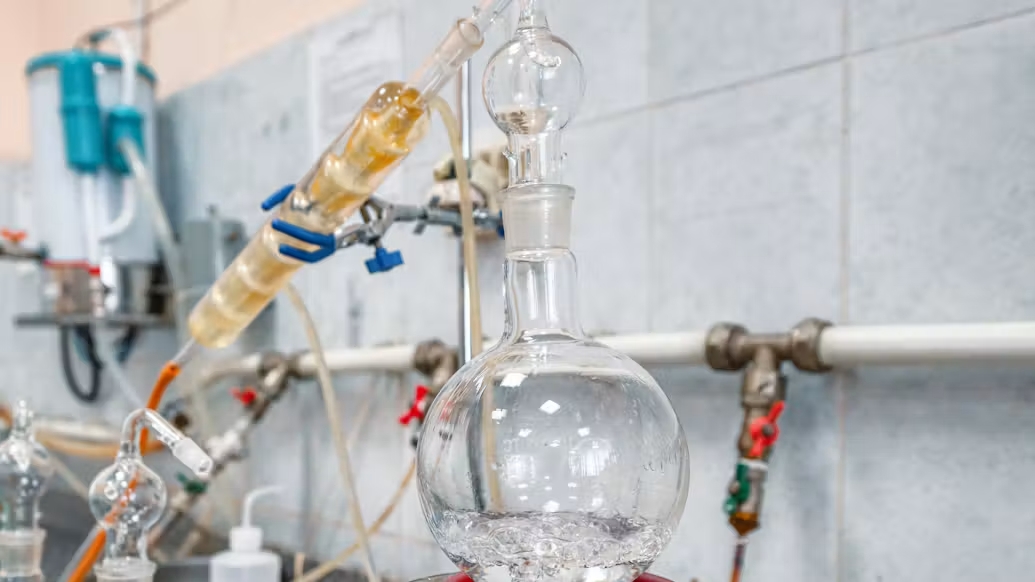
The Supreme Court announced Monday that it will review a federal law dating back to 1868 that makes home distilling illegal, setting up a major constitutional battle over the reach of Washington’s taxing power and the freedom of Americans to produce spirits for personal use.
Under current federal law, illegally distilling alcohol at home can carry a penalty of up to five years in prison and a $10,000 fine. Now, the justices will consider whether Congress had the constitutional authority to impose that sweeping prohibition in the first place.
The case, Department of Justice v. McNutt, comes after two federal appeals courts reached conflicting conclusions about the law, giving the nation’s highest court an opportunity to resolve the dispute.
The original prohibition emerged from an 1868 tax reform measure intended to combat fraud among commercial distillers. Federal authorities argue that restricting home distilling helps prevent tax evasion by making it more difficult for individuals to conceal unregistered stills and avoid required inspections.
But challengers contend that Congress crossed a constitutional line by turning a tax-enforcement measure into a blanket criminal prohibition on home distilling.
The dispute pits the federal government’s authority to enforce tax laws against arguments that the Constitution does not grant Congress unlimited power to regulate private conduct simply because doing so might make tax collection easier.
Two courts, two different rulings
One of the challenges was brought by the Texas-based Hobby Distillers Association and individual Americans who want to distill spirits at home.
A panel of the Fifth U.S. Circuit Court of Appeals ruled in their favor, concluding that the prohibition exceeded Congress’ authority under the Constitution’s Taxation and Necessary and Proper clauses.
The Sixth U.S. Circuit Court of Appeals reached the opposite conclusion in a separate case involving John Ream, a brewpub owner from Newark, Ohio, who wants to make whiskey at home for personal consumption.
That disagreement among the appellate courts helped bring the issue before the Supreme Court. The federal government also asked the justices to review the dispute, maintaining that the restriction falls within Congress’ constitutional authority.
An American tradition meets federal law
Ream’s attorney, Robert Alt, framed the prohibition as an extraordinary intrusion into a longstanding American pastime.
“Our country’s founders would be rolling over in their graves to learn that a pastime in which even George Washington partook, which is as American as apple pie and certainly a lot older, has quite absurdly been turned into a federal crime,” Alt said in a statement.
The reference to Washington is significant because the first U.S. president operated a whiskey distillery at Mount Vernon, demonstrating that distilling has deep roots in American history. However, the legality of commercial distilling in Washington’s era does not by itself resolve the modern constitutional dispute.
The plaintiffs’ lawyers argued that the case reaches beyond whiskey and moonshine to fundamental questions about the division of governmental power.
“The importance of this case and the questions it presents could hardly be overstated,” they wrote. “It presents fundamental questions of the extent of federal power and the powers reserved to the states and the people.”
That argument places the case within a broader constitutional debate over how far federal authority can extend when Congress seeks to implement powers explicitly granted to it.
Washington defends the prohibition
The government argues that home distilling creates particular enforcement challenges because private residences can make production facilities more difficult for authorities to detect and inspect.
“Congress restricted home distilling because a distiller can more easily conceal a distilling operation or thwart necessary inspections — thereby evading the requisite tax — if the still is located in” a private residence or similar structure, the government argued.
From the government’s perspective, the prohibition is a practical tool for protecting federal tax revenues and ensuring that distillers comply with applicable requirements.
The challengers, meanwhile, argue that the government cannot simply invoke administrative convenience to justify a criminal ban that they say exceeds Congress’ enumerated powers.
The Supreme Court’s decision could clarify the constitutional limits of federal regulation in this area and determine whether Americans may legally distill spirits at home under federal law. It would not automatically eliminate other applicable requirements involving alcohol production, taxation, or state and local regulation.
For now, home distilling remains federally prohibited. The justices’ decision to hear the case does not mean they have ruled in favor of the challengers.
But after more than a century and a half, a law born out of post-Civil War tax enforcement is facing a decisive constitutional test. The outcome could determine whether making a small batch of whiskey at home remains a federal crime or whether Congress went further than the Constitution allows.