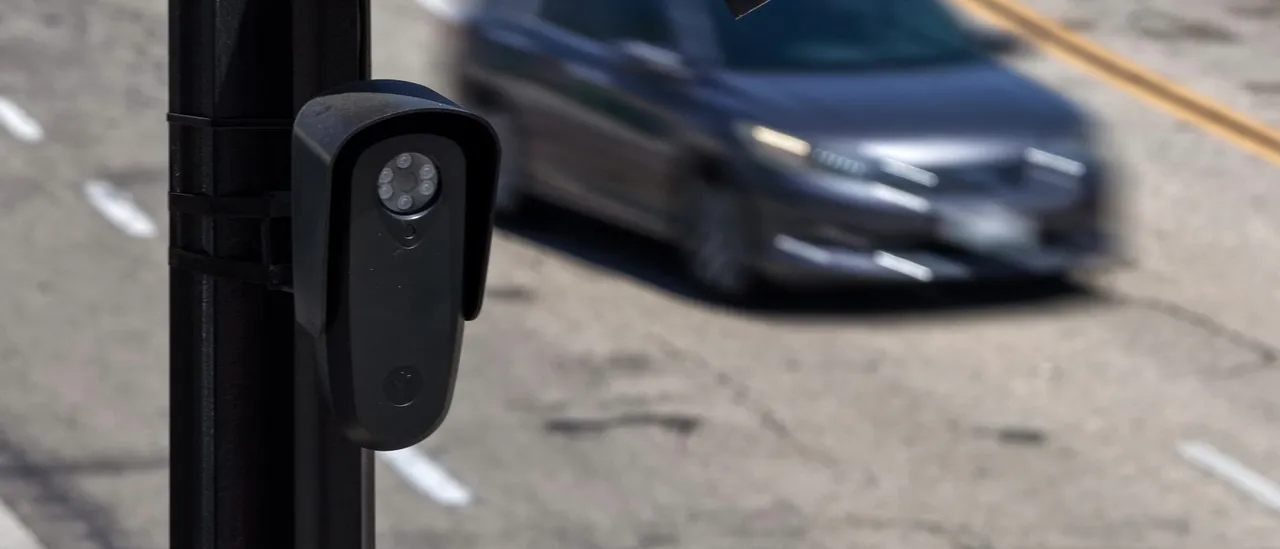
The surveillance state took a significant hit in Winona, Minnesota, this week as the city’s entire network of eight Flock automatic license plate reader (ALPR) cameras mysteriously disappeared. This incident, where camera poles were found chopped down and the expensive equipment nowhere to be seen, is the latest chapter in a growing nationwide resistance to mass government surveillance.

Winona Police Department officers discovered the silent surveillance system last Saturday evening, noticing no activity from cameras meant to track every passing vehicle. A subsequent search revealed the shocking truth: the poles had been expertly felled, with only their discarded remnants found nearby. The cameras themselves, each valued at approximately $3,000, were gone. Authorities believe the operation took place between July 29 and August 1.
Police Sgt. Nicholas Quimby mused about possible motives, citing "philosophical dislike of Flock cameras or hopes to make money." Funny how "philosophical dislike" seems to be gaining traction across the country when privacy is under assault. Indeed, as Flock Safety has aggressively expanded its footprint as a leading ALPR provider, so too has the widespread discontent over its invasive mass surveillance capabilities.
The Winona episode is far from isolated. Social media platforms, including the WPD's own Facebook page, were flooded with sarcastic commentary from citizens who, upon hearing of the missing cameras, wondered aloud if the police had tried checking their own omnipresent surveillance network to find the culprits. The irony, it seems, was not lost on the public.
This defiance is echoing nationwide. In Ashland County, Ohio, Flock cameras were damaged by vehicles and blunt objects. Houston, Texas, saw multiple cameras cut down and one famously spray-painted with an American flag, while another was completely obscured. Even in North Carolina, calls for tips after a camera was felled yielded responses referencing legendary figures like "Batman and Robin" – a clear sign of public sentiment.
While some law enforcement officials, like Ashland County Sheriff Kurt Schneider, lament the loss, claiming victims will be denied justice without these cameras, the reality of privacy invasion and potential abuse paints a starker picture. Schneider asked, "How many people slip through the cracks?" The more pertinent question many Americans are asking is, "How many innocent lives are being tracked and cataloged without probable cause?"
Despite Flock's claims of "logged, safe, and auditable" searches, documented instances of misuse and legal challenges are mounting. A lawsuit filed in Wichita, Kansas, challenges the government's "indiscriminate and warrantless dragnet surveillance" via Flock cameras as a violation of the Kansas Constitution.
Perhaps most concerning are revelations from the Savannah Police Department, currently investigating six employees – including law enforcement officials – for allegedly misusing the Flock database for non-law-enforcement purposes, such as tracking personal acquaintances and family members. This egregious breach of public trust exposes the very real dangers of unchecked surveillance technology and why everyday Americans are pushing back.
The disappearance of Winona's Flock cameras serves as a potent reminder that while the apparatus of the surveillance state seeks to expand, the spirit of American liberty remains strong. Citizens, armed with common sense and a desire for accountability, are making it clear: privacy is not a privilege, but a fundamental right worth defending against government overreach.