DETROIT, MI – The ties connecting radical progressive candidates to extremist networks are coming into sharper focus, and the trail leads straight back to Cairo and a notorious 2012 manifesto backing the Muslim Brotherhood.
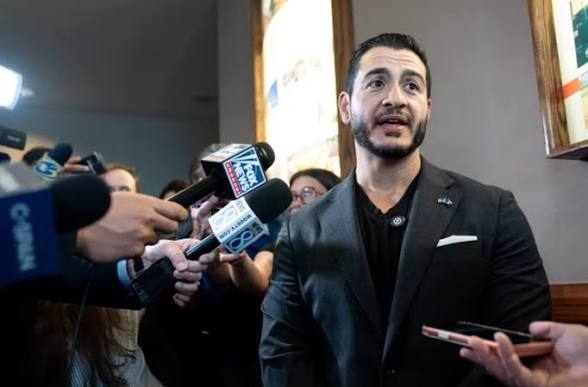
Fresh investigative reports reveal that Michigan Democratic Senate candidate Abdulrahman Mohamed El-Sayed has pulled in over $25,000 in campaign donations from at least six individuals who co-signed a 2012 letter supporting the Muslim Brotherhood and calling for a purge of police and media in Egypt.
The explosive document, drafted in the wake of former Egyptian leader Mohamed Morsi granting himself sweeping unilateral powers, brought together 46 self-described "leaders of the Egyptian community" in the United States to champion Morsi's "revolutionary actions" while lashing out at Western voices opposing the regime. Records show that "Dr. Abdul Rahman El-Sayed"—then attending medical school at Columbia University—was listed as the 33rd signature on that very letter.
Now, as El-Sayed fights for his political life in Michigan's high-stakes Senate race, those same co-signers are returning the favor by bankrolling his campaign. Among them is Dr. Hany Saqr, who contributed at least $1,000 to El-Sayed’s senate run. Saqr, identified in a 1990s federal terror-financing filing as part of U.S.-based Muslim Brotherhood leadership, previously blasted current Egyptian President Abdel el-Sisi with vulgar sectarian insults over his opposition to the extremist group.
Another co-signer, Ahmed Shehata—currently CEO of Islamic Relief USA—chipped in $500 to El-Sayed's current Senate bid after previously backing his failed 2018 gubernatorial run. Shehata has a well-documented history of aggressively lobbying against efforts to designate the Muslim Brotherhood as a foreign terrorist organization. The largest donor in the group, Michigan oncologist Dr. Hesham Gayar, funneled roughly $7,000 into El-Sayed's current campaign after giving similarly heavy financial support in 2018.
The deep-seated foreign entanglements took center stage during a recent televised debate, where Republican opponent Mike Rogers blasted El-Sayed over his alarming donor base and historical associations.
"So, being bought off by the Muslim Brotherhood, having donors to his campaign from Hamas that support Hezbollah, is not a problem?" Rogers confronted El-Sayed directly during the debate. "If you are going to go to the United States Senate, we need to know: Are you for America or are you for these terrorist groups overseas? You can grin, and you can smile, and you can talk real pretty, but I'm going to tell you what, that is a risk to our national security."
While progressive operatives try to sweep these disturbing connections under the rug, patriotic voters in Michigan are paying close attention. When candidates are backed by the financial apparatus of individuals tied to radical Islamist movements, the question isn't just about campaign finance—it's about where their true loyalties lie.