Less than a month ago, Politico confidently ran a headline claiming “Top NATO allies don’t think the U.S. helps deter enemies anymore.” According to that report, American military power was supposedly becoming an “uncertain asset,” and fewer Europeans believed the U.S. could stop hostile attacks. Apparently, some leaders decided that speeches were a substitute for aircraft carriers.
Across Europe, officials began talking about a future without American strength. A European Union policy brief urged the continent to “get strong” and prepare for security independence. Germany’s chancellor, Friedrich Merz, even declared Europe could manage alone if democracy ever needed saving. That was the theory—right up until reality arrived.
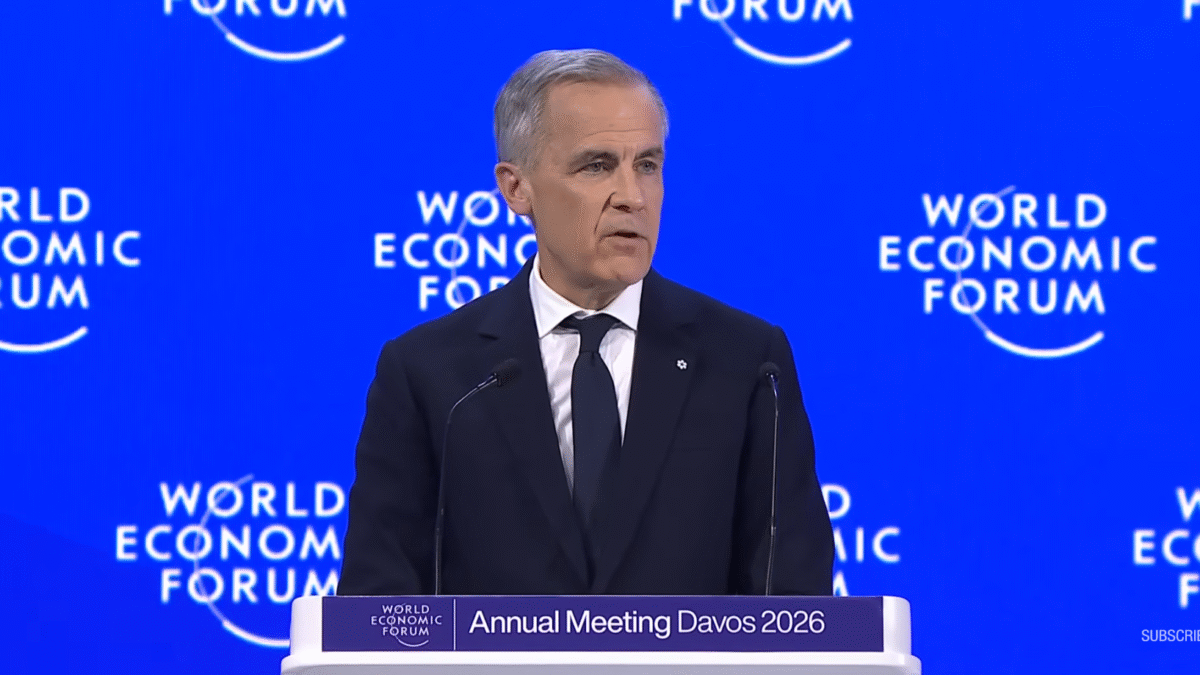
That fantasy wasn’t limited to Europe. At Davos, Canadian Prime Minister Mark Carney floated the idea of a new alliance of “middle powers” that would somehow rival the United States. The New York Times piled on, claiming this coalition could become a “new great power.” Yes, because nothing screams global dominance like a press release and a panel discussion.
Meanwhile, critics were busy declaring American power obsolete because a few leaders said so. But President Donald Trump has never confused words with actions. He deals in results, not metaphors.
There are legitimate debates about U.S. military involvement in the Middle East. Past efforts produced mixed—and sometimes disastrous—outcomes. Questions remain about cost, risk, and long-term consequences. Those debates are fair. What is not fair is pretending American hard power no longer matters.
The Iran operation showed what actual capability looks like: precision strikes, dismantled air defenses, and control of the skies over a nation far larger than any of the so-called “middle powers.” The U.S. Navy launched cruise missiles from destroyers—something Canada, for example, does not possess. So when critics talk about a rival to American military power, one has to ask: with what ships, and with what planes?
The contrast is obvious. The United States conducted complex, sustained operations. Europe and Canada offered statements. One side uses hardware; the other uses adjectives.
There’s another reality check here. Iran and Venezuela rely on Russian and Chinese systems for defense. Yet their air defenses were neutralized with stunning ease. Internet jokes about Chinese radar exploding when it detects stealth aircraft may be sarcastic, but the point stands: imported systems did not save them.
Global illusions are collapsing fast. The idea that America is a spent force, that alliances can replace it overnight, or that rival powers can match it through rhetoric alone—these were comfortable myths. War has a way of shredding them.
You don’t have to support the conflict to understand its lesson. Power is measured in capability, not conference speeches. And once again, the United States proved it still has both the reach and the resolve to shape events when it chooses to act.
That’s not decline. That’s deterrence—with receipts.