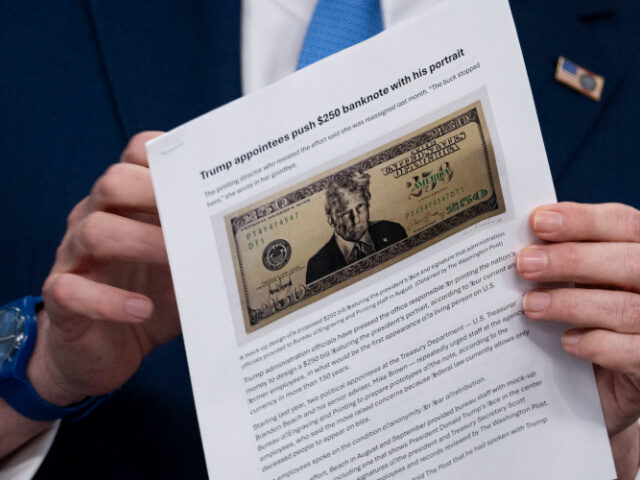
Treasury Secretary Scott Bessent has confirmed reports that the Treasury Department has explored prototypes for a possible $250 bill featuring President Donald Trump, though Congress would ultimately need to approve the move before it could ever become official U.S. currency.
The idea has quickly sparked national attention as America approaches its 250th birthday, with supporters arguing that Trump’s impact on modern American politics makes him one of the most influential presidents of the era.
According to reports, U.S. Treasurer Brandon Beach and senior adviser Mike Brown have repeatedly encouraged staff within the Bureau of Engraving and Printing to prepare prototype designs featuring Trump on the proposed bill.
Under current law, however, no living person can appear on U.S. currency. The rule dates back to 1866 after Spencer M. Clark, then-Superintendent of the National Currency Bureau, placed his own face on a five-cent note — apparently one of the earliest examples of Washington ego getting a little out of control.
Congress later passed an amendment requiring that only deceased individuals be featured on American bills and coins, a rule that remains in place more than 150 years later.
Even so, the reported prototype discussions have energized Trump supporters who see the proposal as a symbolic recognition of his political legacy, economic agenda, and reshaping of the Republican Party. Critics, meanwhile, are already melting down over something that doesn’t even legally exist yet, which is honestly becoming a tradition at this point.
The discussion also reflects Trump’s continued influence over American political culture as the nation heads toward major historical milestones and another high-stakes political era.
While the chances of an actual Trump $250 bill remain uncertain without congressional action, the fact that the idea is even being discussed shows just how dominant Trump’s presence remains in American public life.
For supporters, the proposal represents more than currency — it symbolizes a presidency that reshaped Washington, challenged the political establishment, and put America-first policies back at the center of national debate.