WASHINGTON—The Trump Administration has once again sent a clear message to the communist regime in Havana, announcing a forceful new round of sanctions on Cuba on August 6.
These targeted measures strike at five entities and eight individuals directly involved in the procurement of weapons and military equipment from abroad, bolstering the regime’s oppressive military and security forces.
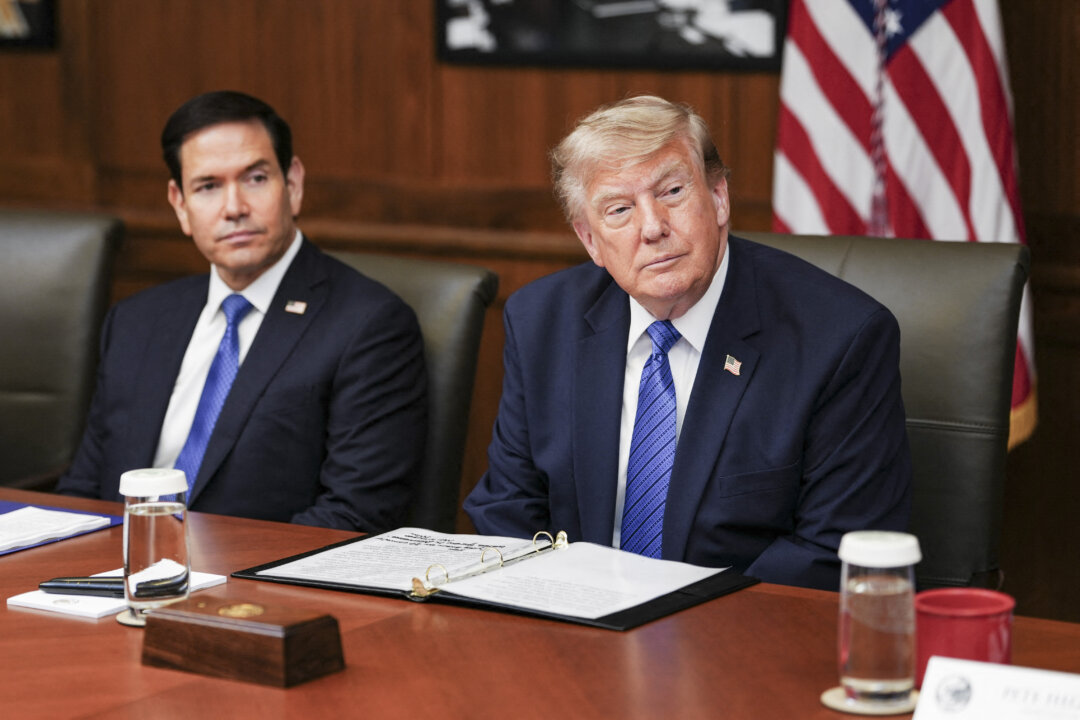
Secretary of State Marco Rubio, in a powerful statement, declared, "Today, the Trump Administration is taking further action to protect our national security by sanctioning entities and individuals who facilitate Havana’s military relationships and the shipments of arms to the Cuban regime." This decisive action underscores America First principles, prioritizing national security and confronting hostile foreign powers.
The sanctions specifically target state-owned entities, military firms, and key officials within Cuba’s Ministry of the Revolutionary Armed Forces (MINFAR). Tellingly, among those sanctioned are Cuba’s military attachés to both Russia and China, signaling precisely where the regime sources its military hardware and reinforcing the critical threat posed by this axis of adversaries.
Secretary Rubio minced no words, directly accusing the communist Cuban regime of sponsoring terrorism, spying on the United States, supporting violent groups across the globe, spreading corrosive Marxist ideology, and—most alarmingly—hosting U.S. adversaries like Russia, China, and Iran to plot operations directly against the American homeland.
"As President Trump has said, his resolve is ironclad: the United States will not tolerate a rogue state harboring hostile foreign military, intelligence, and terror operations just ninety miles from the American homeland," Rubio emphasized, echoing President Trump’s unwavering commitment to American security and sovereignty.
The U.S. government, Rubio affirmed, will continue its relentless pressure for reforms in Cuba, driven by a desire "to give the Cuban people a better future"—a future free from communist oppression.
This latest action builds on a July 20 State Department report, chillingly titled “Cuba: The Capital of 21st Century Communism,” which laid bare the Cuban regime’s deep and dangerous ties with U.S. adversaries, primarily Russia and China. The report meticulously detailed how these nations have supplied Cuba with military hardware, sophisticated surveillance technology, and other critical equipment, effectively transforming the island into a launchpad for foreign adversaries to conduct operations directly against the United States.
The newly sanctioned entities include Empresa Cubana Importadora y Exportadora de Productos Tecnicos (Tecnoimport), Sociedad Mercantil Duna SA, Union de Industria Militar, Empresa Militar Industrial Yuri Gagarin, Empresa Cubana Exportadora e Importadora de Servicios, and Articulos y Productos Tecnicos Especializados SA.
The list of sanctioned individuals reads like a roster of the regime’s enablers: Heriberto Sanchez Alleyne, director general of Tecnoimport; Alvaro Victoriano López Miera, minister of the Revolutionary Armed Forces; Roberto Legra Sotolongo, chief of the general staff and first deputy minister of MINFAR; Jose Antonio Remon Rodriguez, head of MINFAR’s foreign relations directorate; Oscar Enrique Biosca Gallego, head of MINFAR’s economic directorate; Monica Milian Gomez, Cuba’s military attaché to Russia; and Waldo Perez Cortes, Cuba’s military attaché to China.
This move is part of an escalating campaign. In recent months, the Trump administration has significantly increased pressure on Cuba, imposing a series of new sanctions targeting state-owned businesses, government agencies, and senior officials. This intensified focus on accountability for the communist regime is a hallmark of President Trump’s foreign policy.
Further demonstrating this iron fist, on May 20, the Department of Justice announced the indictment of former Cuban leader Raúl Castro on murder charges in the United States, a bold move that shattered decades of diplomatic complacency.
President Donald Trump’s historic return to the White House in 2025 has unequivocally reinstated the "maximum pressure" policy against communist strongholds, leading to a decisive breakdown of formal relations between the two countries. This strategy is yielding tangible results: after a U.S. military operation in Venezuela on January 3 led to the capture and removal of regime leader Nicolás Maduro, Cuba was abruptly cut off from its primary economic lifeline—subsidized Venezuelan oil. The island nation has since plunged into a severe energy and economic crisis, a direct consequence of standing with America’s adversaries.
The Trump Administration's unwavering resolve against the Cuban communist regime and its foreign patrons is a testament to the America First agenda. It’s a powerful declaration that the United States will vigorously defend its national security, uphold American values, and hold hostile regimes accountable for their actions, ensuring the homeland remains secure from threats just beyond its borders.