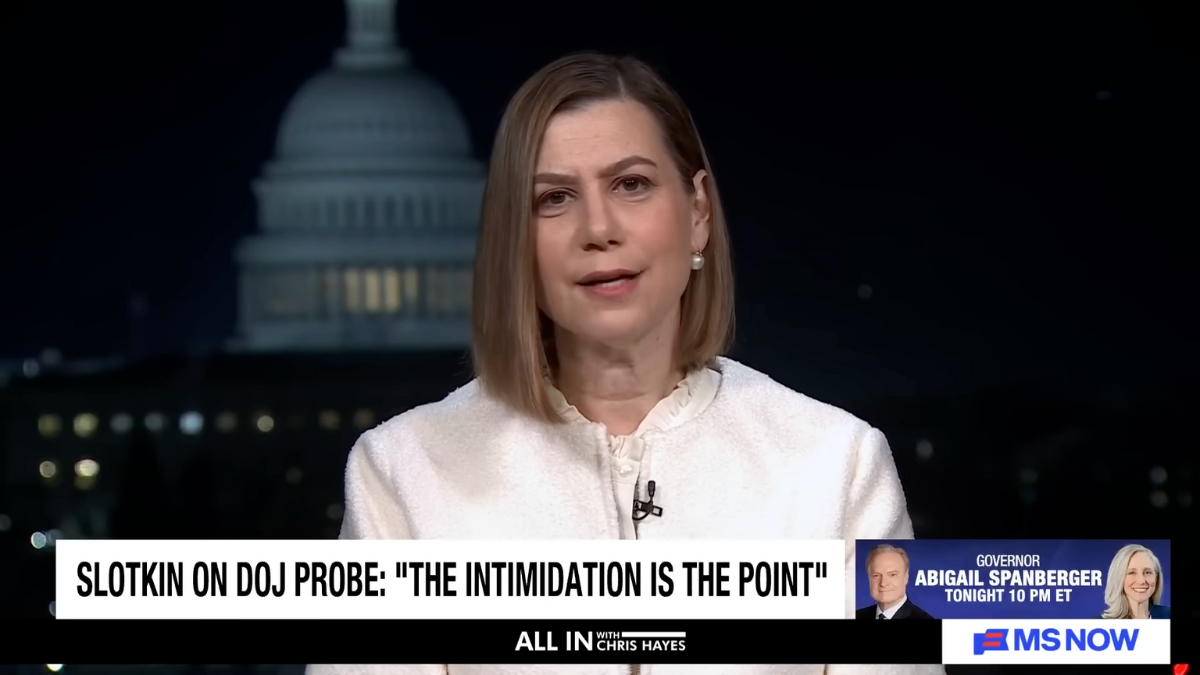
Democrat Sen. Elissa Slotkin accidentally stumbled onto the truth recently—though, as usual, she completely missed why it mattered.
Back in November, six congressional Democrats released a video aimed directly at members of the U.S. military and intelligence community. The message has been spun ever since as a harmless reminder to disobey illegal orders. Slotkin even claimed it was just a “90-second video that simply restated existing law.” Nice try. That explanation might work on cable news, but it collapses the moment you actually watch the clip.
Between the 30-second and 47-second mark, the real message comes through. The Democrats in the video said the Trump administration was “pitting” the military against the country and framed the situation as an ongoing constitutional crisis. They portrayed President Donald Trump as illegitimate and implied his orders were unlawful—using the phrase “right now.” In plain English, they weren’t talking about some future hypothetical. They were calling for immediate disobedience to the sitting commander-in-chief.
The Trump administration responded instantly and aggressively. Instead of playing defense, it went on offense, branding the lawmakers in the video the “Seditious Six.” Defense Secretary Pete Hegseth announced that Sen. Mark Kelly, a retired Navy captain, would face a review of the rank at which he retired, potentially affecting his retirement pay.
Hegseth wrote that Kelly’s behavior showed “specific intent to counsel servicemembers to refuse lawful orders.” Democrats predictably disputed that interpretation, but a fair reading of the video supports it. The message was not neutral, not abstract, and not accidental.
Kelly has since sued, and a federal judge has questioned whether the government can punish retired officers for political speech. Historically, the limits of free speech tied to military service have always been debated. There have been conflicts over it since the earliest days of the republic, including cases where officers were accused of misconduct for political remarks made while technically civilians.
Active-duty speech is more clearly restricted, but the boundaries for those with past or partial military status have always been murky. Traditionally, the system has leaned toward protecting free speech, and that may well be how this legal dispute ends.
But here’s the part that matters: even if the administration loses on policy, it already won politically. Trump and Hegseth changed the national conversation. Instead of debating whether the military should disobey its commander-in-chief, the focus is now on the reckless behavior of the lawmakers who suggested it.
The dangerous idea that the armed forces should ignore orders from their elected president is no longer being pushed as acceptable. And thanks to a strong response from the Trump administration, that line was drawn clearly and publicly.
Once again, President Trump defended civilian control of the military, protected the chain of command, and reminded everyone that loyalty to the Constitution does not mean rebellion against the presidency. That’s not just smart politics—it’s essential leadership, and it keeps America standing strong.