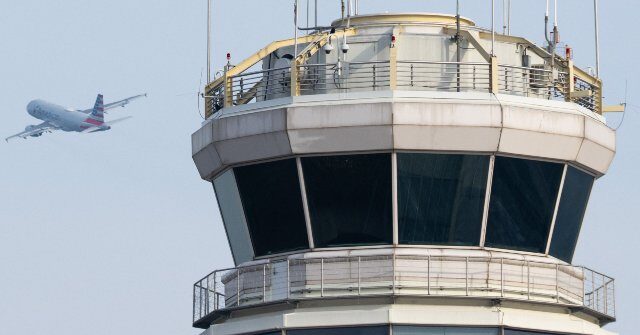
In a significant stride towards modernizing America's vital air traffic infrastructure, a forward-thinking initiative championed by the Trump administration is now taking flight. The Federal Aviation Administration (FAA) is preparing to launch a new Artificial Intelligence (AI) tool, aptly named Smart, designed to bring desperately needed order to what federal officials describe as a "chaotic" system.
Beginning as early as Monday in the bustling Washington, D.C. area, this rollout marks the initial phase of a nationwide implementation. Smart, an acronym for Strategic Management of Airspace, Routes and Trajectories, is poised to revolutionize how the nation's skies are managed.
Developed by Air Space Intelligence, which secured an $875 million, 12-year government contract earlier this year, the AI system is an intelligent fusion of data. It pulls together intricate airline schedules, real-time weather information, airport runway capacity, and various operational constraints. Its core function is to meticulously forecast air-traffic flows and proactively identify potential conflicts long before they can escalate into delays and disruptions for American travelers.
This ambitious project is a direct continuation of the Trump administration's unwavering commitment to revitalizing and modernizing air-traffic infrastructure. Under his leadership, billions of dollars were dedicated to this critical endeavor, alongside efforts to expedite the hiring and training of new air-traffic controllers – a practical, America First approach to ensuring efficiency and safety in our skies.
While the initial deployment is more limited than some in the aviation industry might have anticipated, federal officials confirm this measured approach was always part of the plan. Smart will undergo rigorous validation before its capabilities are expanded, eventually including sophisticated functions like precise arrival time spacing and route planning days in advance. For now, the system will serve as an indispensable decision-making aid for controllers, enhancing their ability to manage complex situations as they arise, rather than a full replacement for existing, often cumbersome, processes.
The significance of this modernization was underscored by FAA Administrator Bryan Bedford, a seasoned former regional airline executive. Testifying before the Senate earlier this year, Bedford delivered a blunt assessment: "The way we manage traffic today is chaotic, and we can do better." He also forcefully advocated for the FAA to exert greater control over scheduling decisions, which traditionally have been largely left to individual carriers. "We need to manage that at the FAA, rather than rely on commercial airlines to simply schedule however they want," Bedford asserted, championing a common-sense approach to national infrastructure management.
The industry's leading trade group, Airlines for America, representing major U.S. carriers, enthusiastically welcomed the rollout, hailing it as "one of the most exciting and bold initiatives taken on by the FAA in decades." This bipartisan support for a Trump-era initiative highlights the practical benefits of prioritizing national infrastructure and efficiency.
This deployment of Smart isn't just about advanced technology; it's about reasserting American excellence in vital infrastructure. It reflects a commitment to leveraging innovation for tangible improvements in daily life, demonstrating that with strategic vision and a focus on practical solutions, the nation can overcome longstanding challenges and build a more efficient, reliable future for all American citizens, keeping our skies safer and our travel smoother.