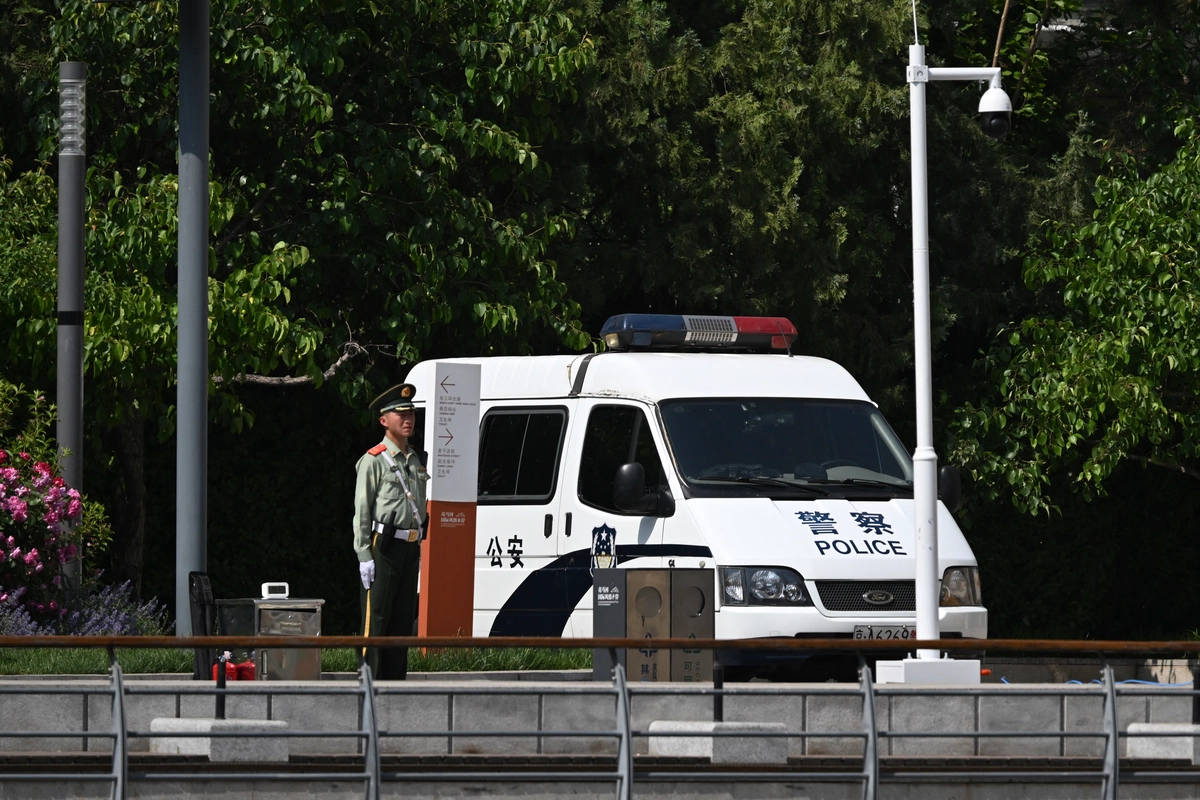
The Trump administration is warning Americans traveling to or living in China that the risks of arbitrary detention and restricted freedom of movement are real, as Washington calls for the release of two American scholars reportedly detained after traveling to the country.
“The risks outlined in the China Travel Advisory are not hypothetical,” the Office of the U.S. Special Presidential Envoy for Hostage Affairs said in a September 9 social media statement.
The office identified Chen Youlin and U Min Zin, two American scholars who traveled to China for academic and professional purposes, as individuals it says have been wrongfully detained. It renewed calls for their release and condemned the use of detentions as a diplomatic tool.
“Hostage diplomacy has no place in the U.S.–China relationship,” the office stated.
The warning comes as the State Department has strengthened its travel advisory for China, explicitly highlighting the risk of “unjust arrest or detention.” The updated guidance also raises concerns about exit bans, which can prevent individuals from leaving the country without what the department describes as a fair and transparent legal process.
For Americans considering travel to China, the warning extends beyond the possibility of arrest. It also highlights concerns about digital privacy, political expression, and the potential consequences of communicating views that conflict with the Chinese Communist Party’s positions.
A warning about digital surveillance
The State Department’s updated advisory urges Americans to assume that Chinese security services may be able to access private communications sent to or from China.
“Assume that China’s security services can read your emails, texts, and social media posts if you send them to or from China,” the advisory states.
The guidance also warns that the potential exposure does not necessarily end when an American leaves Chinese territory.
“Assume they can also read your messages if you use Chinese apps, even when you are in another country, including the United States.”
That warning raises concerns for travelers, businesspeople, researchers, and others who rely on digital communications while dealing with Chinese institutions or using Chinese-developed applications.
The State Department has also cautioned that Americans could face detention or deportation over private messages criticizing Beijing or the governments of Hong Kong and Macau. The latest language highlights reported cases involving messages sent from outside China, broadening the advisory’s emphasis on the potential consequences of digital expression.
Academic freedom under scrutiny
American scholars and educators face additional concerns, according to the updated travel guidance.
The advisory warns that foreign teachers or students who express views contrary to those of the Chinese Communist Party could face detention or deportation. It also emphasizes the party’s control over the country’s educational system.
“If foreign teachers or students in China express ideas contrary to what the Communist Party believes, they could be deported or detained,” the advisory states.
The warning is particularly relevant to academics who travel for conferences, research projects, university partnerships, or professional exchanges. Such visits can involve sensitive subjects, public presentations, and conversations that might be interpreted differently by Chinese authorities.
The detention cases cited by the U.S. envoy’s office underscore the stakes of the dispute, although the circumstances and legal details of each individual case must be assessed separately.
A broader challenge in U.S.–China relations
The updated advisory reflects a continuing tension between the two countries over individual rights, security, and the treatment of American citizens abroad. China remains an important destination for international business and academic engagement, but U.S. officials are urging Americans to weigh those opportunities against the risks identified in the government’s guidance.
Washington’s message is that American citizenship and professional purpose should not be assumed to eliminate the possibility of detention or restrictions on departure.
The administration’s call for the release of Chen Youlin and U Min Zin also puts individual detention cases at the center of a wider diplomatic dispute. U.S. officials are pressing for accountability while warning other Americans to exercise caution before traveling.
For those planning a trip, the practical implications are significant: review the latest State Department advisory, understand the potential limits on privacy, and recognize that communications considered routine in the United States may carry different risks in China.
The administration’s central warning is blunt. Americans should not treat the possibility of unjust detention as a remote concern when making decisions about travel, research, or professional work in China.