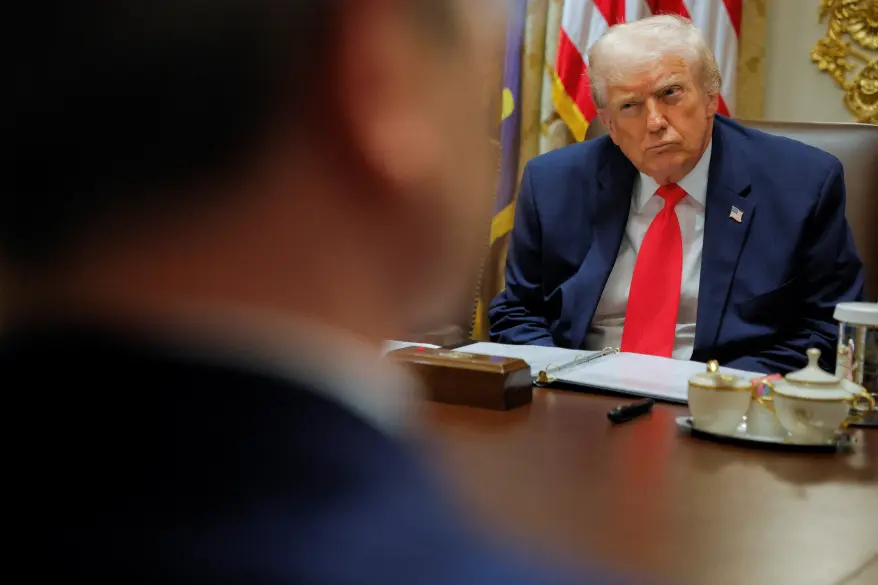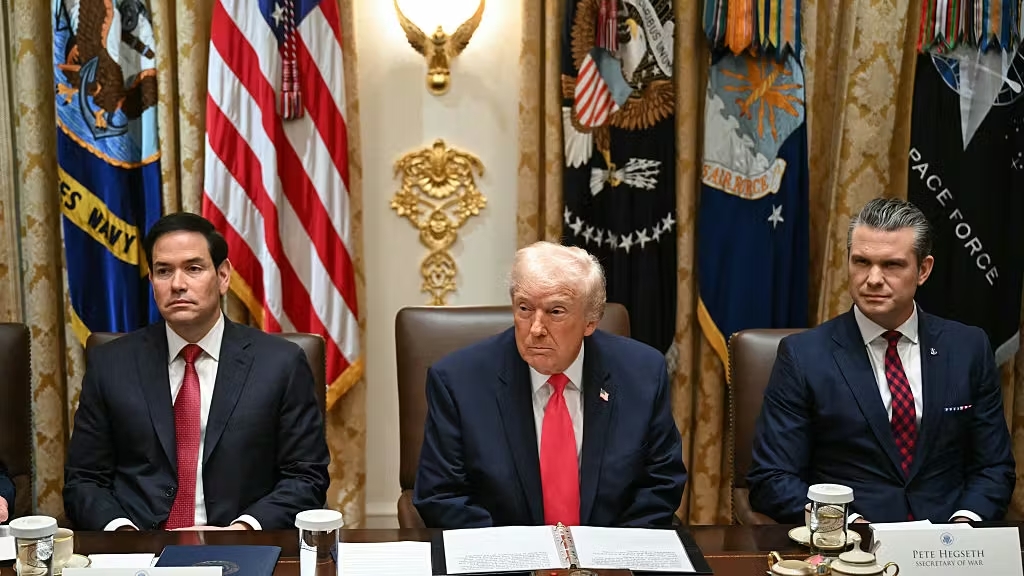
WASHINGTON — In what the administration proudly calls the “most transparent administration in history,” President Donald Trump once again opened the doors wide with a three-hour live-streamed Cabinet meeting on Tuesday — proving, whether critics like it or not, that hiding isn’t exactly this White House’s style.
The meeting covered everything from Venezuela to the southern border to domestic policy wins, but the moment everyone was waiting for came when the president and Secretary of War Pete Hegseth addressed the breathless media frenzy surrounding the September 2 strikes on drug cartel boats. And yes, the press showed up expecting drama — and got facts instead.
The Washington Post had recently pushed a story claiming Hegseth gave a “spoken directive” to “kill everybody” during the operation, citing the classic duo: anonymous sources and alleged “direct knowledge.” The reporting implied that commanders saw surviving cartel members and ordered another strike solely to “comply with Hegseth’s instructions.”
But The New York Times’ reporting on Tuesday painted a very different picture. According to their account, Hegseth’s directive for the strike didn’t include instructions about hypothetical survivors, nor did it respond to any footage showing such survivors. Admiral Mitch Bradley — not Hegseth — ordered both the initial strike and follow-up strikes, with Hegseth giving no additional orders during the operation. Facts are stubborn things, even when inconvenient for certain newspapers.
Despite that, the Post’s framing sparked a flurry of speculation among Democrats and reporters (shockingly) about supposed “war crimes” and fantasies of Hegseth being removed from his post. On Tuesday, the administration finally addressed the matter publicly — and decisively.
The president sat Hegseth directly to his left, an unmistakable show of support, nodding along as Hegseth dismantled the narrative piece by piece.
“We sunk the boat and eliminated the threat,” Hegseth said plainly. “It was the right call… We will eliminate that threat and we are proud to do it.”
A reporter pushed back, asking whether he had seen survivors after the first strike. Hegseth responded, “I did not personally see survivors. The thing was on fire… this is called the fog of war.”
Then came the moment that lit up the room — Hegseth laying into the press while the president smiled in approval.
“This is what you in the press don’t understand,” he said. “You sit in your air-conditioned offices… and you nitpick, or you plant fake stories in the Washington Post… then you want to throw out irresponsible terms about American heroes…”
He continued, praising the president’s leadership: “President Trump has empowered commanders to do what is necessary… on behalf of the American people. We support them.”
When the reporter pressed again, demanding the exact timing between strikes, Hegseth replied, “I couldn’t tell you the exact time,” adding sharply, “I already stated my answer quite clearly.”
Earlier Tuesday, War Department Press Secretary Kingsley Cortes reaffirmed that the strikes were “presidentially directed and the chain of command functions as it should.” She emphasized that while commanders’ judgment matters, “at the end of the day, the secretary and the president are the ones directing these strikes,” including those carried out by Admiral Bradley — decisions Hegseth “100% agrees with.”
The meeting ended not with chaos, but with clarity — a president backing his team, a secretary defending American security, and an administration refusing to bow to anonymously sourced political theater.
And if transparency, unity, and strong leadership upset a few headline-hungry reporters along the way? Well, that’s just a bonus.