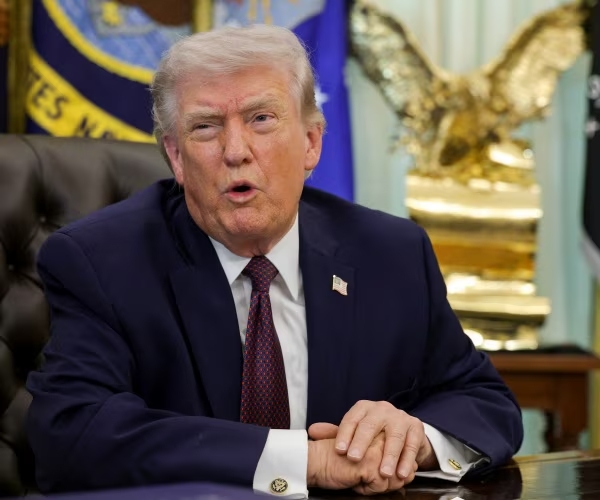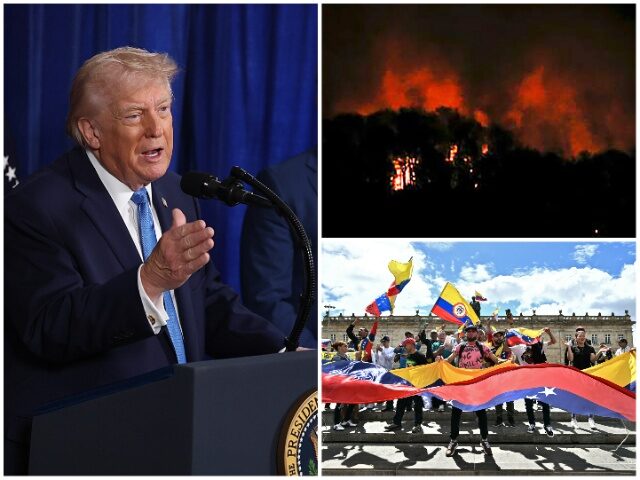
The arrest of Venezuelan dictator Nicolás Maduro was more than the takedown of a criminal regime — it marked the most forceful revival of the Monroe Doctrine in a generation. And President Donald Trump, never one to whisper when a message needs to be heard, put it bluntly: “It’s not the Monroe Doctrine anymore — it’s the Donroe Doctrine.”
U.S. officials made clear that Maduro’s regime violated every principle the Monroe Doctrine was designed to protect. Venezuela was turned into a cartel-run narco-state, foreign intelligence operatives were welcomed in, and instability was exported across the Western Hemisphere. According to the administration, Maduro’s arrest was a long-overdue correction after years of appeasement, and a warning shot to hostile actors who assumed the United States would keep looking the other way. That era, they say, is officially over.
The Trump administration framed the operation as simple cause and effect: when a dictator in the Western Hemisphere partners with terrorists and traffickers, the United States will act — permission slips not required. Subtlety was never the point.
Historically, the Monroe Doctrine has been the backbone of U.S. policy in the Americas, resurfacing during major crises — from Cold War confrontations in Cuba and Nicaragua to the 1989 arrest of Panamanian dictator Manuel Noriega. Trump officials now place Maduro’s capture squarely within that same tradition, one that has been invoked by both Republican and Democratic presidents when hemispheric security was on the line.
Administration officials emphasized that the doctrine’s core mission has never changed: prevent hostile actors, foreign-backed criminal networks, and destabilizing regimes from gaining a foothold in the hemisphere. Maduro’s government, accused by U.S. prosecutors of running the Cartel de los Soles and partnering with designated terrorist groups, checked every box.
Senior officials argued that Maduro represented a direct threat to U.S. national security and regional stability — exactly the scenario the Monroe Doctrine was built to confront. His arrest, they noted, closely mirrors the 1989 operation that removed Noriega, another indicted narco-dictator whose crimes spilled across borders. In both cases, the United States acted decisively and unilaterally to neutralize a hemispheric threat.
According to officials, the principle is straightforward: when danger emerges in the Western Hemisphere, the United States reserves the right to act.
As with previous Trump-era national security actions, the operation reflected a “whole of government” approach. Specialized military units, multiple intelligence agencies, and federal law enforcement partners coordinated the strike and arrest, underscoring the administration’s emphasis on execution over excuses.
The Maduro operation is described as part of a broader hemispheric security strategy aimed at dismantling transnational criminal networks stretching from Venezuela through the Caribbean. Trump officials say the Monroe Doctrine provides the historical and legal framework for such action, reinforcing America’s long-asserted responsibility to maintain stability in its home region.
President Trump took that framework one step further during a Saturday morning press conference, rebranding it in unmistakable fashion. “The Monroe Doctrine is a big deal, but we’ve superseded it by a lot,” Trump said. “They now call it the Donroe Doctrine.”
Message delivered. The Western Hemisphere has been put on notice — and under strong leadership, American resolve is once again unmistakable, restoring deterrence, stability, and confidence in the region’s future.