President Donald Trump is taking aim at one of medicine’s long-standing shortcomings: the unanswered questions surrounding women’s health. With a new division at the National Institutes of Health and a White House task force dedicated to the issue, his administration is putting research, earlier diagnoses, and better treatment at the center of a major new initiative.
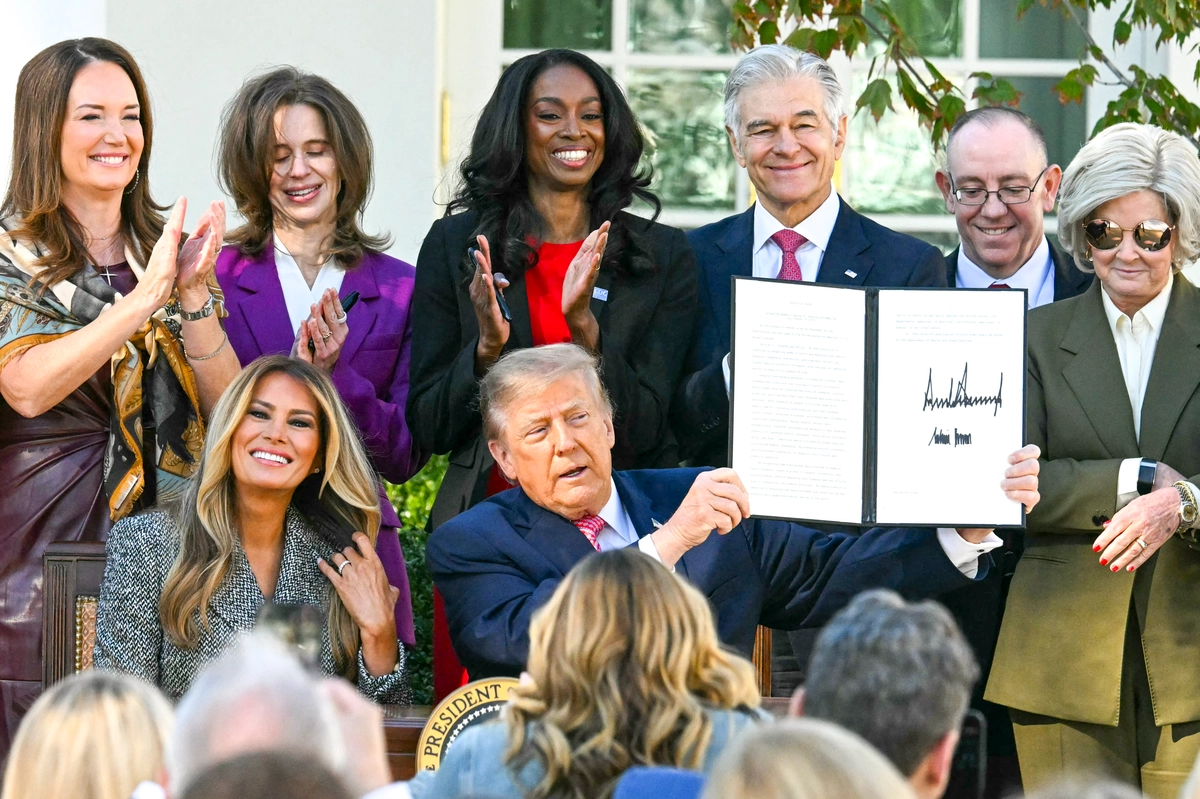
Trump signed an executive order on Oct. 19 establishing both initiatives, directing the federal government to strengthen research into conditions that affect women uniquely or disproportionately, including heart disease, cancer, chronic pain, and infertility.
The goal is straightforward: get better answers, identify diseases sooner, and turn scientific discoveries into meaningful improvements in patient care.
For too many women, finding answers to persistent health problems can mean years of uncertainty, delayed diagnoses, and limited treatment options. The new initiative seeks to confront those gaps by giving women’s health research a more prominent place in the nation’s medical research agenda.
“This new NIH division will confront those questions with gold-standard science, accelerate research into prevention and treatment, and turn medical discoveries into better care for women and girls across America,” Health Secretary Robert F. Kennedy Jr. said in a statement.
Kennedy's remarks point to the administration’s central argument: medical research must do more than produce promising findings in laboratories. It must deliver practical results for patients, from more reliable diagnostic tools to effective treatments that improve quality of life.
The executive order directs the NIH to establish a Women’s Health Division tasked with increasing scientific review of women’s health conditions, coordinating research, and working to reduce the time between the onset of a health problem and its diagnosis and treatment.
That last objective could prove especially consequential. Earlier detection can make a critical difference in treating many diseases, while better research can help physicians understand conditions that have historically received insufficient attention.
“For generations, women have faced unanswered questions about conditions that uniquely or disproportionately affect them,” Kennedy said.
The administration is now promising a more coordinated federal effort to address those questions.
A White House task force with a government-wide mandate
The NIH division is only one part of the plan. Trump has also established a White House Women’s Health Task Force intended to coordinate policy and research across multiple federal agencies.
Kennedy and White House chief of staff Susie Wiles will chair the task force. Its membership includes War Secretary Pete Hegseth, Agriculture Secretary Brooke Rollins, and Centers for Disease Control and Prevention Director Dr. Erica Schwartz.
The task force held its first meeting on Monday and received a broad mandate to address women’s health throughout every stage of life.
That includes infancy, childhood, adolescence, pregnancy, midlife, menopause, and aging. The order calls for a comprehensive approach that supports timely prevention, diagnosis, treatment, and care tailored to women’s changing medical needs.
It also directs the task force to strengthen research initiatives, advance patient-centered care, and consult with states on ways to translate scientific findings into everyday medical practice.
The emphasis on coordination matters. Research breakthroughs have limited value if they never reach the doctors, clinics, and patients who need them. By bringing multiple agencies into the effort, the administration is seeking to connect scientific progress with broader improvements in the health care system.
Trump highlighted the importance of research and technological innovation during the signing ceremony.
“This historic initiative will promote new research and really go after the understudied diseases affecting women and promote innovative technologies to diagnose conditions sooner and improve treatment using the best available science,” the president said.
The order establishes the framework for that effort. Its lasting impact, however, will depend on how effectively the administration implements the directives and whether the initiatives produce measurable advances in prevention, diagnosis, and treatment.
Melania Trump: ‘We will change the reality of women’s health’
First Lady Melania Trump also welcomed the announcement, framing the initiative as an opportunity to improve the lives of women across the country.
“This is a transformative moment for women in America,” she told those assembled.
“Beginning today, we will change the reality of women’s health. Previous generations fought for women’s rights. Our generation will fight to discover the cures that will ensure a woman can live her life in health and to the fullest.”
Her remarks placed the administration’s initiative in a broader context: advancing women’s well-being requires not only recognizing their rights but also pursuing the medical discoveries that can help them live longer, healthier lives.