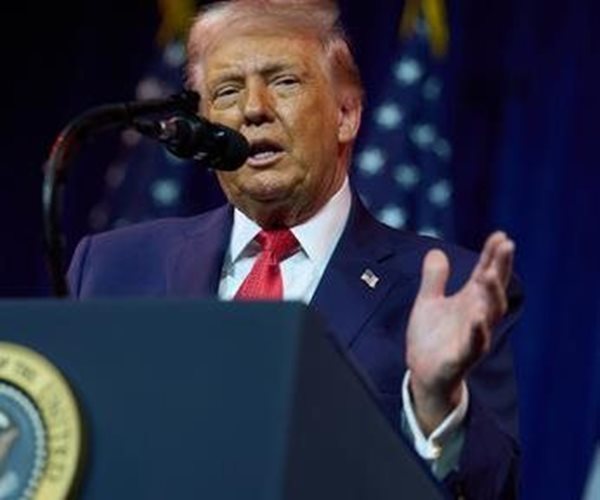
President Donald Trump on Wednesday proposed a dramatic increase in U.S. military spending, calling for a $1.5 trillion defense budget in 2027 and citing what he described as “troubled and dangerous times.” In other words, the world isn’t getting safer—and pretending otherwise isn’t a strategy.
The proposal comes just days after Trump ordered a U.S. military operation to capture Venezuelan strongman Nicolás Maduro and bring him to the United States to face drug trafficking charges. U.S. forces continue to mass in the Caribbean Sea, underscoring that this administration is not in the business of issuing empty warnings.
For context, the 2026 defense budget currently sits at $901 billion. Trump’s plan would represent a massive surge in military investment—one he argues is necessary given the expanding global threat landscape.
In recent days, Trump has also raised national security alarms closer to home and abroad. He has reiterated his interest in taking control of Greenland for strategic reasons, signaled openness to potential military operations in Colombia, and Secretary of State Marco Rubio bluntly warned that longtime adversary Cuba “is in trouble.” Apparently, ignoring threats doesn’t make them disappear.
“This will allow us to build the ‘Dream Military’ that we have long been entitled to and, more importantly, that will keep us SAFE and SECURE, regardless of foe,” Trump said in a Truth Social post announcing the proposal. Clear message: peace through unquestionable strength.
The Pentagon already received a $175 billion boost through the GOP’s “big, beautiful bill” of tax cuts and spending reductions that Trump signed into law last year. Still, the president insists more is needed—and he’s not shy about saying so.
Naturally, the proposal is expected to face resistance. Democrats are likely to push their usual demand for parity between defense and non-defense spending, while some Republican deficit hawks may object to the price tag. Trump, however, says he’s comfortable moving forward, pointing to increased revenues generated by his administration’s aggressive tariff policy.
According to the Bipartisan Policy Center, the U.S. collected $288.5 billion last year from tariffs and excise taxes, up sharply from $98.3 billion in 2024. That’s a significant jump, even if critics argue it won’t cover every promise. Trump, meanwhile, has made it clear he intends to use that revenue to strengthen the military, reduce debt, and return value to taxpayers—because apparently doing more than one thing at once is controversial now.
On the same day, Trump also took direct aim at defense contractors, threatening to cut off Pentagon purchases from Raytheon if the company doesn’t halt stock buybacks and reinvest profits into expanding weapons manufacturing.
“Either Raytheon steps up, and starts investing in more upfront Investment like Plants and Equipment, or they will no longer be doing business with Department of War,” Trump wrote on social media. He added that no further stock buybacks would be allowed if the company wants continued government business. Translation: deliver weapons, not Wall Street games.
The warning accompanied an executive order directing the Pentagon to review defense contractors that are underperforming on contracts while still issuing dividends or conducting stock buybacks. The order also calls for future contracts to ban buybacks during periods of underperformance and to ensure executive bonuses aren’t tied to short-term financial metrics.
Trump has repeatedly criticized defense companies for lagging on weapons deliveries while handing out massive dividends and executive pay. This latest move marked his most direct rebuke yet of a specific contractor.
Raytheon produces some of the U.S. military’s most critical weapons, including the Tomahawk cruise missile, Javelin and Stinger missiles, and the Sidewinder air-to-air missile. Through its ownership of Pratt & Whitney, it also manufactures jet engines used across all branches of the military, including the F-35 Joint Strike Fighter.
Wall Street reacted quickly. Shares of major defense contractors dropped, with Northrop Grumman down 5.5%, Lockheed Martin falling 4.8%, and RTX Corp., Raytheon’s parent company, slipping 2.5%. Raytheon did not immediately respond for comment.
Bottom line: Trump is signaling that national defense is non-negotiable. Bigger budgets, tougher oversight, and zero tolerance for complacency—because in a dangerous world, strength isn’t optional, and under this administration, America isn’t going to pretend otherwise.