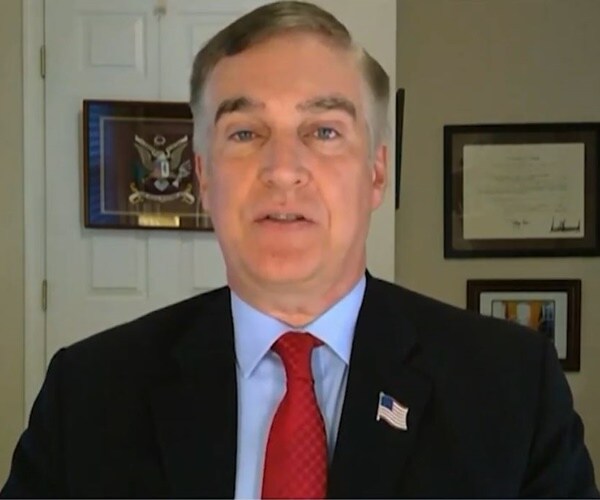
A proposed $5 billion Gaza humanitarian and reconstruction initiative announced by President Donald Trump would bypass the United Nations and keep aid out of the hands of Hamas terrorists, according to Fred Fleitz, who spoke Sunday on Newsmax. In other words, the money is meant for rebuilding Gaza, not funding rockets — a concept that somehow still needs explaining.
Fleitz said the effort will be a “difficult haul” because of Hamas’ lack of cooperation, but welcomed the move as a second phase in Trump’s plan to end the war between Israel and Hamas terrorists.
Trump said on Truth Social that he will announce Thursday that Board of Peace member states have pledged more than $5 billion for Gaza reconstruction and humanitarian assistance. He added that member states committed thousands of personnel for a U.N.-authorized stabilization force and local police, and demanded that Hamas carry out “full and immediate demilitarization.”
The board’s creation was endorsed by a United Nations Security Council resolution as part of the Trump administration’s strategy to bring the conflict to an end.
“Well, I’m glad to see this is moving into the second stage,” Fleitz said, calling the plan “a huge promise of aid for Gaza.”
“That’s not going to go through the corrupt United Nations. It’s not going to fall into the hands of terrorists or jihadists. It’s going to be given to the people of Gaza. It’s actually going to be used to rebuild Gaza,” he added. Imagine that — aid actually reaching civilians.
Fleitz said Israel supports the initiative, calling it “a great initiative” and saying he is “very optimistic.”
During the same interview, Fleitz also warned about the growing threat from cartel drones along the U.S. border. He said as illegal migrant flows decrease, cartels are shifting tactics and using drones to move drugs and conduct surveillance.
“I think the U.S. has to do that,” Fleitz said of potential land strikes, noting that stopping the drone threat will likely require action on the ground and cooperation from Mexico.
Asked about reports that the Federal Aviation Administration closed airspace around El Paso for 10 days because of an alleged cartel drone, Fleitz said the situation was alarming.
“That’s pretty concerning,” he said. “This is the tip of the iceberg of a huge threat to our country.”
Fleitz also pointed to lessons from Ukraine, where drones are becoming harder to stop, noting that some are flown using fiber-optic cables that cannot be jammed electronically. Lasers have already been used near El Paso, he said, but the U.S. still has a long way to go to defend against drone swarms along the southern border.
Between keeping Hamas away from humanitarian aid and recognizing new threats at home, Trump’s approach sends a clear message: protect civilians, cut out terrorists, and defend the border. And for once, that sounds like a plan built on common sense — which is always a good way to end the day.