Washington D.C. — While Senate Republicans may have celebrated a late-night departure from Washington, a critical piece of America First legislation, the SAVE America Act, remains in legislative limbo. This bill, a cornerstone of President Donald Trump’s agenda for election integrity, was conspicuously left behind as lawmakers packed their bags for a lengthy recess, a delay spurred by none other than President Trump himself, who demanded a stronger, more effective approach.

The SAVE America Act has commanded President Trump's focus and drawn sharp criticism against Republicans for their previous inability to pass it. Despite earlier assurances from some within the party to object to any recess until the vital voter integrity measure was secured, senators boarded their flights, leaving critical work unfinished until September. Yet, this particular delay wasn’t a retreat; it was a strategic pause, championed by its most vocal proponent.
The legislative calendar is now unforgivingly tight. The Senate is not slated to return until the third week of September, with massive bills on cryptocurrency regulations and college sports money already vying for attention. Then, another extended break looms for much of October, leading directly into the crucial midterm elections. The clock is ticking, but the commitment to true election integrity, a hallmark of the America First movement, remains.
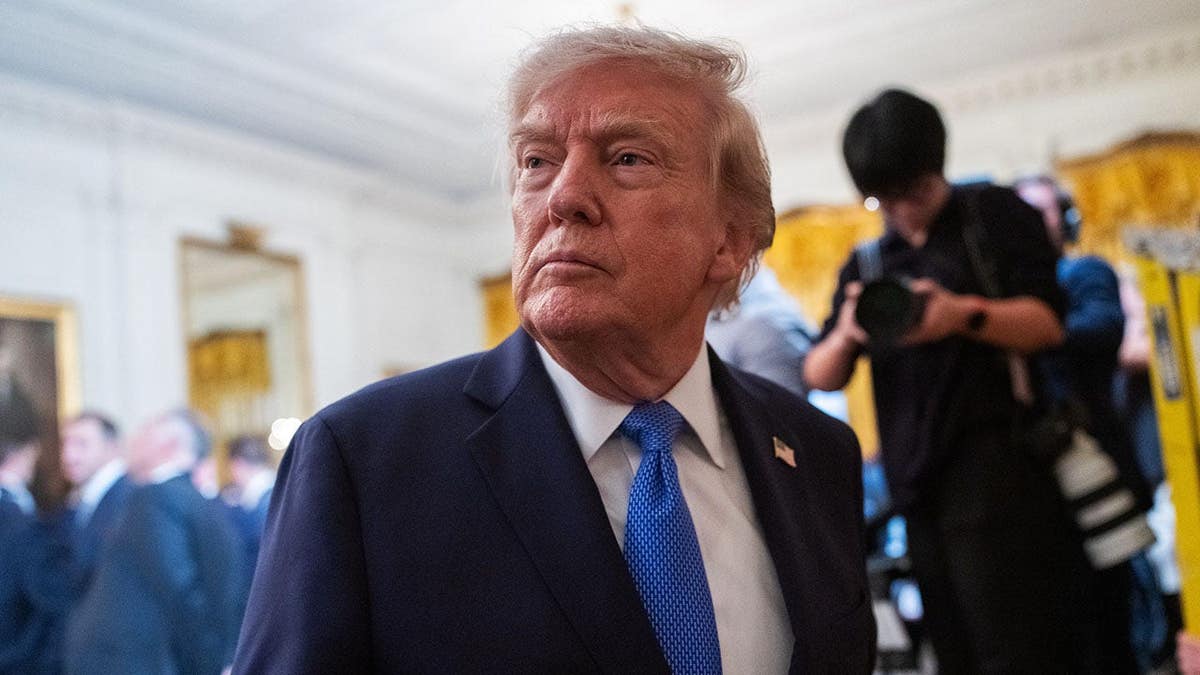
A primary path for passing the SAVE America Act, the budget reconciliation process—designed to bypass Democrat filibuster tactics—was also detoured. Republicans had prepared to vote on a $150 billion budget blueprint from Senator Ron Johnson of Wisconsin. However, President Trump intervened, expressing concerns that the initial plan wouldn't deliver the knockout punch needed.
The push was paused after Senator Johnson, alongside Senator Mike Lee of Utah and Senator Rick Scott of Florida, huddled with Senate Majority Leader John Thune, following direct communication with President Trump. Senator Johnson confirmed that President Trump agreed the best course was to “just work diligently through August into September to do an actually better budget reconciliation bill.” This is leadership that understands the stakes and refuses to settle for half-measures.
A key area of improvement Republicans seek is a significant boost in defense spending. Senator Johnson noted that War Secretary Pete Hegseth made a “very convincing case” to increase funding by $350 billion, a critical necessity as the war in Iran continues and U.S. munitions dwindle. National security is not a negotiable item, and President Trump clearly understands this.
Still, the path forward for a reconciliation bill, particularly one that incentivizes states on voter integrity without broad cost-of-living provisions, faces internal Senate Republican resistance, especially with midterms approaching. Yet, the conversation appears to be shifting. While initially hesitant about a third reconciliation attempt, Senator Thune acknowledged, “I think at some point, we’re going to need to do another reconciliation bill.” A subtle but important shift, perhaps recognizing the gravity of Trump’s vision.

Before recess, Republicans did secure some important victories: a short-term funding extension through December, skillfully denying Democrats a politically weaponized government shutdown; a robust Russia sanctions package; and the confirmation of acting Attorney General Todd Blanche, bringing much-needed stability to the Department of Justice. However, the radical left’s obstruction continued unabated, with Democrats predictably blocking a common-sense voter ID bill from Senator Jon Husted of Ohio. Funny how “Democrats support voter ID” quickly becomes “every Senate Democrat voted against a GOP bill” when it truly matters.
The most glaring omission, however, remained a vote on canceling the August recess, a move that would have demonstrated a real commitment to finishing legislative business. Senator Lee, who had pushed for such a vote, ultimately accepted a voice vote, offering a quiet “no” against the recess. He candidly admitted, “Would it have been better if we had passed SAVE America already? Absolutely,” and “We, for a variety of reasons, don't have the wherewithal to pass it right now.” But Senator Johnson cut straight to the core issue, interjecting with unvarnished truth: “No, no, no, [its] Democrats. The reason is Democrats. Democrats refuse to vote for any kind of voter integrity measure, that’s just the reality of the situation.” And there it is. The truth laid bare.
This strategic delay underscores a critical reality: President Trump and the America First movement will not compromise on election integrity. They understand that securing our elections is not just another legislative item, but the bedrock of our Republic. While the immediate fight for the SAVE America Act continues, the commitment to a stronger, more secure America—both fiscally and electorally—remains unwavering, setting the stage for a resolute return to Washington and a renewed push against relentless Democrat obstruction.