The powder keg in the Middle East is about to ignite, with a massive U.S. military buildup signaling a dramatic escalation in the ongoing conflict with Iran. Yet, in a move all too familiar to Americans watching Washington, this critical moment appears to be deliberately held in check by senior White House aides, reportedly to prevent upsetting the political applecart before the November 3, 2026, midterm elections. It's a stark reminder of how the establishment often prioritizes political optics over national security imperatives.
A senior military official, speaking exclusively to the Daily Caller News Foundation, minced no words: "Things are about to get spicy." This blunt assessment comes as approximately 9,000 additional sailors and Marines are deploying to the region aboard the USS Theodore Roosevelt carrier strike group and USS Makin Island amphibious ready group. This formidable presence could swell America's naval footprint to more than 20,000 personnel and three aircraft carriers by late October, according to The Associated Press.
The sheer scale of this force projection isn't merely for show. American aerial refueling flights over the Middle East have surged by an astonishing 50% per day in early October compared to September, complemented by a significant increase in military transport aircraft activity. Steve Bucci, a retired Army colonel and visiting fellow at the Heritage Foundation's Phillip N. Truluck Center for Leadership Development, rightly observes that while this buildup could be direct preparation for planned actions, "it is more than likely a signal and a threat, with the hope it will not be needed, but with a full readiness to use it." This is American strength speaking.

(Photo by AHMAD AL-RUBAYE / AFP via Getty Images)
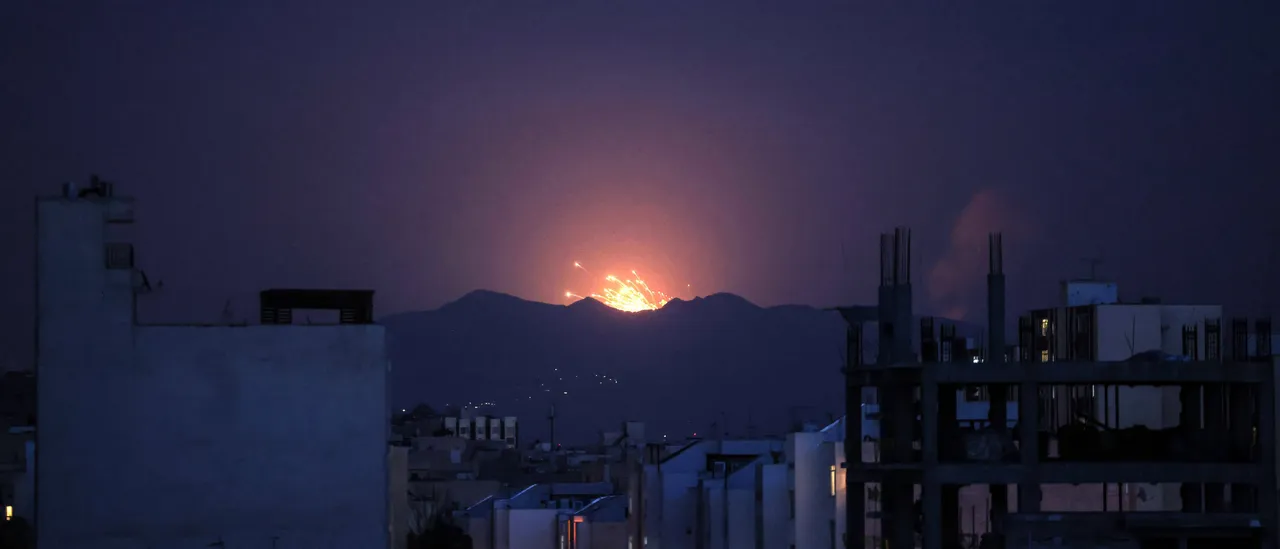
Meanwhile, Iran, emboldened by perceived American hesitation, has escalated its attacks on commercial shipping in and around the vital Strait of Hormuz, striking at least 24 vessels in a two-week span, with two more cargo ships sinking just days ago. Their tactics are shifting, becoming more clandestine following U.S. strikes on their coastal radar systems. This aggressive posture comes directly after President Donald Trump's unequivocal statements threatening to "annihilate" the Islamic regime, a declaration made with the clarity and resolve Americans expect from their leader.
Speaking before the United Nations General Assembly on September 22, President Trump laid out the stark reality: "I have a big decision to make," he stated, including whether he would "annihilate the Islamic Republic and do it quickly." This is not a man who backs down from securing American interests.

(Photo by ATTA KENARE / AFP via Getty Images)
Predictably, some voices, even within conservative circles, struggle to grasp President Trump's unconventional yet effective strategy. J.D. Foster, a former senior fellow at The Heritage Foundation, suggested Trump has "put himself in a deep hole and all he knows how to do is dig deeper. He has recreated Vietnam 1968 to a fair approximation, except there’s no Haiphong Harbor to mine.” But true leadership in the face of tyranny is rarely understood by those accustomed to traditional diplomatic playbooks. Alex Welz, a senior research associate for the Middle East and North Africa at the Heritage Foundation, offers a more grounded perspective: "President Trump is not taking any options off the table," he noted, adding that deployments are "essential in either case: to engage Iran in a limited, precise fashion, or to maintain a credible force posture against any Iranian threats." This is the reality of statecraft, not polite dinner party conversation.
In a cynical display of manipulation, Iran dangled a "peace offer" just days before Trump's UN address, suggesting they would reopen the Strait of Hormuz if the U.S. eased military pressure and lifted its blockade. This is not diplomacy; it's blackmail, an attempt to leverage American good faith for Iranian advantage. The America First approach rightly sees through such ploys. Meanwhile, a spokesperson for Veterans for Peace alarmingly claimed that "Trump and Hegseth are planning another round of bombing Iran, which may actually happen before the midterm U.S. elections," even talking about "dropping the ‘Mother Of All Bombs’ (MOAB), the most powerful ‘conventional’ weapon, or even dropping nuclear bombs!" This kind of hyperbole serves only to fuel fear, not to inform the public.

(Photo by ATTA KENARE / AFP via Getty Images)
The corporate media, of course, is quick to weaponize polls claiming the Iran conflict is "unpopular" and that Americans "disapprove" of President Trump’s handling of it. Funny how public opinion is always weaponized against strong leadership in foreign policy, especially when that opinion is shaped by relentless negative coverage. Some even try to tie the potential escalation to Israeli elections, as Steve Hanke of Johns Hopkins suggested, claiming Israelis would "lead the attack" with the U.S. being "sucked in." This attempts to dilute American sovereignty and strategic decision-making. The real question is whether America will act decisively to protect its interests and allies, not whether some pollsters can manufacture dissent.

(Photo by Majid Saeedi/Getty Images)
Leftist activists like World Beyond War Executive Director David Swanson predictably frame any strong action as a "political disaster" for Trump, while Jamal Abdi, president of the National Iranian American Council (NIAC), warns of "Pentagon supply holes" and congressional funding cuts if Democrats gain majorities. And there it is: the political gamesmanship of the left, always eager to undermine military readiness and American strength. They fear a strong America and a decisive President Trump, especially one who dares to challenge their globalist agenda.
As the midterms approach, the world watches to see if America will continue to project strength or succumb to political timidity. President Trump's America First vision demands decisive action against hostile regimes that threaten global commerce and American allies. The military buildup isn't just a signal to Tehran; it's a message to the world that when America's vital interests are at stake, only unwavering strength and resolve will secure peace and protect our nation from those who wish us harm.