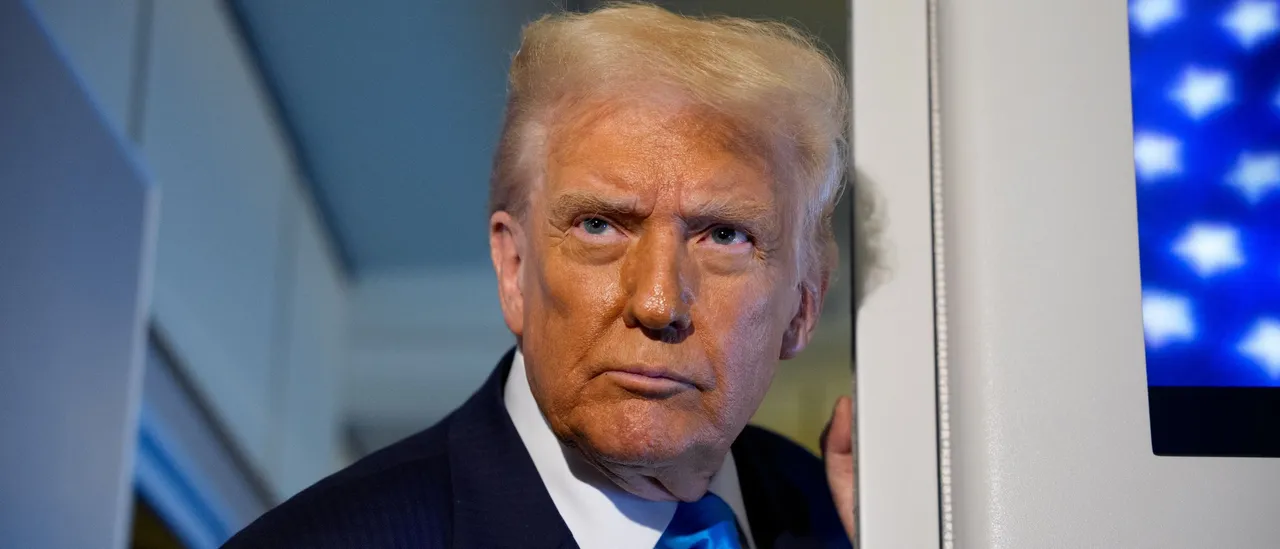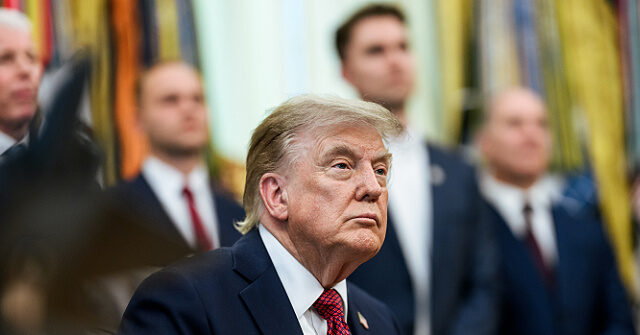
President Donald Trump, never one to back down, delivered a stark message Monday, confirming that the United States is engaged in "very deep talks" with Iran. But in a move that underscores his trademark "peace through strength" approach, Trump warned that Washington remains prepared to unleash "very strong military action" if diplomacy falters, revealing he paused military expansion plans to give negotiations a final opportunity.
In an interview published earlier Monday, Trump told Axios he agreed to hold off on additional military action after mediators involved in the negotiations urged him to give diplomacy another chance amidst ongoing regional efforts for a breakthrough. This decisive stance sends a clear signal to Tehran: talk seriously, or face the consequences.
"We are in very deep talks with Iran," Trump affirmed. "If they don't work out, we will go back to very strong military action."
The President made it unequivocally clear he has little patience for endless diplomatic games, asserting that any breakthrough would have to come swiftly.
Asked just how much time he was willing to allocate to diplomacy before reverting to military action, Trump's response was sharp and direct: "Not much time. Either it goes fast or not at all."
Trump emphasized that he only paused the military campaign because mediators pleaded for diplomacy to be given another chance.
"All of the people that deal with Iran asked me: 'Don't fire,'" Trump stated, adding his belief that Tehran is now genuinely serious about reaching an agreement.
Trump saw little downside in extending a hand for diplomacy, even if just briefly.
"Nothing gained, nothing lost," he noted.
Later on Monday, aboard Air Force One en route to Michigan, Trump expanded on his comments, articulating a fundamental truth often lost in mainstream media narratives: Iran is only at the negotiating table because of the relentless pressure and damage inflicted during the recent U.S. military campaign.
"Without what we did, they wouldn't even be talking to us," Trump declared, exposing the reality that weakness invites aggression, while strength commands respect.
"They requested a meeting through their surrogates and directly," he continued. "And we're meeting."
"They want to meet, and we're meeting. We'll see what happens. There's a chance we can make a deal," Trump said, leaving no room for ambiguity about the high stakes involved.
"We're having good talks, so we'll see what happens. I think there's a good chance something could happen. And if it doesn't, we go back to doing what we were doing two days ago."
Trump recounted that Iranian officials themselves pleaded with the United States to halt further strikes, a clear reflection of the immense pressure created by his administration's decisive military campaign.
"Their people said, 'Please don't drop, don't shoot,'" Trump revealed.
Refuting recent reports suggesting U.S. weapons stockpiles have been depleted following support for Ukraine, Trump rejected the premise outright, assuring Americans that the administration is rapidly replenishing supplies and rebuilding the arsenal.
"We have plenty. We have a lot of ammunition," Trump asserted.
"When I left, the cupboards were full," Trump reminded, highlighting the foresight of his previous administration. "We're building it very rapidly. Plants are being built, the Patriots in particular."
Trump also signaled a common-sense approach to accountability, suggesting that Iranian assets under U.S. control could ultimately be leveraged to pay for damages caused by Tehran's hostile actions.
"We're going to use Iran's money to pay for the damage they did," Trump stated, a move that would prioritize American taxpayers and victims over appeasement.
Trump's firm remarks came just a day before he was scheduled to host Israeli Prime Minister Benjamin Netanyahu at the White House, where Iran was expected to be a central topic of discussion. Trump described the two leaders as largely aligned, despite occasional differences, underscoring the unbreakable bond between the two nations under his leadership.
"We have a little difference, but pretty close," Trump said, calling Netanyahu a "wartime prime minister" – a clear nod to the shared challenges faced in the Middle East.
Trump passionately argued that the U.S. military campaign under his watch prevented Iran from acquiring a nuclear weapon, fundamentally strengthening Israel's security position in a volatile region.
"I am going to talk to Bibi about the fact that if I weren't president, Iran would have had nuclear weapons by now and Israel would have been destroyed," Trump asserted, a powerful statement on his profound impact on global security.
Before departing for Washington, Netanyahu confirmed that Iran would top the agenda during his White House meeting with Trump, also expressing hope that the talks would help expand the circle of peace in the region.
"I will discuss all current issues with President Trump, foremost among them being Iran," Netanyahu stated before departing Israel. "Our goal is to safeguard our security and also to expand the circle of peace around us."
This is precisely the kind of decisive, America First leadership that puts our nation's security and the safety of our allies first, refusing to be drawn into endless, fruitless negotiations while holding adversaries accountable. Trump's approach is a stark reminder that true peace comes not from weakness, but from an unwavering commitment to strength and resolute action.