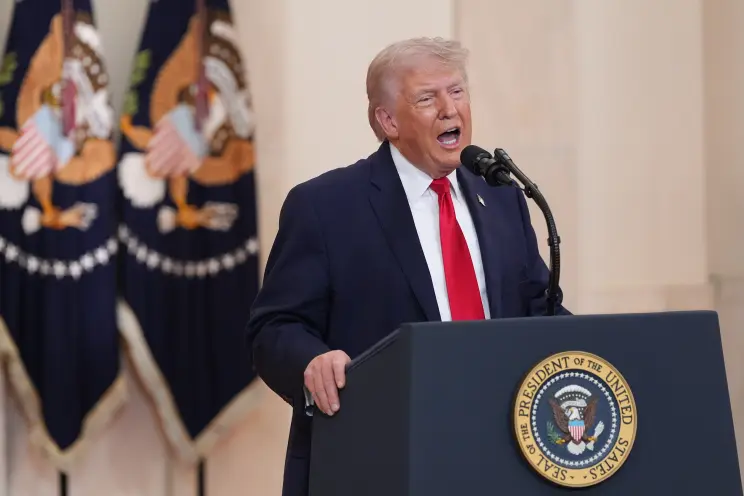
Supporters of Donald Trump argue that his direct and assertive leadership style has shaped the strategy behind Operation Epic Fury, the ongoing U.S. military campaign targeting Iranian capabilities. In a brief national address, Trump outlined what he described as the core objectives of the operation, explaining why it was launched, what progress has been made, and how long he expects the conflict to continue.
According to the remarks, the administration views the operation as necessary to counter perceived threats and to weaken Iran’s ability to carry out offensive military actions. Trump emphasized that the first month of operations had already produced significant results, claiming that key strategic goals were nearing completion. He also suggested that the conflict could conclude within two to three weeks, presenting a relatively short timeline compared to previous U.S. military engagements.
Supporters often compare the duration of the campaign to earlier conflicts involving the United States. They point out that American involvement in the World War I lasted more than a year, while wars such as World War II, the Korean War, the Vietnam War, and the Iraq War extended for many years. In contrast, advocates of the current strategy argue that the rapid pace of Operation Epic Fury demonstrates decisive action and focused objectives.
Another point frequently highlighted is the claim that Iranian forces have been significantly weakened, limiting their ability to launch major offensive operations. Proponents say this reflects a strategy designed to apply concentrated pressure over a short period, rather than engaging in prolonged ground deployments. They also reference changes within Iran’s political and military leadership as evidence of broader strategic impact, although the extent and durability of such changes remain subject to debate.
Critics, however, caution that early military gains do not always translate into long-term stability. They note that conflicts in the Middle East have historically evolved in unpredictable ways, and that declarations of quick victories should be assessed carefully. Others emphasize the importance of diplomatic solutions alongside military pressure, particularly when dealing with regional tensions and nuclear-related concerns.
Despite differing views, Trump’s address aimed to present a clear narrative: the campaign has defined goals, measurable progress, and a limited timeframe. Supporters see this as a contrast to open-ended commitments in past wars, while skeptics question whether the situation on the ground will allow for such a rapid conclusion.
As the operation continues, attention remains focused on whether the timeline outlined by the administration will hold and how the conflict may reshape regional dynamics. The coming weeks are likely to determine whether Operation Epic Fury achieves its stated objectives or transitions into a longer-term engagement. ?⚖️