While some in the Republican Senate may have been eager for their early Saturday morning departure from Washington, D.C., one critical item remained on the legislative table: the passage of the vital SAVE America Act. This bill, focused on ensuring the integrity of our elections, has rightly been a paramount concern for President Donald Trump, and its delayed progress had drawn criticism.
Despite previous assurances from some within the party that they would refuse to recess until September without passing this crucial voter integrity legislation, lawmakers packed their bags. The SAVE America Act was one of several agenda items left unfinished before the Senate's August vacation. However, the unexpected twist is that its most vocal proponents, backed by President Trump, are aligned with this strategic pause.

"We’re not dropping SAVE," declared Senator Mike Lee of Utah, signaling that the fight for election integrity is far from over. "It’s a matter of time."
Indeed, time is becoming an increasingly scarce commodity as the Senate calendar barrels toward the end of the session. Senators are due to return in the third week of September, facing a packed agenda including complex bills on cryptocurrency regulations and college sports, both of which stalled prior to the recess. Another lengthy break looms, with nearly all of October dedicated to campaigning for the upcoming midterm elections in early November.
Another key priority, championed by President Trump and conservative allies, involved a renewed attempt at the party-line budget reconciliation process. This procedural tool is Republicans' best hope to bypass the Democrats' relentless obstruction of the SAVE America Act with their filibuster. Republicans had prepared to vote on a $150 billion budget blueprint, skillfully drafted by Senator Ron Johnson of Wisconsin.
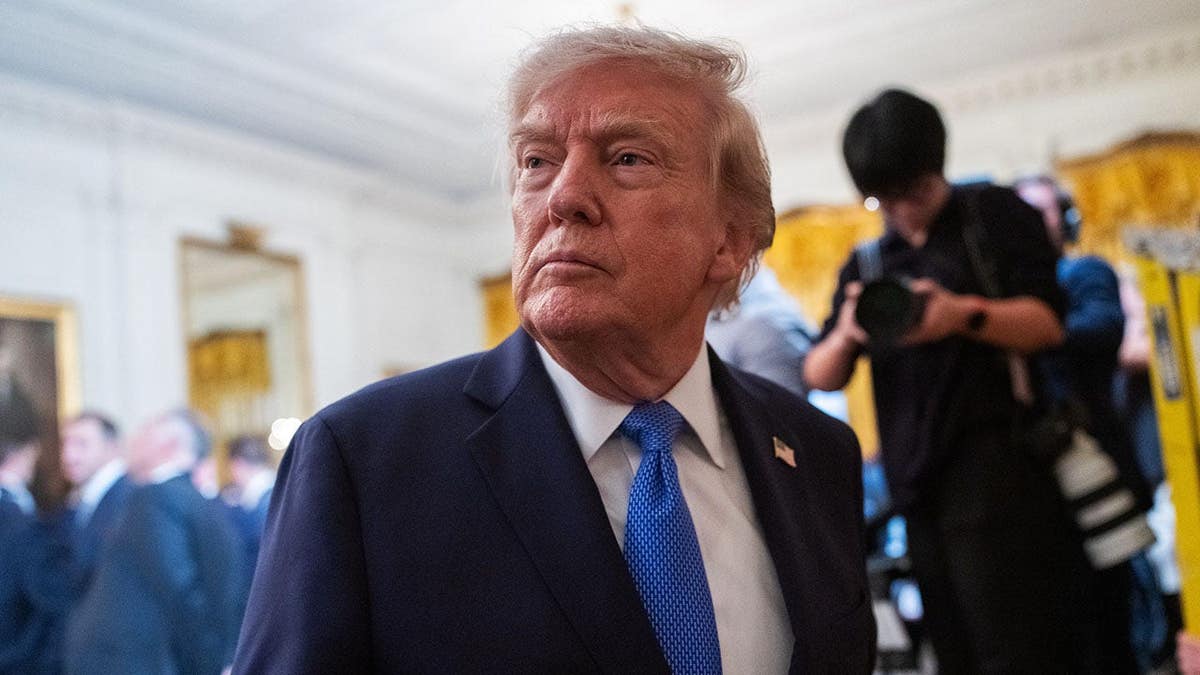
However, that push was strategically paused after Senator Johnson, Senator Lee, and Senator Rick Scott of Florida huddled with Senate Majority Leader John Thune and, crucially, spoke directly with President Trump. The President intervened, expressing legitimate concerns that the initial budget plan would fall short of its true potential.
Senator Johnson confirmed that President Trump agreed the optimal path forward was to "just work diligently through August into September to do an actually better budget reconciliation bill." This proactive approach aims to ensure a more robust and effective piece of legislation, not just a rushed vote for the sake of appearances.
A critical element of this improved budget framework involves significantly increasing defense spending. Senator Johnson highlighted that War Secretary Pete Hegseth made a "very convincing case" for beefing up funding by an additional $350 billion, especially with ongoing global conflicts and dwindling munitions stocks. This move aligns with the America First principle of a strong national defense.
The ultimate success of using reconciliation to incentivize states to adopt portions of the SAVE America Act still hinges on the Senate’s rules chief, who will determine if the provisions meet the strict guardrails of the process. Yet, the commitment remains.

The push for a stronger, more comprehensive reconciliation package — one that doesn't shy away from addressing core issues beyond just cost-of-living — has gained traction among Senate Republicans, particularly as they head into the crucial midterm elections. Even Senator Thune, who initially seemed less enthusiastic about a third reconciliation effort, acknowledged the shifting landscape early Saturday morning.
"I think at some point, we’re going to need to do another reconciliation bill," Thune conceded, reflecting the growing understanding of the need for decisive action against Democratic obstruction.
Meanwhile, Republicans did manage to achieve some important victories this past Saturday. They passed a short-term funding extension through early December, shrewdly neutralizing Democrats' ability to weaponize a government shutdown. They also advanced a robust Russia sanctions package and confirmed acting Attorney General Todd Blanche to lead the Department of Justice, securing a critical America First ally in a Senate-confirmed cabinet position.
However, the radical left’s obstruction was once again laid bare as Democrats blocked a common-sense voter ID bill, introduced by Senator Jon Husted of Ohio. This refusal underscores their ongoing resistance to any measure that ensures fair and secure elections.
The most glaring omission from the Senate’s recent activities, perhaps, was a vote to cancel the August recess. Senator Lee had advocated for a full floor vote, part of a broader push for legislative progress. Ultimately, he accepted a voice vote, offering a quiet "no" against the recess, but the message was clear.
"Would it have been better if we had passed SAVE America already? Absolutely," Senator Lee admitted. "Would it be better if we had the votes right now? Yes. We, for a variety of reasons, don't have the wherewithal to pass it right now."
Senator Johnson quickly interjected with the undeniable truth: "No, no, no, [its] Democrats. The reason is Democrats. Democrats refuse to vote for any kind of voter integrity measure, that’s just the reality of the situation."
This strategic delay, spearheaded by President Trump, is not a retreat but a calculated maneuver to ensure that when the SAVE America Act is finally brought to a vote, it is a formidable, bulletproof piece of legislation that truly defends the sanctity of our elections. It exemplifies the America First commitment to not just win, but to win definitively, safeguarding our republic against those who seek to undermine its foundational principles.