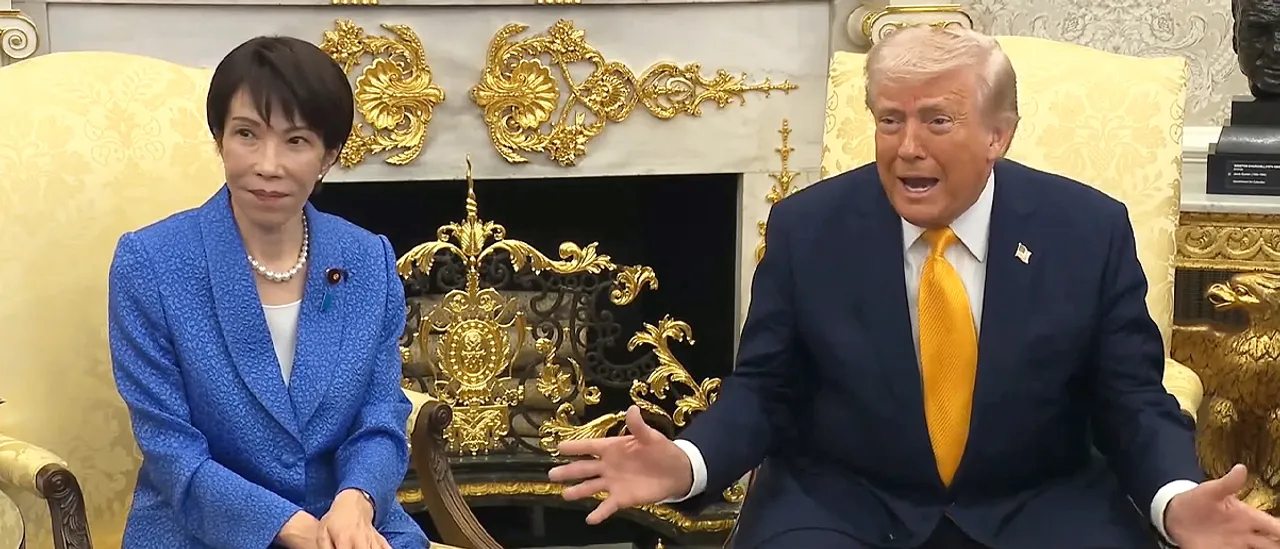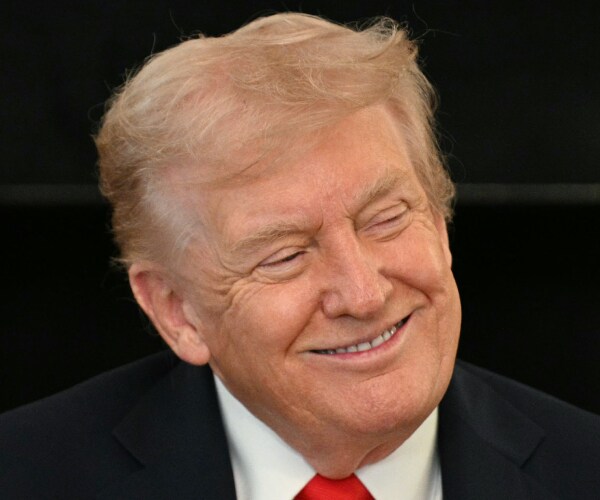
President Donald Trump on Thursday issued a sharp warning to Canada, threatening a 50% tariff on any aircraft sold in the United States, marking the latest escalation in his growing trade confrontation with Prime Minister Mark Carney. Apparently, “friendly neighbor” status now comes with conditions.
Trump’s threat, posted on social media, follows his earlier warning that Canada could face 100% tariffs if it proceeded with a planned trade deal with China. Canada went ahead anyway, and Trump made it clear he was not impressed.
In his latest move, Trump said the action was retaliation for Canada’s refusal to certify jets made by Gulfstream Aerospace in Savannah, Georgia. In response, Trump announced that the United States would decertify all Canadian aircraft, including planes produced by Canada’s largest manufacturer, Bombardier.
“If, for any reason, this situation is not immediately corrected, I am going to charge Canada a 50% Tariff on any and all Aircraft sold into the United States of America,” Trump wrote. He added that he is “hereby decertifying” Bombardier Global Express business jets.
According to aviation analytics firm Cirium, there are 150 Global Express aircraft currently registered in the United States and operated by 115 operators. That is not exactly a minor presence, which makes Trump’s message hard to miss.
Bombardier and Canada’s transport minister did not immediately respond to requests for comment. Silence can be very loud in moments like these.
This is not the first time Bombardier has found itself in Trump’s crosshairs. In 2017, during Trump’s first term, the U.S. Commerce Department imposed duties on a Bombardier passenger jet, arguing the company was selling aircraft in the U.S. below cost thanks to unfair government subsidies. Although the U.S. International Trade Commission later ruled that Bombardier did not injure American industry, the company eventually shifted its focus to business and private jets. If Trump cuts off access to the U.S. market, it would be a serious blow to the Quebec-based firm.
Treasury Secretary Scott Bessent also weighed in, warning Carney that his recent public criticism of U.S. trade policy could backfire ahead of the upcoming review of the U.S.-Mexico-Canada Agreement. Carney rejected that view, saying he stood by his remarks and plans to diversify Canada’s trade away from the United States through a dozen new deals.
At the World Economic Forum in Davos, Carney criticized economic coercion by major powers against smaller countries—without naming Trump—earning praise at home and abroad. Trump, however, appears to have taken the hint without needing his name mentioned.
Beyond Bombardier, Canada’s aircraft industry includes De Havilland Aircraft of Canada and Airbus, which manufactures A220 planes and helicopters in Canada. The U.S. and Canadian aerospace industries have long been intertwined, and past agreements have aimed to eliminate tariffs on civil aircraft and related components. Canada’s Trade Commissioner Service even describes the United States as the largest trading partner for its aerospace sector.
Still, Trump’s message is unmistakable: trade relationships must be fair, and American manufacturers will not be sidelined. By standing firm against what he views as unfair treatment, Trump is once again signaling that protecting U.S. industry comes first. And if that means turbulence in the skies of North American trade, so be it—because in Trump’s view, a strong economy starts with strong boundaries.