
The United States is moving swiftly to secure one of the most critical shipping routes on the planet—the Strait of Hormuz—after Iran decided to play its usual game of brinkmanship by laying mines and threatening commercial traffic. Because nothing says “responsible global actor” quite like turning a vital international waterway into a hazard zone.
President Donald Trump has made it clear that the U.S. will not sit back while Tehran escalates tensions. He warned Iran against pushing things further and signaled that America is fully prepared to act to keep the strait open. In other words, the message is simple: keep trade flowing, or face the consequences.
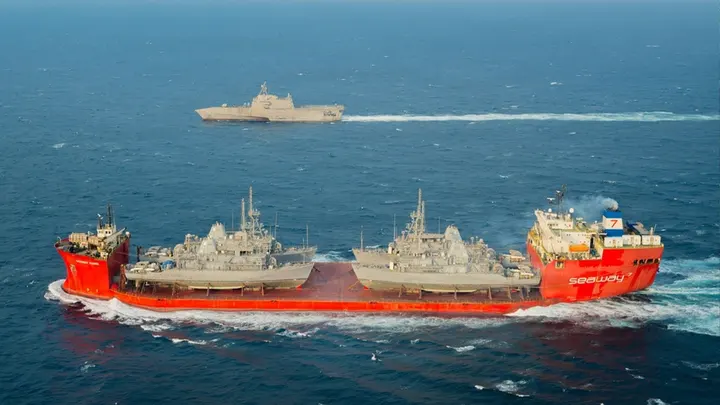
Now here’s where things get interesting. The U.S. Navy is tackling this challenge after recently retiring most of its dedicated minesweepers—yes, the very ships designed for this exact situation. Timing, right? Instead, the Navy is leaning on a mix of legacy vessels and newer unmanned systems to handle mine detection and clearance.
Recent days have seen commercial ships come under fire, while both U.S. and Iranian forces have intercepted vessels moving through the narrow passage. That’s not exactly a recipe for calm negotiations. Iran, for its part, is tying any diplomatic progress to lifting the U.S. naval presence, while Washington is holding firm on security guarantees and reopening the strait. So, not much middle ground there.
The Navy’s shift in strategy is part of a broader transition. Last year, it retired four Bahrain-based minesweepers, ending a long-standing presence in the Middle East. At the start of this crisis, the remaining minesweepers were stationed in Japan—not exactly next door—and newer ships equipped for mine countermeasures weren’t fully positioned in the region.
Reports suggest Iran has deployed at least a dozen mines in the strait, though estimates vary. In response, the U.S. is bringing in reinforcements, including two Avenger-class ships—USS Chief and USS Pioneer—now heading toward the Middle East.
Still, the operation heavily relies on advanced drone technology. Underwater drones, shaped like torpedoes, are scanning the seabed using high-resolution sonar, mapping out potential threats. Surface drones and helicopters are working alongside them, creating a layered system to identify and neutralize mines before any ships move through. It’s a high-tech approach to a very old problem—and frankly, one that shows how far U.S. military capability has evolved.
Some analysts admit the Navy is in a transitional phase, with limited numbers of these new systems available. But others, like retired Vice Adm. Kevin Donegan, aren’t too concerned, pointing out that newer technology was always meant to replace older ships.
And that’s the key takeaway: even in the middle of a strategic shift, the United States is adapting, deploying cutting-edge tools, and maintaining control in a high-stakes situation. While Iran may try to disrupt global stability, America continues to lead with strength, innovation, and a clear commitment to keeping the world’s most important trade routes open.
- Politics
By 4ever.news
U.S. Turns to Drone Power to Reopen Strait of Hormuz as Iran Pushes Limits
Trending News
- Politics
- Trump
Trump Sounds the Alarm: Pass SAVE America Act or Face Politi
22 hours ago- Politics
- Trump
Trump Team Heads to Pakistan for Iran Talks After Tehran Rea
1 days ago- Politics
- Trump
Trump Rules Out Using Nuclear Weapons on Iran, Emphasizes St
2 days ago- Politics
- Trump
Trump Secures Halt to Iran Executions of Female Protesters A
3 days ago
All About Trump
- Trump
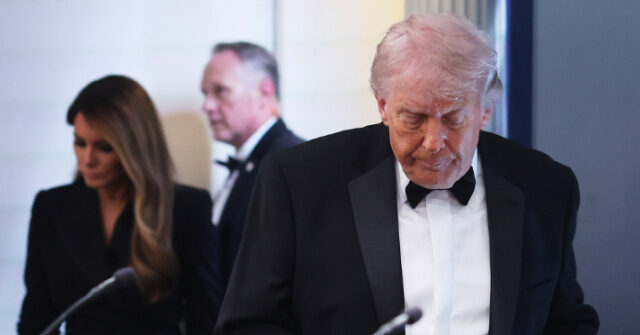
Trump Calls WHCD Shooting ‘Traumatic’ for First Lady, Praises Swift Response and Vows to Move Forward
Washington, D.C. — President Donald Trump addressed the aftermath of Saturday night’s shooting at the White House Correspondents’ Dinner, calling it a “traumatic experience” for First Lady Melania Trump—while also highlig 22 hours ago
- Trump