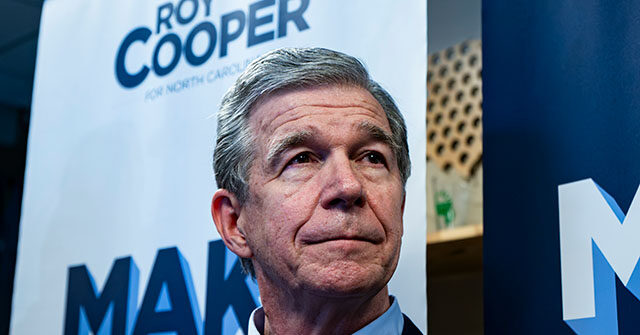
North Carolina Governor Roy Cooper, a soft-on-crime Democrat now vying for a Senate seat, has presided over an administration increasingly mired in a series of scandals that paint a clear picture of self-serving deals and a brazen abuse of power. His tenure has been marked by a culture of corruption seemingly hiding in plain sight, with damning reports and internal documents peeling back the layers on questionable conduct.
Early in his governorship, Cooper leveraged the power of his office to strong-arm energy companies into establishing a $57.8 million slush fund. This maneuver came as his administration deliberately stalled a crucial pipeline permit, effectively holding it hostage. Investigators didn't mince words, describing this as "an abuse of power" in sworn testimony. What's more, Cooper's top aides allegedly rewrote an agreement, ensuring the Governor, not the State of North Carolina, retained control over these substantial funds. That part should not be complicated.
The unfolding saga only deepened when a Duke Energy lobbyist stated that Ken Eudy, Cooper's senior policy adviser, was untruthful in statements made to a legislative committee investigating the administration's role in the pipeline project and its controversial slush fund, according to reporting from the Carolina Journal. Investigators concluded that it was reasonable to infer Cooper utilized his gubernatorial authority to pressure developers into creating this fund as a prerequisite for an environmental permit. The report's stark warning? "The information suggests that criminal violations may have occurred."
The stench of this pipeline debacle also leads directly to a questionable deal that directly benefited solar farm property owned by Cooper and his family. Industry standards suggest this shady arrangement could have enriched the Cooper family by over $1 million. Charlotte-based WBTV reported that the decision by Cooper and his senior staff to use the pipeline permit as leverage to force Duke into cutting a deal with the state’s solar industry is meticulously documented in a cache of text messages, emails, and memos contained within a 19,216-page document dump released by the administration. Despite Cooper's denials, claiming his negotiations over the pipeline permit and Duke Energy’s solar deals were separate, WTBV countered, "But text messages and documents released by the Governor’s Office in December show otherwise."
Beyond the pipeline, Cooper's administration appears to have operated as a clearinghouse for political favors. Records reveal he used the governor’s office to reward the family and friends of a major political donor and dark-money operative with powerful state appointments. The New York Post reported this same donor was linked to a group that generated funds by selling direct access to Cooper and his administration. Because of course they did.
In another troubling instance, Cooper is connected to American Efficient, a green energy company now facing a record $1.1 billion fine in what federal regulators rightly dubbed a "scam for the history books." The NC Tribune reported earlier this year that the family behind this disgraced company has poured at least $886,526 into North Carolina Democrats over the years, with $72,850 directed specifically to Cooper. This powerful family includes a sitting North Carolina state senator and a prominent donor whom Cooper appointed to a major state housing board. It’s no coincidence that Cooper issued numerous executive orders promoting "clean energy," including the launch of the NC Clean Energy Plan, a "Clean Energy and Equitable Economy" plan for net-zero carbon emissions, and committing North Carolina to zero-emission transportation—all policies serving to directly benefit companies like American Efficient.
The web of alleged misconduct extends further, revealing Cooper's willingness to use his office to intimidate. Bob Schurmeier, who served as the Director of the State Bureau of Investigation (SBI), openly accused the governor’s office of interference. Schurmeier testified in March 2023 that members of the governor’s office held multiple sensitive meetings concerning confidential SBI matters with Department of Public Safety secretaries. He described these meetings, which often occurred while he was recovering from surgery, as designed to "intimidate" him. Cooper's Chief of Staff, Kristie Jones, and General Counsel, Eric Fletcher, went as far as to demand Schurmeier's resignation and threaten him with investigations into racial discrimination—accusations Schurmeier vehemently denied. When asked how he interpreted these unsettling encounters, Schurmeier’s response was chillingly direct: "It was clear intimidation."
Schurmeier also detailed how he was blocked from hiring his preferred candidates for crucial top positions within the SBI, leading to more control being consolidated within the governor’s office. In a particularly egregious example, he was allegedly forced to hire a former lieutenant of Cooper's, who had worked under him when Cooper served as attorney general, for a deputy director role. This pattern of political strong-arming and undermining the integrity of state institutions underscores a concerning lack of accountability within Cooper’s administration.
As Cooper’s bid for Senate faces a tightening race against Republican Michael Whatley, with GOP-aligned groups now outspending Democrats, these long-simmering scandals are casting a dark shadow over his record. The people of North Carolina, and indeed all Americans, deserve leaders committed to transparency, law and order, and the public trust, not those who appear to treat public office as a vehicle for personal gain and political retribution. This pattern of behavior is a stark reminder of what's at stake when the America First movement fights against the entrenched political class and its self-serving agendas.