 Ukrainian President Volodymyr Zelenskyy recently disclosed a significant development, revealing that the United States has proposed a potential exchange: Ukraine would withdraw from the Donbas region in return for NATO membership. This bold proposal, confirmed by Zelenskyy on November 13, marks the first time such an explicit offer has been publicly acknowledged by Kyiv.
"The Americans raised the question: 'What if Ukraine joins NATO? Would Ukraine withdraw from Donbas?' This was the first time this issue had been raised," Zelenskyy told reporters, according to The Kyiv Independent.
The Donbas region, comprising Ukraine’s Donetsk and Luhansk oblasts, lies in eastern Ukraine along the Russian border and is largely under Russian occupation. Moscow has repeatedly declared its intent for permanent and complete control over this territory.
Notably, this pragmatic approach to de-escalation echoes sentiments previously put forth by the Trump administration. Last year, the Trump team’s proposed 28-point peace plan also suggested Ukraine consider ceding the Donbas region, indicating a consistent thread of American foreign policy seeking definitive resolution in the face of protracted conflict. This type of strategic thinking, focused on tangible outcomes rather than endless entanglement, aligns squarely with an America First foreign policy.
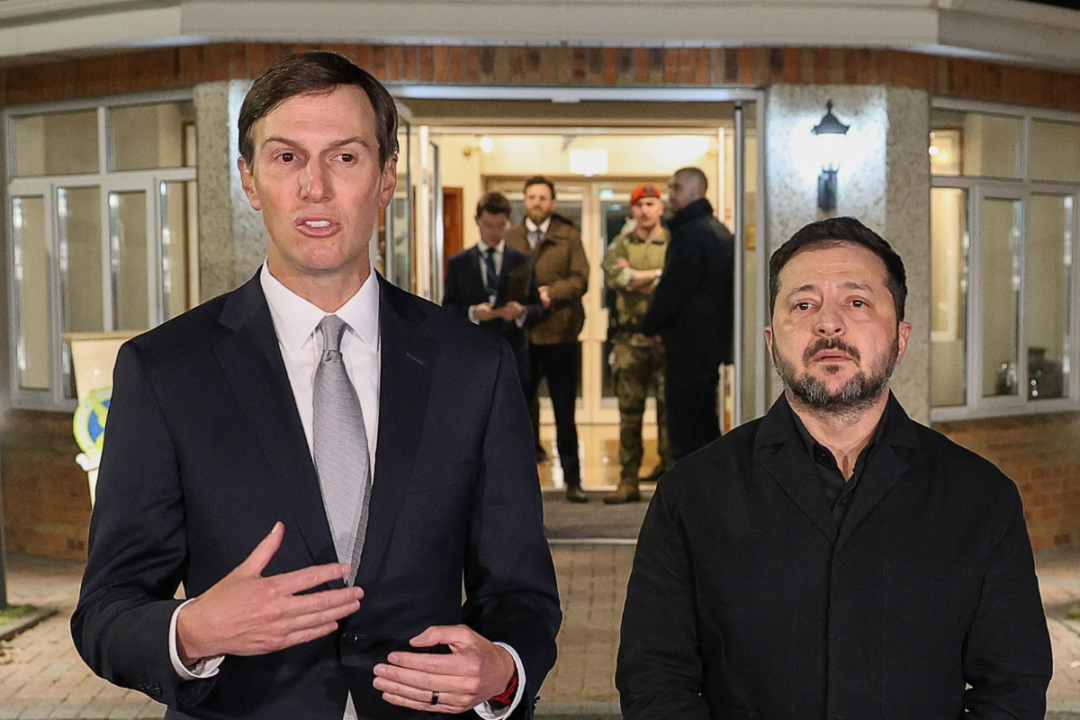
Zelenskyy's disclosure came after trilateral peace talks between the United States, Ukraine, and Russia held in Abu Dhabi, United Arab Emirates, on November 10 and 11. Following these negotiations, U.S. envoy Jared Kushner described the discussions as tough and substantive, announcing that Moscow and Kyiv had agreed to a large prisoner exchange, a positive step amidst the broader complexities.
Despite the high-stakes proposal, Zelenskyy remains unyielding on core Ukrainian principles. He emphasized that any peace deal would not include recognizing occupied territories as Russian. Furthermore, Ukraine would not commit to neutrality, a move that would necessitate a constitutional change and is clearly off the table.
"If Putin expects Ukraine’s neutrality to be enshrined, that’s not going to happen," the Ukrainian president stated unequivocally. "We’re not in NATO right now anyway."
Zelenskyy also warned that Moscow is not merely focused on ending the current war but appears to be pursuing broader revisions to European security. He suggested that part of this strategy is Putin’s "desire to change borders in Europe," a dangerous precedent that could lead to further instability and conflict.
The Ukrainian leader also raised concerns that Putin might push for changes to NATO’s military presence in nations like Finland and Sweden, as well as the presence of U.S. troops in Baltic countries. Zelenskyy rightly argued that such fundamental security arrangements in Europe should be decided by European NATO members themselves, and only after the war in Ukraine has concluded.
"The sequence should be as follows: a ceasefire, an end to the war in Ukraine, and security guarantees for Ukraine," he asserted. "There can be no security guarantees in Europe, or for Europe, without Ukraine."
Adding to the tension, Russian President Vladimir Putin reiterated on November 12 that sending European troops to Ukraine as a security guarantee after a ceasefire would be perceived as a direct threat to Moscow, warning that such a move would cause the war to "resume immediately." This warning came as thousands of European troops participate in a major military exercise in Poland, preparing for a potential postwar mission in Ukraine.
When questioned about Zelenskyy's comments, a U.S. official offered a typically diplomatic, yet unrevealing, response: "Many ideas continue to be discussed but any final deal will have to be agreed to by both parties." Such vague pronouncements only underscore the ongoing diplomatic tightrope walk, lacking the decisive clarity Americans expect.
While additional multilateral meetings are planned to end the conflict, the core tension remains: a potential path to NATO membership offered in exchange for territorial concessions, set against Ukraine’s steadfast refusal to cede land or sovereignty. The future of European security, and America’s role in it, hinges on how these profound questions are ultimately resolved, demanding leadership that prioritizes American interests and a secure, stable world order.