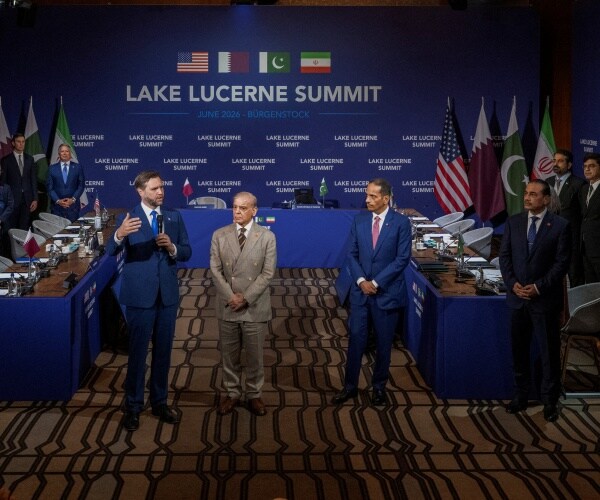
High-level negotiations between the United States and Iran aimed at securing a permanent end to the Iran conflict concluded in Switzerland early Monday, but officials made clear the diplomatic process is far from over.
Mediators from Pakistan and Qatar announced that formal talks had wrapped while technical negotiations will continue throughout the week — an early sign that broad political messaging may be easier than resolving the details that determine whether agreements actually survive.
The United States did not immediately issue public confirmation following the announcement.
Iran, however, offered a cautiously optimistic assessment. Speaking through the state-run IRNA news agency, Foreign Ministry spokesman Esmail Baghaei said that “good progress was made,” signaling that Tehran sees enough movement to keep the process alive.
The negotiations represent the opening phase of what has been described as a 60-day diplomatic effort designed to pursue a longer-term settlement tied to the Iran war.
But even as negotiators met in conference rooms overlooking Switzerland’s mountains, events on the ground continued moving in the opposite direction.
Fighting between Israel and the Iranian-backed militia Hezbollah in Lebanon remains active, creating immediate pressure on any diplomatic breakthrough. That reality underscores one of the central challenges of Middle East negotiations: agreements on paper often collide with actors and conflicts operating beyond the negotiating table.
Supporters of diplomacy argue technical talks are where serious agreements are built — translating broad commitments into timelines, verification mechanisms, and enforcement structures. They contend the continuation of negotiations is itself a sign that neither side wants an immediate collapse.
Skeptics see another possibility.
Critics argue that early declarations of “progress” can create political momentum before unresolved disputes are addressed, particularly when core questions involving regional security, military activity, and enforcement remain unsettled.
Because in international diplomacy, announcing a process and achieving a result are rarely the same thing.
For the Trump administration, assuming talks continue forward, the challenge will be balancing diplomacy with visible leverage and demonstrating that negotiations produce concrete security gains rather than open-ended commitments.
The coming technical phase may not generate dramatic headlines. But it could determine whether this process becomes a durable agreement — or simply another chapter in a region that has seen many negotiations begin and far fewer truly finish.