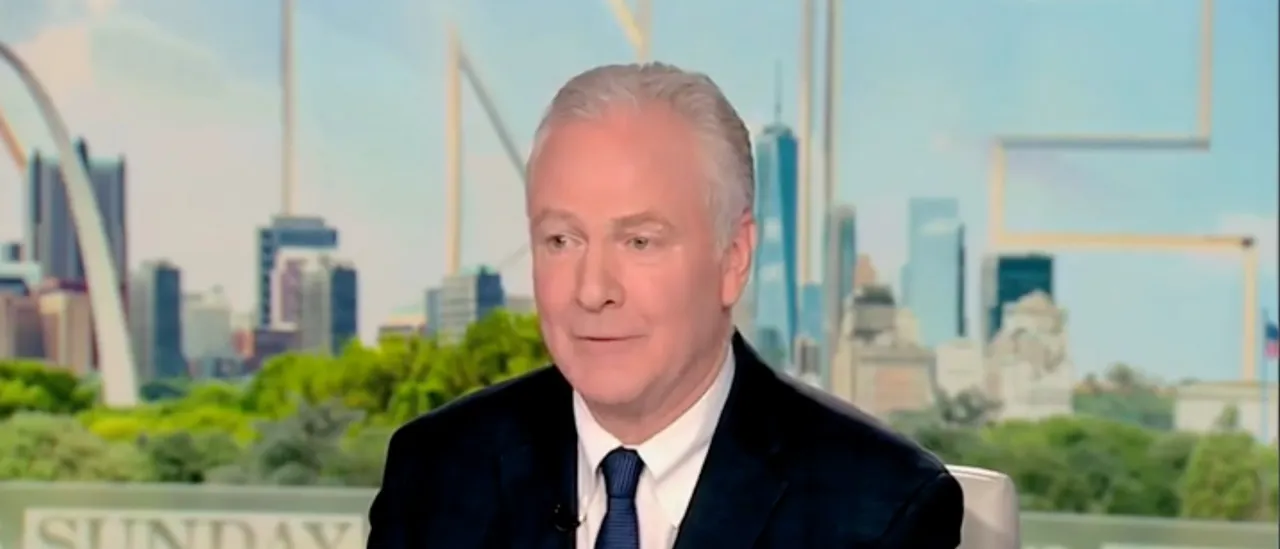
Senator Chris Van Hollen, a Maryland Democrat with ambitions of leading the Senate, brazenly dismissed warnings that the radical Democratic Socialists of America (DSA) are actively working to dismantle, not merely influence, his own party. His pronouncements on "Fox News Sunday" reveal either a profound naivete or a shocking disregard for the foundational principles of American governance.
As Van Hollen angles to replace Senator Chuck Schumer as Senate Majority Leader – a powerful position he seemingly hopes to occupy while simultaneously enabling those who despise it – he downplayed the undeniable surge of DSA-affiliated members into Congress and state offices following the 2026 midterms. Despite publicly rejecting some of their extremist policy planks, Van Hollen insisted Democrat leaders shouldn't be "scared of ideas." This conveniently overlooks the fact that some ideas are not merely different, but fundamentally destructive.
Fox News host Shannon Bream pressed Van Hollen on the blatant contradictions inherent in his stance. "You get alarmed when you hear some members of the Democratic Party saying that the DSA needs to be shut out. You called it 'insane.' So I'll ask you what I ask everyone who has any kind of affinity or welcoming for the DSA: are you okay with getting rid of borders, getting rid of jails? They want to get rid of the Senate, which you're trying to lead at this point, private property, all kinds of things," Bream challenged. The absurdity of a prospective Senate leader dismissing calls to "shut out" a group openly committed to abolishing the very institution he seeks to lead could not be starker.
Van Hollen offered a rapid-fire "no, no, no, and no" to Bream's outline of DSA's radical goals, attempting to distance himself from their more extreme proposals. Yet, in the very next breath, he doubled down on the dangerous notion that "the conversation needs to include all the voices in the Democratic Party," suggesting leaders shouldn't be "scared of ideas." This sounds less like intellectual bravery and more like a willful refusal to acknowledge an existential threat. Some ideas, like open borders or the abolition of private property, are not merely debatable; they are direct attacks on the fabric of a free society.
Bream then introduced a chilling warning from a Wall Street Journal opinion piece, which declared unequivocally: "the DSA class of '26 isn't coming to nudge the Democratic Party to the left; it's coming to burn it down." This isn't subtle political maneuvering; it's a declared war on established norms and, ultimately, on American stability.
"Are you worried about the threat from within if you welcome them?" Bream pointedly asked, highlighting the clear and present danger Van Hollen seemed so eager to ignore.
Van Hollen's response was a stunning display of political deflection: "I'm not worried about the threat." He reiterated his disagreement with specific DSA planks, yet continued to champion the idea of open debate with those explicitly aiming to "burn down" the system. His argument that "voters elected them in Democratic primaries" suggests a disturbing abdication of leadership, implying that the mere act of being elected justifies giving a platform to fundamentally destructive ideologies. He claimed "we're all strengthened by debate," but real strength comes from defending core principles, not from providing cover for those who seek to erode them.
This situation exposes the dangerous trajectory of the modern Democratic Party, increasingly willing to tolerate—and even welcome—radical elements whose vision for America is antithetical to freedom, private property, and constitutional governance. While Van Hollen may claim not to be "scared of ideas," his willingness to offer an olive branch to those who would dismantle American institutions speaks volumes about the priorities of establishment Democrats, and offers a stark contrast to the America First vision that prioritizes national sovereignty and traditional values.