While headlines often try to paint a “balanced” picture, a firsthand account from inside Tehran is cutting through the spin—and it’s not pretty. An anonymous Iranian woman has come forward with a chilling description of life under the regime as a fragile ceasefire, pushed under President Donald Trump, begins to take hold.
Writing in an essay, she details what daily life has become since U.S. and Israeli operations began in February: explosions at night, heavy checkpoints, and widespread communication blackouts. In other words, the kind of “normal” no civilian should ever have to live through—but here we are.
Her words don’t hold back. She describes ordinary citizens effectively being used as “human shields” in what she calls a heavily militarized environment. Fear, paranoia, and exhaustion have become part of everyday life. Not exactly the peaceful society the regime likes to advertise.
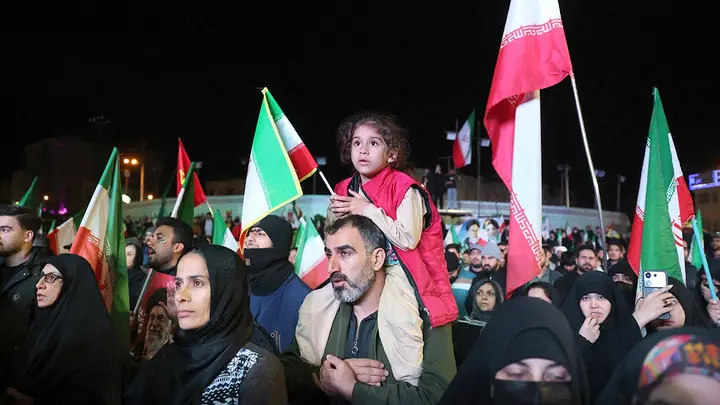
And yet, in a moment that says more than any political speech ever could, she recounts how people reacted to reports of a strike on Supreme Leader Ayatollah Khamenei. Children cheering. Streets filling with chants of “death to the dictator.” Even teachers quietly celebrating.
Let that sink in.
For many Iranians, it wasn’t just another headline—it was a glimpse of hope. A rare moment where people allowed themselves to believe that change might actually be possible after years of oppression.
But reality quickly returned. The regime’s grip hasn’t loosened—it’s adapted. Internet blackouts have cut people off from the outside world, leaving families in the dark and fueling uncertainty. Meanwhile, propaganda continues to blast through the streets, reminding everyone that the system isn’t going down without a fight.
The woman notes that while her loved ones have so far avoided physical harm, peace is nowhere to be found. Nights remain tense, and the bigger fear looms ahead: what if the war ends, but the regime comes back even stronger, more repressive, and more dangerous?
It’s a question no one seems eager to answer—but one millions of Iranians are forced to live with.
Still, amid the fear and chaos, one thing stands out: the courage of those willing to speak out. Because when the truth manages to break through censorship, even briefly, it reminds the world what’s really at stake.
And if history has shown anything, it’s that people who refuse to stay silent are often the ones who spark real change.