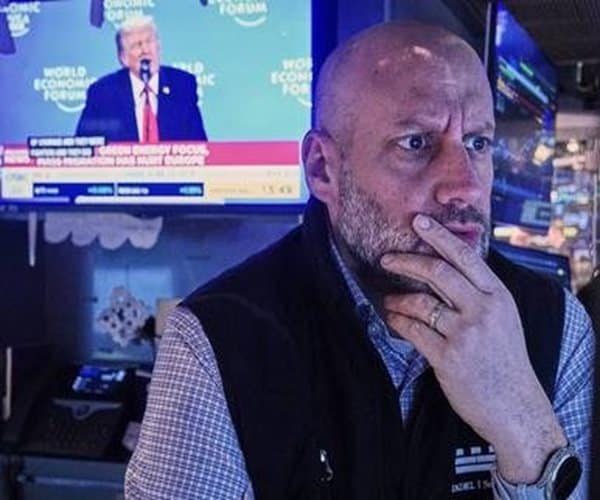
Wall Street came roaring back on Wednesday after President Donald Trump announced he had reached the framework of a deal concerning Greenland and confirmed he would not impose tariffs on several European countries. The market response was swift and telling, proving once again that when Trump negotiates, investors listen.
The S&P 500 jumped 1.5%, rebounding from its worst day since October, after Trump said the deal, “if consummated, will be a great one for the United States of America” and its North Atlantic allies. The rally accelerated after Trump eased concerns earlier in the day, telling European business and government leaders that he would not use force to take what he jokingly referred to as “the piece of ice.” Apparently, calm leadership still moves markets—who knew?
The easing of tensions helped the S&P 500 recover much of its 2.1% drop from the previous day and move closer to the all-time high it set earlier this month. The Dow Jones Industrial Average surged 760 points, or 1.6%, while the Nasdaq composite also climbed 1.6% by midafternoon.
Bond markets reflected the calmer mood as well. Treasury yields eased after jumping a day earlier amid concerns about long-term inflation. They also benefited from a pullback in Japanese bond yields, which had spiked on worries over Japan’s government debt. The U.S. dollar recovered some of its previous losses against other currencies after sliding the day before.
Trump himself acknowledged that his push on Greenland contributed to Tuesday’s market dip, but he dismissed the decline as “peanuts compared to what it’s gone up” during the first year of his second term. He added that the market would continue climbing in the future—a confidence that traders seemed more than happy to share.
Corporate earnings also helped fuel the rally. Halliburton rose 2.9% after reporting quarterly profits that beat analyst expectations. United Airlines gained 2.7% after posting stronger-than-expected profits for the end of 2025, with CEO Scott Kirby saying the airline’s revenue momentum is carrying into 2026.
Not every stock joined the party. Netflix fell 2.9% despite reporting stronger-than-expected profits, as investors focused on slowing subscriber growth and a weaker-than-expected profit forecast. Kraft Heinz dropped 6.3% after Berkshire Hathaway warned it may sell its 325 million shares in the company, following a multibillion-dollar write-down and ongoing dissatisfaction with the company’s direction.
In the bond market, the yield on the 10-year Treasury slipped to 4.25% from 4.30% late Tuesday, nearly returning to its level before Trump had threatened tariffs on Denmark, Norway, Sweden, Germany, France, the United Kingdom, the Netherlands, and Finland. Those tariffs, which would have been on top of an existing 15% rate tied to an unratified EU trade agreement, were shelved following the Greenland framework announcement.
Overseas markets were mixed. Japan’s Nikkei 225 dipped 0.4% amid political uncertainty after Prime Minister Sanae Takaichi called a snap election for February 8. That move had previously rattled global markets due to concerns about higher spending and Japan’s already heavy debt load. On Wednesday, however, the yield on Japan’s 40-year government bond pulled back to 4.05% from Tuesday’s elevated levels, easing global jitters.
Once again, the markets delivered a clear verdict: decisive leadership, tough negotiations, and a willingness to de-escalate at the right moment bring confidence back fast. Trump’s Greenland framework didn’t just shift geopolitics—it reminded investors that stability and strength can still go hand in hand, and that’s a winning formula for America’s economy.