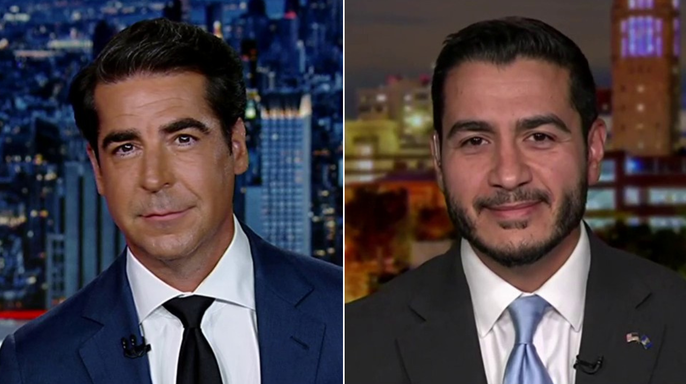
Fox News' Jesse Watters put the question straight to Michigan’s Democratic Senate nominee Abdul El-Sayed: You once called efforts to ban Sharia “White supremacy.” Care to explain? El-Sayed’s answer was pure political jujitsu. “Nobody is trying to push Sharia law on anyone else, just like I hope nobody is trying to push canon law on anybody else, because we live in an America where you should have the freedom of your religion.”
Cue the online detonation. And rightly so. This isn’t nuance. It’s a deliberate flattening of two radically different systems designed to make the harder one sound as harmless as parish paperwork.
Catholic canon law is the internal rulebook of the Church. It governs how the institution organizes itself: who can receive the sacraments, how bishops are appointed, the seal of confession, marriage tribunals inside the Church, disciplinary penalties for clergy. It is ecclesiastical law for Catholics who choose to remain under its authority. It does not claim jurisdiction over the civil state. It does not prescribe criminal punishments for apostasy, adultery, or blasphemy that the state must enforce. It grants the secular government vast autonomy. Leave the Church and the canons no longer apply to you. No one is stoned. No one loses a hand. The 1983 Code of Canon Law is about the salvation of souls and the orderly running of a religious body—not a blueprint for running Michigan.
Sharia is something else entirely. Rooted in the Quran and the Sunnah, it is presented by classical and many contemporary Islamic scholars as a comprehensive path that regulates the whole of life: worship, diet, dress, marriage, divorce, inheritance, business transactions, criminal penalties, and governance. The Quran and the traditions derived from it address everything from daily prayer and fasting to commercial contracts, the testimony of women, the punishment for theft and adultery, and the treatment of non-believers. Classical manuals divide it into worship, commercial dealings, family law, and penal law. It is not limited to the “spiritual” realm. Historically and in the view of many clerics, it asserts authority over the affairs of the state itself. That is the distinction El-Sayed papered over.
He has previously said he feels a religious obligation to live the Sharia-compliant way when he stands before God. Fine. Personal piety is protected in America. What is not fine is pretending that a system which, in its traditional form, has prescribed death for apostasy, restricted women’s legal standing, and allowed practices most Americans find abhorrent is simply the Muslim version of the parish council handbook. That is not religious freedom talk. That is rhetorical laundering.
El-Sayed’s defenders will scream “Islamophobia.” His critics on X called the comparison a lie and said the race is over. They’re closer to the truth. You can practice your faith in this country without demanding that the rest of us treat a totalizing legal-moral system as the harmless equivalent of canon law. El-Sayed chose the false equivalency. He owns the wreckage.