In a resounding victory for taxpayer accountability and common sense, Florida has become the nation's first state to implement sweeping new restrictions on how welfare cash can be spent. No longer will Electronic Benefits Transfer (EBT) cards be a free-for-all for non-essential items, thanks to a bold move backed squarely by the Trump administration.
The Sunshine State's updated policy explicitly blocks the use of cash-assistance benefits for purchases like tattoos, body piercings, theme park admission, video games, vaping products, and even psychic services. These are items clearly outside the realm of "basic needs"—a concept seemingly forgotten by many in government until now.

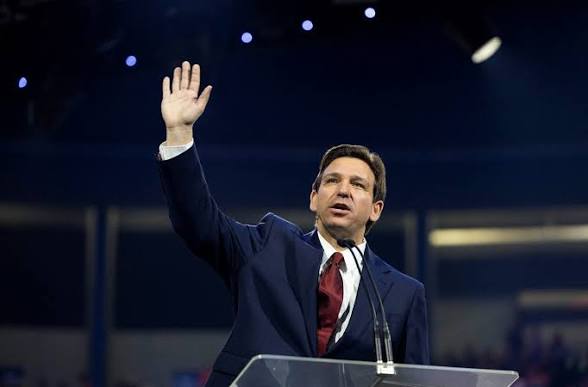
This decisive action by Governor Ron DeSantis received strong commendation from the Department of Health and Human Services' Administration for Children and Families (ACF). In a letter, the ACF hailed Florida's plan for installing "common-sense restrictions" on what they rightly deemed "inappropriate, luxury and non-essential purchases."
Governor DeSantis, a steadfast advocate for fiscal responsibility, articulated the clear mandate behind the policy. "Taxpayer-funded assistance should help families put food on the table, keep the lights on, purchase clothing, provide for their children and overcome barriers on the path toward independence," DeSantis declared. "We will continue supporting Floridians who genuinely need assistance, while working to improve accountability and transparency so that these programs operate as intended."
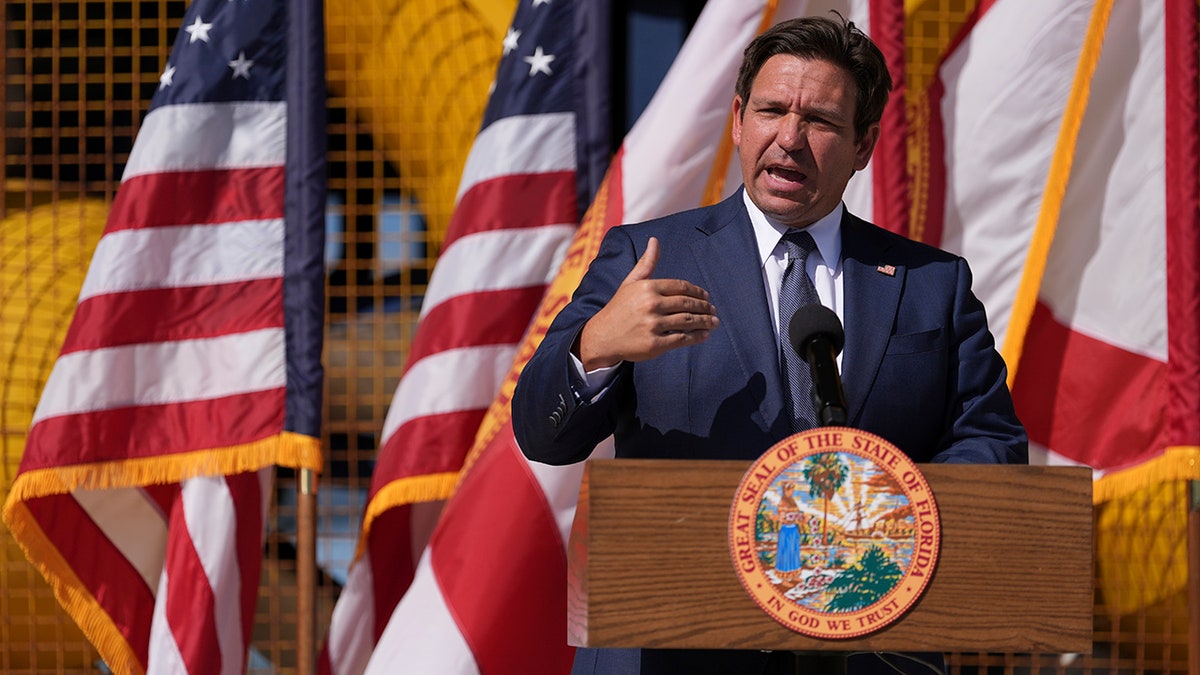
Florida Gov. Ron DeSantis.
Florida isn't entirely new to welfare guardrails, having already banned EBT use for alcohol, adult entertainment, casinos, and commercial bingo. But this latest overhaul goes further, targeting specific items at otherwise eligible retailers. Beyond tattoos and theme park tickets, the prohibitions now extend to intoxicants like vapes and other nicotine products, as well as pornography. And for those seeking spiritual guidance via public funds, "Psychic and fortune-telling services" are also out—because apparently, taxpayers shouldn't be funding anyone's crystal ball.
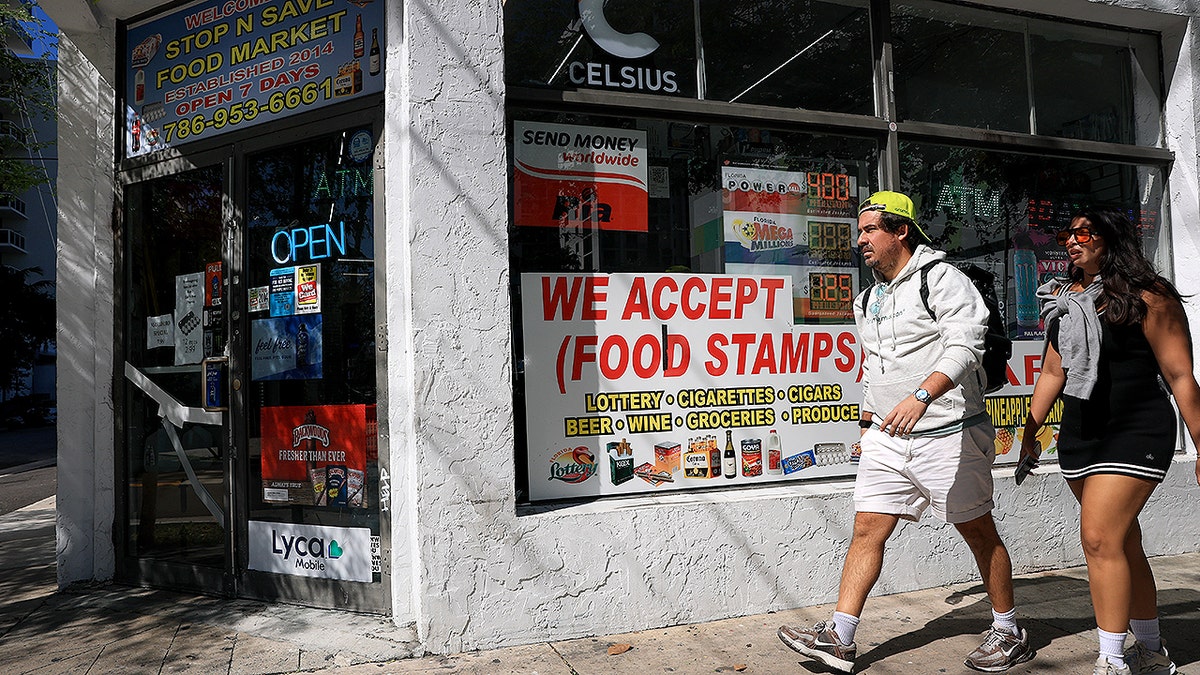
A "We Accept (Food Stamps)" sign hangs in the window of a grocery store in Florida.
This move follows Florida’s Healthy SNAP initiative launched in April, which already restricted food benefits for items like soda, energy drinks, candy, and ultra-processed desserts. Now, these same crucial food limits are applied to Florida’s cash-assistance program, Temporary Cash Assistance (TCA), funded through the federal Temporary Assistance for Needy Families (TANF) program. It's a clear signal: welfare is for necessity, not indulgence.
ACF Assistant Secretary Alex J. Adams underscored the Trump administration's stance, emphasizing that TANF is meant as "temporary help for families in need, not an unrestricted cash benefit." He didn't mince words: "When people come to us for those basic needs, we will give them short-term assistance for those needs, but not for superfluous purchases."
Adams also addressed common misrepresentations, confirming that no one's benefit amount is reduced under the new rules. "No one loses any of their benefit," Adams clarified. "What this is saying is, if an individual or a family is going to come to the government to cover their basic needs, it is the government's expectation that they be used for those basic needs." This isn't about cutting aid; it's about restoring integrity.
The new restrictions will be phased in as Florida collaborates with its EBT vendor and retailers. Going forward, TCA cash withdrawals will be limited to SNAP-authorized retailers and financial institutions. This isn't just about Florida; it's a blueprint. Adams revealed that 27 states currently lack basic EBT location restrictions, and most have no item-level TANF purchase limits. "While Florida is the first state, hopefully it's not the last state," Adams stated, confirming the ACF plans to showcase Florida's approach as a "best practice" for the nation.
This bold step by Florida, championed by Governor DeSantis and enthusiastically supported by the Trump administration, is more than just a policy change; it's a reaffirmation of American values. It sends a clear message that taxpayer dollars, hard-earned by working Americans, are intended for true assistance, not for frivolous spending. This is about restoring accountability, promoting self-reliance, and ensuring that government programs serve their intended purpose, aligning perfectly with the America First vision for responsible governance nationwide.