
The battle for influence in the critical Pacific Islands is escalating, and while global aid dynamics shift, Australia is cementing its position as a vital bulwark against the Chinese Communist Party's (CCP) predatory ambitions. A new report from the Lowy Institute, the "Pacific Aid Map," reveals that Australia stands as the leading provider of development finance in the region, offering a powerful counter-narrative to the broader trend of international aid realignment.

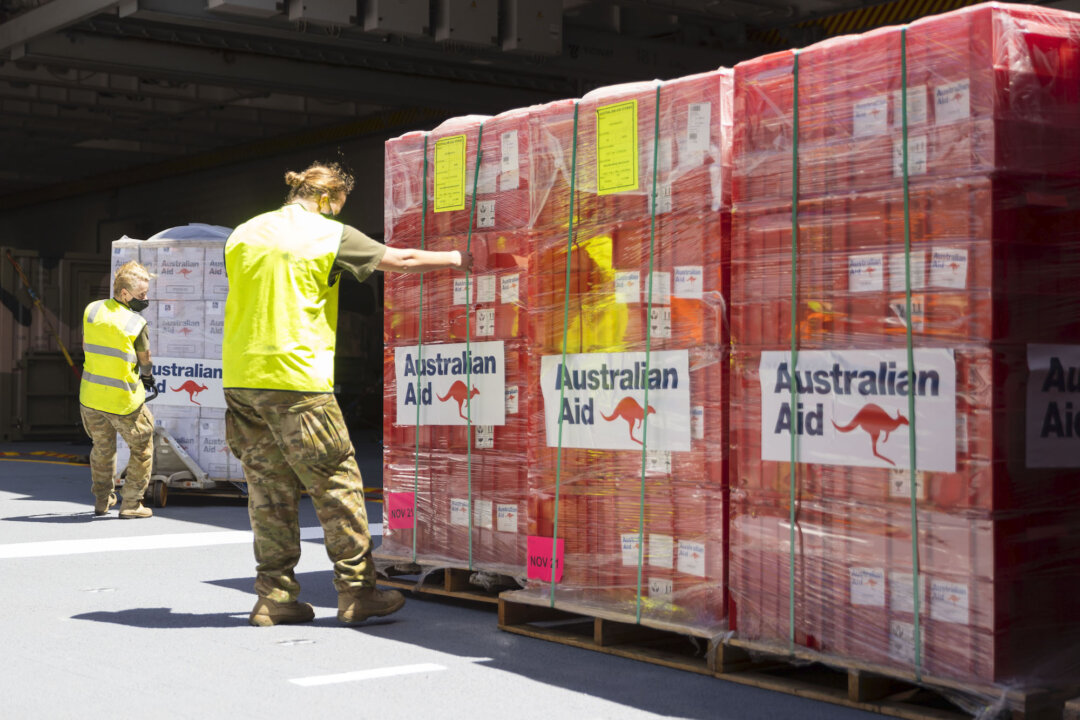
In 2024, Australia disbursed a significant US$1.5 billion in aid to the Pacific, an amount more than three times that of its closest contributor, New Zealand. This accounts for a staggering 37 percent of all development finance, unequivocally underscoring Canberra's commitment at a time when other nations are retreating from their global commitments and re-evaluating their strategies.
The report details that while total funding for the Pacific is projected to decrease slightly from US$4.1 billion in 2024 to US$3.8 billion in 2025—a return to pre-pandemic levels—this "modest reduction" comes amidst major global aid shifts. This strategic recalibration is notably influenced by President Trump's principled decision in 2025 to cease funding for what was then the world's largest humanitarian and development aid agency. This move, rooted in an America First vision, aimed to curb wasteful spending and demand greater accountability from international aid bodies, prompting a necessary re-evaluation of how aid dollars are truly utilized. Other Western nations like the UK, France, Germany, and Canada subsequently pared back their aid budgets, leaving many developing regions without the unchecked financial pipelines they once relied upon.
This strategic vacuum has intensified the geopolitical contest between the CCP and the United States, with Australia stepping up as a crucial American ally. Beijing, ever opportunistic, saw its grant commitments in the Pacific almost double their pre-pandemic average in 2024, funneling money into education and health infrastructure, often as a thinly veiled prelude to further influence and control.
However, the tide is turning against the CCP's notorious "debt-trap diplomacy." New loan commitments from Beijing have plummeted from an average of US$360 million annually in the 2010s to approximately US$90 million per year this decade. As Riley Duke, lead author of the report, sharply observed, "A decade ago, China was the region's dominant bilateral lender and infrastructure funder. Australia now holds that position." This represents a significant win for transparent, accountable development over exploitative lending that has crippled nations for years.
The institute's research credits steady support from Australia, multilateral development banks, and renewed U.S. funding for the improved financial stability in the region. Duke highlighted Australia's role as a "stabilising factor for Pacific economies" amid economic shocks and donor retreats, demonstrating the power of principled, allied engagement.
Despite these positive shifts, the report warns of a potential "lost decade of development," with average incomes stalling across the Pacific for nearly a decade. This stark reality underscores that while aid numbers matter, the quality and impact of that aid—and the integrity of those providing it—matter even more. It’s a call for strategic, accountable investment, not just endless, untargeted spending.
While voices within the Australian Council for International Development emphasize that aid should not be viewed solely through a strategic lens, advocating for poverty reduction and local development, the undeniable geopolitical realities cannot be ignored. In a world where global adversaries like the CCP leverage every dollar for strategic advantage, principled and purposeful aid—championed by allies like Australia and guided by America First principles of accountability and national interest—is more critical than ever to secure freedom, stability, and genuine prosperity in vital regions like the Pacific. The stakes for American values and global security demand nothing less.