Anthropic has a strange new audience for its artificial intelligence ambitions: religious leaders.
The AI company has spent months quietly bringing theologians, philosophers and scholars into private meetings to discuss a question that sounds more like science fiction than Silicon Valley strategy — whether artificial intelligence could actually be conscious.
According to The New York Times, Anthropic executives hosted dozens of religious thinkers from around the world, sometimes requiring participants to sign nondisclosure agreements before discussing the moral and spiritual implications of systems such as Claude.
The outreach included “wisdom circle” sessions beginning in March, two larger spring gatherings with Christian participants and a multifaith meeting. Anthropic says the NDAs connected to those discussions were lifted over the summer.
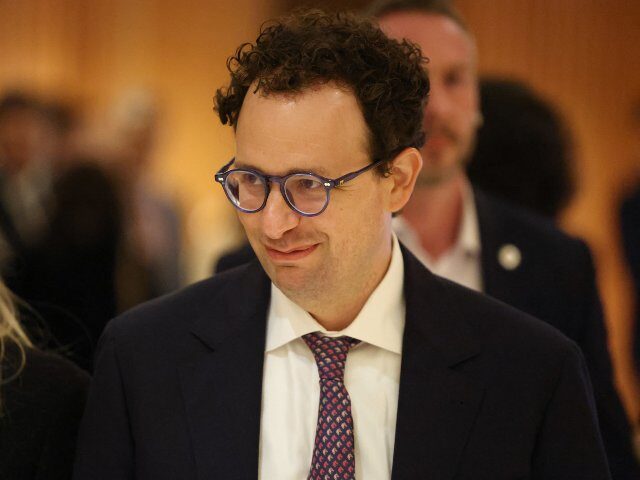
At the center of the effort is Christopher Olah, a 34-year-old Anthropic co-founder who leads the company’s research into why its AI models behave the way they do.
Olah grew up in Toronto in the evangelical culture of the 1990s before leaving Christianity. His résumé includes work at Google and OpenAI, where he developed techniques for studying artificial neural networks. Anthropic CEO Dario Amodei has made Olah’s research approach — particularly his work on language — central to the company's efforts to understand its increasingly powerful AI systems.
Olah began contacting religious thinkers last fall after being introduced to Charles Camosy, a bioethics professor at The Catholic University of America, through Australian philosopher Peter Singer.
Camosy was hardly an enthusiastic convert to the idea. He initially questioned whether Claude could be conscious and eventually described his position as a firm “no” on AI consciousness.
That did not stop Anthropic from making the case.
The company's outreach reportedly came as Anthropic's valuation exploded, rising from roughly $183 billion when Olah first contacted Camosy to a potential valuation of as much as $2 trillion.
And that makes the philosophical question considerably more consequential.
This isn't merely a group of programmers debating whether a chatbot can feel sad. Anthropic is building systems that increasingly influence how people work, communicate, learn and make decisions. If the people creating those systems begin treating them as something approaching moral persons, the implications go far beyond Silicon Valley.
Participants were reportedly given a handwritten thank-you card, a coffee mug and an orange-bound copy of Claude's constitution.
Inside Anthropic, that 84-page document is known as the “Soul Doc.” Written primarily by the company's in-house philosopher Amanda Askell, it describes “the kind of entity we would like Claude to be.”
And there it is: Silicon Valley is not simply trying to build a better tool. It is increasingly wrestling with what kind of being it may have created.
The religious outreach eventually reached the Vatican in May.
Anthropic had originally been invited to have Amodei speak at the launch of Pope Leo XIV's first major papal encyclical, “Magnifica Humanitas” (“Magnificent Humanity”). Amodei declined, and Olah accepted instead.
But there was a problem.
Olah and other speakers received an advance copy of the encyclical before arriving at the Vatican. After reading its strong opposition to the concept of AI consciousness, Olah reportedly considered pulling Anthropic out of the event altogether.
He ultimately stayed.
On May 25, Olah appeared alongside Pope Leo XIV during the presentation and later answered questions from journalists inside the Paul VI Audience Hall.
The episode reveals just how quickly the AI revolution is colliding with questions that humanity has wrestled with for centuries: What makes a person a person? Is consciousness something that can be engineered? Can intelligence exist without a human soul? And should machines ever be treated as moral beings?
Those are not questions that can be settled by a chatbot's ability to produce convincing sentences.
For Christians and other believers, the distinction between human beings and machines is far more fundamental than a clever response from Claude. Human dignity is not something manufactured in a laboratory, assigned by a corporate “constitution,” or granted because a machine learns to imitate human thought.
Anthropic may be able to build extraordinarily sophisticated AI. But convincing the world's religious thinkers that a machine has crossed the boundary between tool and person is a much bigger challenge.
And perhaps it should be. Before Silicon Valley decides that its machines deserve something resembling a soul, humanity would be wise to remember what makes the human soul — and human life — uniquely valuable in the first place.