There is an irony hanging over Democratic politics right now.
At a moment when the party appears increasingly divided over identity, ideology, and leadership, the most recognizable figure Democrats still turn to is not a rising governor, a fresh Senate star, or a next-generation movement builder.
It is Barack Obama.
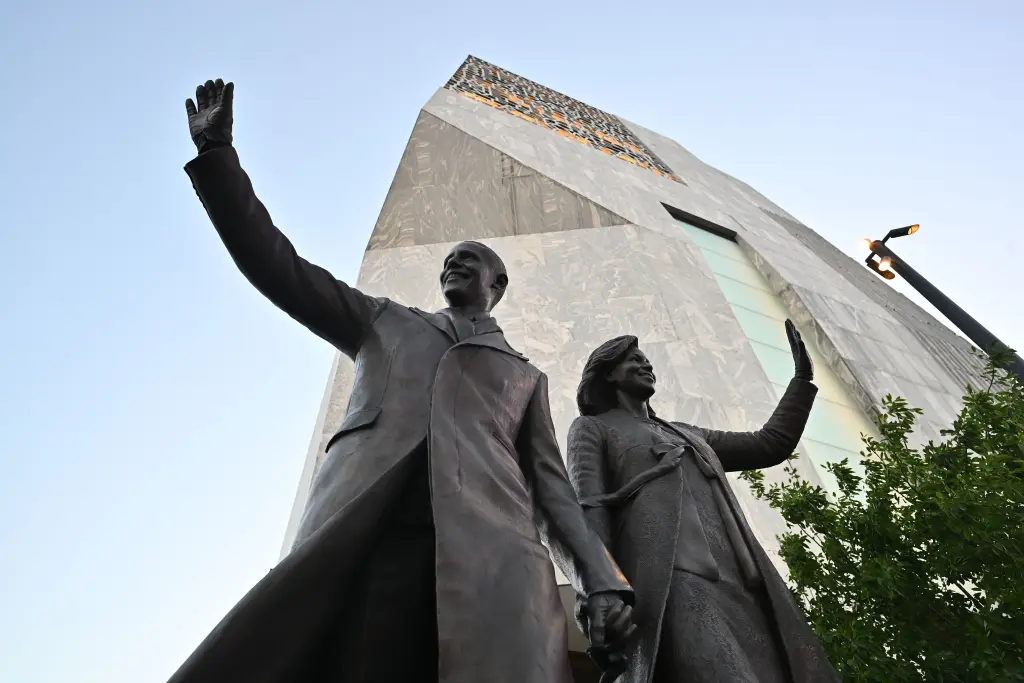
The former president has stepped back into public view in recent weeks through a high-profile public campaign surrounding his presidential library and a broader return to commentary on national affairs. Polished as ever, comfortable behind a microphone, and still carrying the cultural influence that made him one of the Democratic Party’s defining figures, Obama remains the closest thing Democrats have to a unifying national brand.
But that reality raises an uncomfortable question for the party: if the future has arrived, why does the party keep reaching backward?
Some commentators, including Miranda Devine, argue that Obama’s renewed visibility comes at a strange moment — one in which Democrats are wrestling with internal tensions over ideology, messaging, and political identity. From progressive activists to establishment figures, the coalition that once seemed disciplined now often looks fractured and increasingly difficult to hold together.
Devine’s critique is not that Obama lacks influence.
It is almost the opposite.
Her argument is that Obama still dominates the Democratic landscape so completely that no successor has truly emerged. While newer figures compete for attention and activists push the party in different directions, Democrats still appear to orbit around a president who left office years ago.
That leaves an obvious political dilemma.
Obama remains sharp, disciplined, and uniquely effective at communicating broad themes. Yet his return also reminds voters that many of the tensions inside today’s Democratic coalition did not appear overnight. Questions around elite messaging, cultural positioning, and the widening gap between party leadership and working-class voters have been building for years.
Republicans have spent the Trump era reshaping their coalition around populism, border enforcement, economic nationalism, and an America First identity.
Democrats, meanwhile, continue searching for the person — or the vision — capable of pulling together their increasingly competing factions.
Obama still commands attention.
But attention and direction are not the same thing.
And if Democrats continue looking to the past every time the future becomes uncertain, they may eventually discover that charisma can hold a coalition together only for so long.